Most bruises fade in about 2 weeks, sometimes up to 4 weeks.
Timeline
Most bruises fade in about 2 weeks, and may last up to 4 weeks. Colors change as the body breaks down hemoglobin:
- Red or purple at first.
- Blue or dark purple (1 to 2 days).
- Green (5 to 10 days).
- Yellow or brown (10 to 14 days).
Speed healing
- Ice for the first 24 to 48 hours.
- Elevate.
- Gentle compression.
- Arnica gel may help (limited evidence).
Slow healing
Age, blood thinners, vitamin C or K deficiency and large bruises.
See a doctor if

You bruise easily without injury, bruises don’t fade in 4 weeks, or you have lumps or pain.
Emergency
A bruise after a head injury.
Timeline in detail
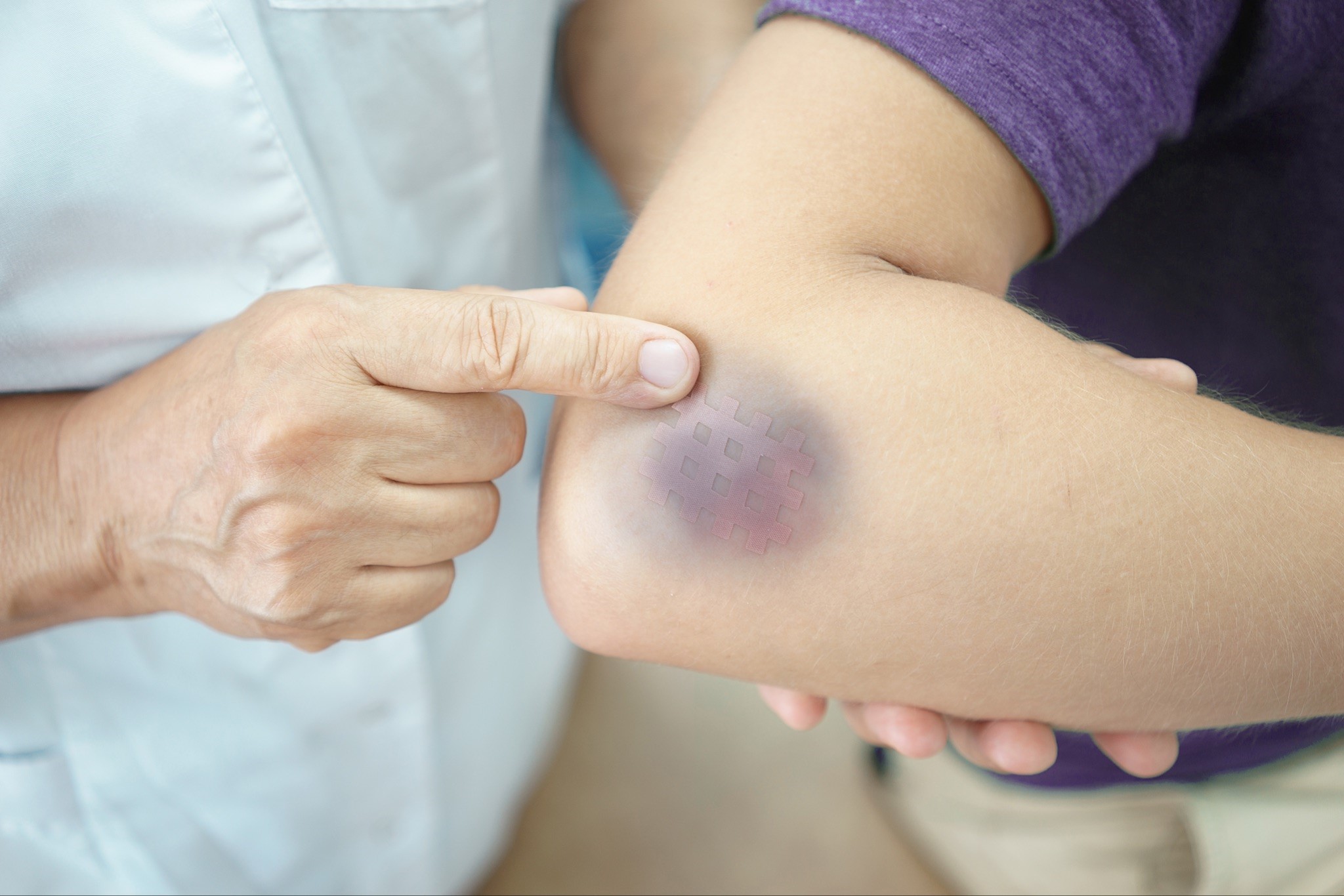
A typical bruise goes through color changes over about 2 weeks. At first it is red or pink as fresh blood pools under the skin. Within 1 to 2 days it turns blue or purple as the blood loses oxygen. After 5 to 10 days it turns green or yellow as hemoglobin breaks down into biliverdin and then bilirubin. It turns light brown and fades by about 10 to 14 days. Large or deep bruises can take 3 to 4 weeks, and bruises on the legs heal more slowly than those on the face.
Speed healing
- Apply a cold pack wrapped in cloth for 10 to 20 minutes several times a day during the first 24 to 48 hours, to limit bleeding.
- After 48 hours, switch to warm compresses to increase blood flow and clear the blood.
- Rest and elevate the bruised limb above heart level.
- Compression with an elastic bandage for limb injuries.
- Take acetaminophen for pain. Avoid aspirin or ibuprofen at first, as they can increase bleeding.
- Vitamin K creams and arnica gel have limited and mixed evidence.
- Eat enough vitamin C and protein to support healing.
Slow healing
Bruises heal slower in older adults, whose skin is thinner and blood vessels more fragile, in people on blood thinners, aspirin or steroids, and in those with low platelets, liver disease or vitamin C or K deficiency. Diabetes and poor circulation slow healing too. Large bruises (hematomas) may take weeks.
See a doctor if
- A bruise appears without injury, especially often or in large areas.
- A bruise does not improve after 2 to 4 weeks.
- There is a hard lump, severe pain or swelling that gets worse.
- You bruise easily and also have nosebleeds, bleeding gums or heavy periods.
- You take blood thinners and bruise a lot.
- Bruises appear on the trunk, back or face of a child without explanation, which may signal abuse.
Emergency
Seek emergency help after a head injury with a bruise, if you have severe pain after a fall, if a limb is numb or very swollen with tightness (possible compartment syndrome), or if you have trouble breathing.

Color changes of a bruise
A bruise typically goes through stages as hemoglobin breaks down: red or purple at the start, blue or dark purple at 1 to 2 days, green around 5 to 10 days, yellow or brown around 10 to 14 days, and then faded. Most bruises heal in about 2 weeks, though deep or large ones may last 4 weeks. Older adults bruise more easily because skin thins and blood vessels become fragile. Use the RICE approach in the first 24 to 48 hours: rest, ice for 15 to 20 minutes at a time, compression and elevation. After 48 hours, warm compresses may increase blood flow. Medicines such as aspirin, warfarin, clopidogrel and some supplements like fish oil and ginkgo can make bruising worse. See a doctor for bruises with no clear cause, frequent bruising, bruising that lasts over 4 weeks, or a bruise with a hard painful lump. Severe swelling after injury can be compartment syndrome and is an emergency.
Based on data from the Mayo Clinic and the Cleveland Clinic