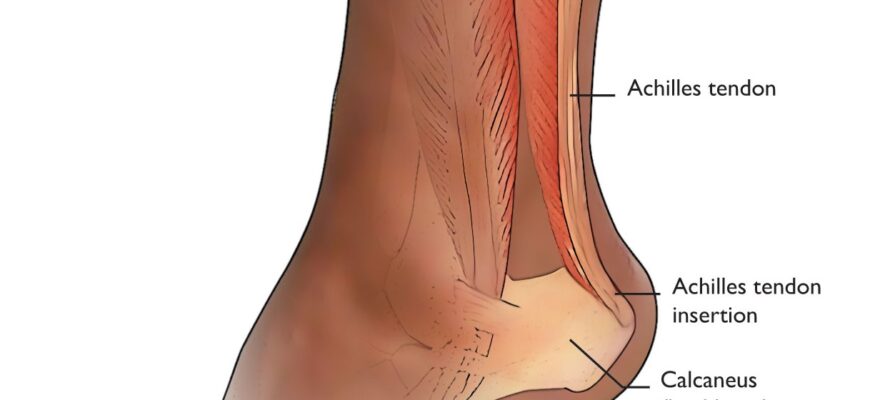
Back-of-the-heel pain is often caused by Achilles tendinitis or heel spurs. See a doctor if it persists.
Common causes
- Achilles tendinitis.
- Haglund’s deformity.
- Heel spur.
- Bursitis.
- Sever’s disease in children.
- Plantar fasciitis (underside).
Home care
Rest, ice, heel lifts and calf stretches.
Shoes
Avoid hard-backed shoes that rub.
See a doctor
If you can’t walk, hear a pop or the heel is swollen. A rupture of the Achilles needs urgent care.
Plantar fasciitis

The most common cause of heel pain. The plantar fascia is a thick band of tissue along the sole connecting the heel to the toes. Inflammation or microtears cause stabbing pain at the bottom of the heel, worst with the first steps in the morning. About 2 million Americans are treated each year.
Back of the heel
Pain behind the heel usually comes from:
- Achilles tendinitis.
- Haglund’s deformity (a bony bump) with bursitis.
- Sever’s disease in growing children, aged 8 to 14, due to growth plate inflammation.
- Retrocalcaneal bursitis.
Under the heel
- Heel spurs, bony growths that often accompany plantar fasciitis but are not always painful.
- Stress fracture of the heel bone (calcaneus).
- Fat pad atrophy.
- Nerve entrapment such as tarsal tunnel syndrome.

Risk factors
Excess weight, high impact exercise, tight calf muscles, flat feet or high arches, unsupportive shoes, standing for long hours and age 40 to 60.
Home care
- Rest and ice for 15 minutes several times a day.
- Stretch the calf and plantar fascia.
- Roll a frozen water bottle under the foot.
- Heel cups or orthotics.
- NSAIDs when safe.
- Night splints.
Shoes
Choose supportive shoes with cushioned soles and a firm arch. Replace worn running shoes after 300 to 500 miles. Avoid walking barefoot on hard surfaces.
See a doctor if
Pain lasts beyond a few weeks, is severe, follows an injury, comes with swelling, numbness or a limp. Options include physical therapy, injections, shockwave therapy and rarely surgery. Most cases improve in 6 to 12 months with conservative treatment.
Achilles and heel bone problems
Pain at the back of the heel often involves the Achilles tendon. Achilles tendinopathy causes pain and stiffness, especially in the morning and at the start of exercise, and it affects runners and people who suddenly increase activity. Retrocalcaneal bursitis, a swollen cushion behind the heel, and Haglund deformity, a bony bump rubbed by shoes, are other causes. In children aged 8 to 14, Sever’s disease, inflammation of the growth plate at the heel bone, is a leading cause of heel pain.

Treatment and warning signs
Rest, ice, heel lifts, calf stretching, eccentric heel drop exercises and supportive shoes with a cushioned heel help most. Avoid walking barefoot on hard floors, and increase activity gradually. See a doctor if there is a sudden pop with trouble pushing off, which could be an Achilles rupture, severe swelling, redness, fever or pain that lasts more than a few weeks. Imaging such as ultrasound or MRI may be used. People with diabetes should have any heel sore checked.
Based on data from the American Academy of Orthopaedic Surgeons and the American Podiatric Medical Association