Cats headbutt you to show affection and mark you with their scent.
Why
- Affection and trust.
- Scent marking: glands in the cheeks and forehead leave pheromones.
- Greeting.
- Seeking attention.
Name
Called bunting.
Meaning
A headbutt is a sign of acceptance.
Response
Gently bunt back or pet their cheeks.
Note
Pressing the head hard against a wall may indicate illness. See a vet.
Bunting
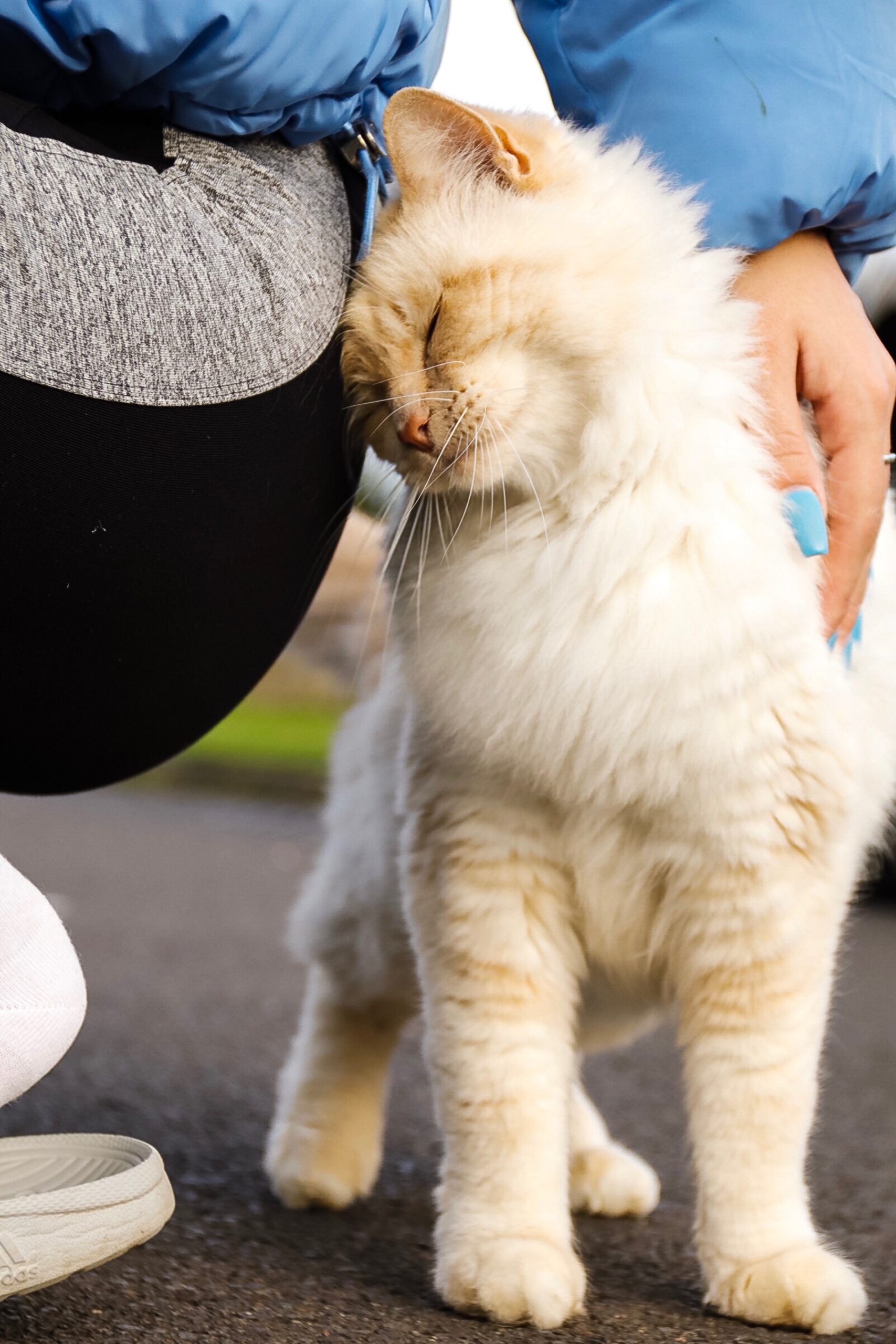
The behavior is known as bunting. Cats press their heads against you, objects or other cats. It’s a sign of affection and trust.
Scent marking
Cats have scent glands on the cheeks, forehead, chin and base of the ears. Bunting deposits pheromones that mark you as part of their group. They use facial pheromones that signal familiarity and safety.
Greeting and bonding
Cats headbutt at greetings, when they want attention, or during petting. Allorubbing between cats in a colony strengthens bonds.
Related behaviors
- Cheek rubbing against furniture.
- Slow blinking, which shows trust.
- Kneading with paws.
- Tail up, which signals a friendly approach.

Meaning of a hard headbutt
A firm bump can be a request for attention, food or to be let outside.
Medical caution
Pressing the head against a wall or corner for long periods, known as head pressing, is different. It can signal neurological disease, toxins or metabolic problems and needs urgent veterinary care.
How to respond
- Offer gentle petting at the cheeks and chin.
- Return a slow blink.
- Offer your hand for a sniff first.
- Respect when the cat is done.
Rubbing and marking
Provide scratching posts and cat trees with scent surfaces, and use feline facial pheromone diffusers if the cat is stressed.
Do cats do this with strangers
Cats usually headbutt people they trust. Friendly behavior toward visitors depends on the cat’s personality and socialization.
Scent glands and greeting
When a cat bumps its head against you, it is called bunting. Cats have scent glands on the cheeks, forehead, chin and base of the tail, and bunting deposits their scent, marking you as safe and part of their group. The facial pheromones used in comfort sprays imitate the chemicals cats leave when rubbing. Cats also headbutt to greet, ask for attention or food, and show trust, a behavior kittens learn in groups.
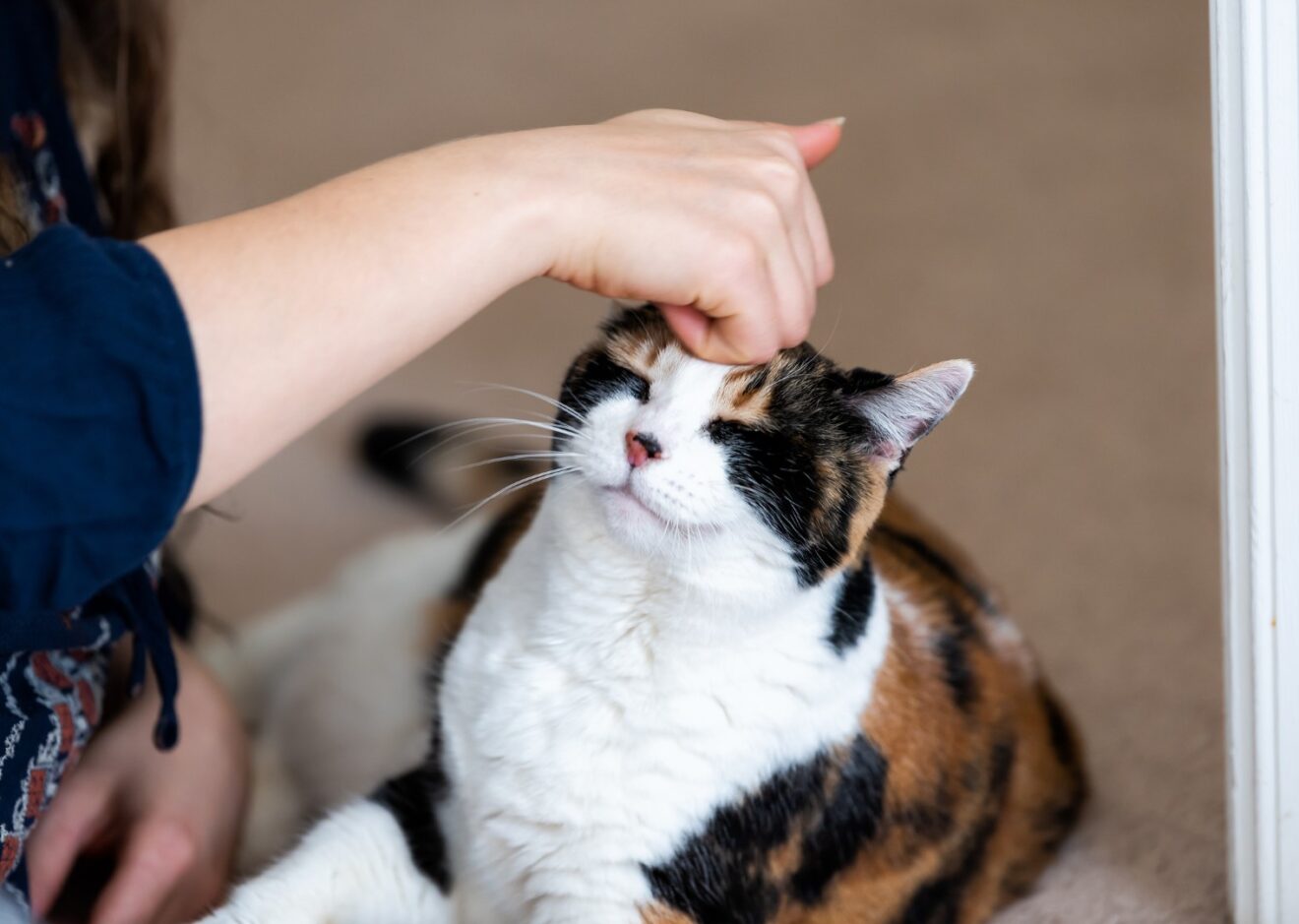
When a headbutt is a concern
A gentle bump is normal, but a cat that presses its head firmly against a wall or corner and stays there is head pressing, which can signal serious neurological problems, toxin exposure or metabolic disease and needs immediate veterinary attention. Respond to affectionate bunting by offering a gentle chin scratch or letting the cat rub on your hand. Do not push the cat away, as this can confuse it. Wash your hands before touching your face if the cat has been rubbing against something unclean.
Based on data from International Cat Care and the American Veterinary Medical Association