A filling that hurts months later may have a high bite, decay beneath it, or a cracked tooth. See your dentist.
Common causes
- High filling that changes your bite.
- Decay under the filling.
- Cracked tooth.
- Gum recession.
- Nerve irritation (pulpitis).
- Grinding teeth.
What to do
Avoid hard food and see your dentist.
Treatment
Adjust the bite, replace the filling, or do a root canal if the nerve is damaged.
See a dentist
Soon, if pain lasts over a few days.
Normal healing
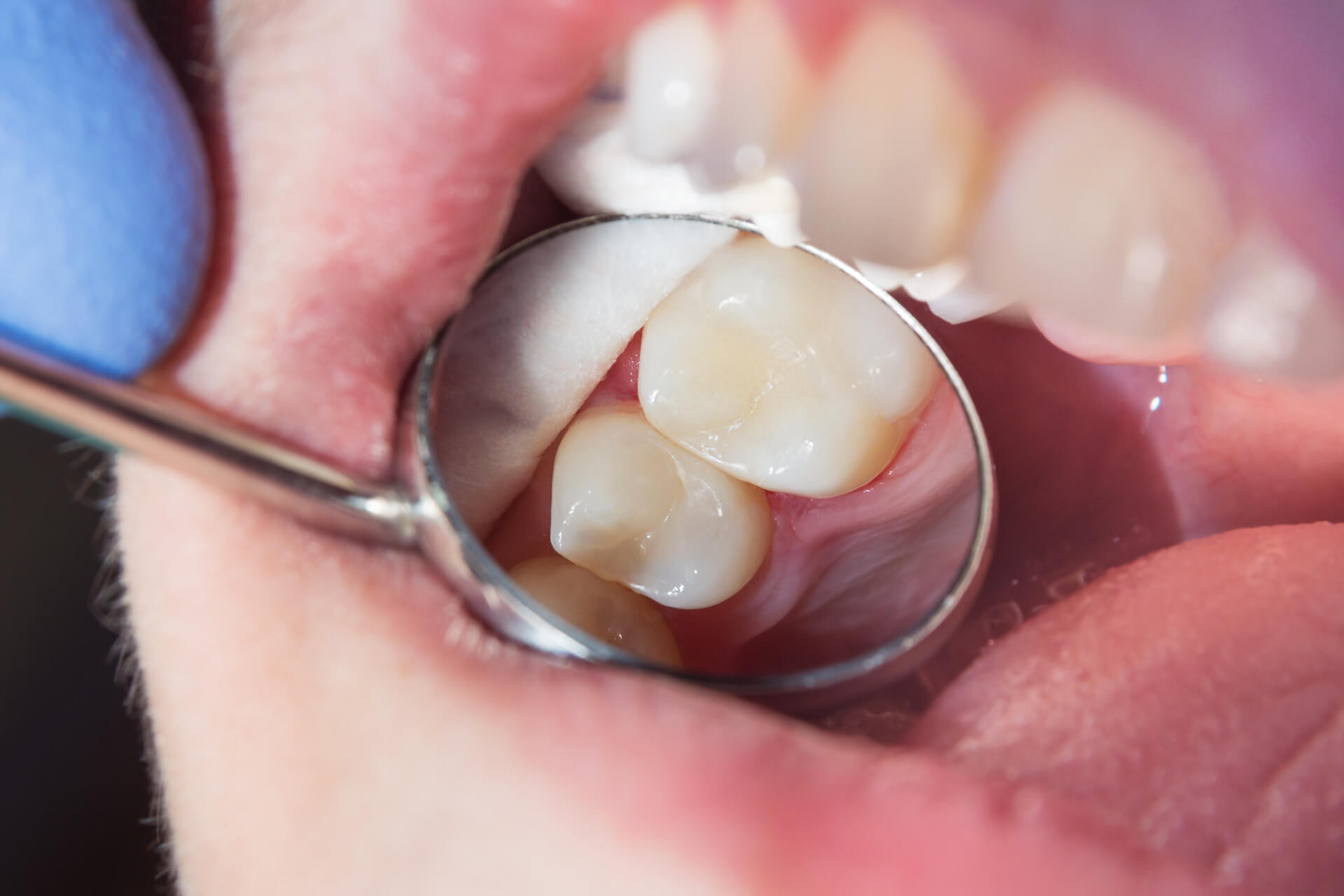
Mild sensitivity to temperature or biting for a few days to weeks after a filling is common. Pain months later is not typical and should be checked.
Common causes
- A high filling that interferes with the bite, causing pain when biting.
- Tooth decay beneath or around the filling (recurrent decay).
- A cracked tooth or filling.
- A filling that has come loose, or leaked.
- Pulp inflammation (pulpitis) or infection, with lingering pain to hot or cold or pain at night.
- Galvanic reaction from metal fillings of different metals touching.
- Gum recession, exposing sensitive root surfaces.
- Teeth grinding.
- Allergy to filling material (rare).
- Referred pain from sinus infection or neighboring teeth.
Types of pain
Sharp pain with cold that goes away quickly suggests sensitivity. Pain that lingers for minutes after hot or cold, throbbing pain or spontaneous pain suggests deeper nerve damage that may need a root canal.

What to do
- Avoid very hot, cold or sweet foods.
- Use desensitizing toothpaste with potassium nitrate.
- Take over the counter pain relievers as directed.
- Chew on the other side.
- Keep brushing and flossing gently.
Treatment
A dentist can adjust a high filling in minutes, replace a failing filling, treat decay, provide a crown or perform a root canal. The American Association of Endodontists says root canals have a success rate of over 90%.
See a dentist if
Pain lasts more than a week or two, wakes you at night, comes with swelling, fever, a pimple on the gum or bad taste. Facial swelling with fever or trouble swallowing is an emergency.
Bite and decay problems
A filling that hurts months after treatment may be too high and cause pain when biting, which a dentist can fix by adjusting it in minutes. Other causes are a cracked tooth, new decay under or beside the filling, a deep filling irritating the nerve (pulpitis), gum recession exposing roots or leaking edges. Composite fillings typically last 5 to 10 years and amalgam about 10 to 15 years, though results vary. Pain to hot or cold that lingers for more than 30 seconds suggests the nerve is inflamed.

Treatment and warning signs
Dentists use X-rays and bite tests. Treatments range from bite adjustment and desensitizing agents to replacing the filling, a crown or a root canal if the nerve is damaged. Avoid chewing on that side, brush gently and use toothpaste for sensitive teeth. See a dentist soon for pain that wakes you at night, spontaneous throbbing, gum swelling, a pimple on the gum or fever, which signals infection. Emergency care is needed for facial swelling that makes breathing or swallowing hard.
Based on data from the American Dental Association and the American Association of Endodontists