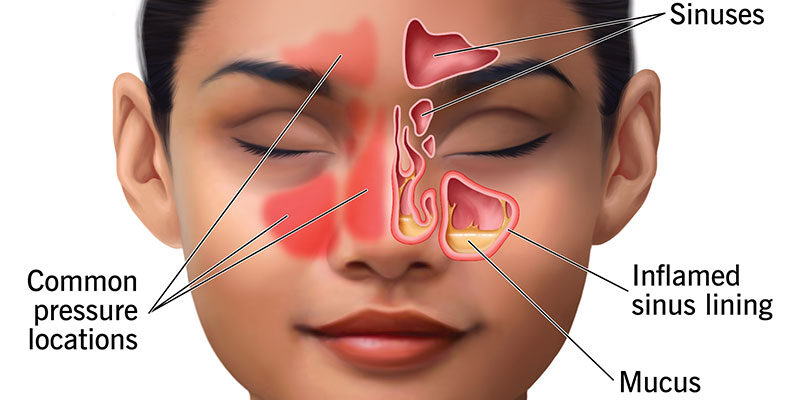
A blocked nose is caused by swollen blood vessels in the nasal lining from a cold, allergies, or sinus infection.
Causes
- Colds and flu.
- Allergies.
- Sinus infection.
- Deviated septum.
- Nasal polyps.
- Dry air.
- Rebound congestion from nasal spray.
Relief
Saline rinse, humidifier and steam. Limit decongestant spray to 3 days.
See a doctor
If it lasts more than 10 days, or comes with fever, facial pain or green discharge.
Nasal anatomy
The nose has a lining with blood vessels and mucus glands. When it swells, the passage narrows. Blockage may affect one or both sides and may be temporary or chronic.
Infections

Common cold, flu and COVID-19 cause swelling and mucus. Acute sinusitis follows a viral infection in about 0.5% to 2% of cases. Chronic sinusitis lasts more than 12 weeks.
Allergic and non allergic rhinitis
Allergic rhinitis affects around 20% to 30% of adults and up to 40% of children in the US, according to the AAAAI. Non allergic rhinitis is triggered by temperature changes, smells, smoke and hormones.
Structural reasons
- Deviated septum, found in up to 80% of people to some degree, though few have symptoms.
- Nasal polyps.
- Enlarged adenoids in children.
- Turbinate hypertrophy.
- Foreign objects in children.
Medication related

Overusing decongestant sprays for more than 3 days can cause rebound congestion. Some blood pressure drugs and erectile dysfunction medicines can cause stuffiness.
Relief steps
- Saline rinses using distilled or boiled and cooled water.
- Humidifier and steamy showers.
- Nasal steroid sprays such as fluticasone, which work over days to weeks.
- Antihistamines for allergies.
- Sleep with the head raised.
- Nasal strips for night breathing.
Hydration
Water thins mucus, and avoiding smoke helps.
See a doctor if
Blockage lasts longer than 10 to 14 days, comes with fever, facial pain, vision problems, bloody discharge, or affects only one side persistently. Surgery such as septoplasty or sinus surgery can help in selected cases.
Anatomy and medication causes
Inside the nose are bony ridges called turbinates covered by tissue rich in blood vessels, which swell when inflamed, causing the stuffy feeling. A deviated septum is very common, with some degree of deviation in a large share of people, but only some have symptoms. Allergic rhinitis, non allergic rhinitis from irritants or weather, polyps and enlarged adenoids in children can block airflow. Some medicines cause congestion, including certain blood pressure medicines, antidepressants, erectile dysfunction drugs and overuse of decongestant sprays, called rhinitis medicamentosa.

Relief
Use saline irrigation, a humidifier, nasal steroid sprays such as fluticasone for allergic or chronic congestion, and antihistamines. Limit decongestant sprays to three days. Drink fluids to thin mucus, and sleep with the head elevated. See a doctor if congestion lasts more than 10 days, is only on one side, comes with bloody discharge, facial pain or fever, or follows a head injury. Persistent obstruction from structural issues may need surgery such as septoplasty.
Based on data from the American Academy of Otolaryngology and the Mayo Clinic