
Random eye twitching is usually caused by stress, tiredness, or caffeine and goes away on its own. See a doctor if it lasts weeks.
Common causes
- Stress.
- Fatigue.
- Caffeine.
- Dry eyes or eye strain.
- Alcohol.
- Nutrition lacking magnesium.
What it is
Myokymia is a harmless eyelid muscle spasm. It usually lasts a few days.
What helps
Rest, less caffeine and warm compresses. Use artificial tears.
See a doctor
If it lasts over 3 weeks, closes your eye, or spreads to the face.
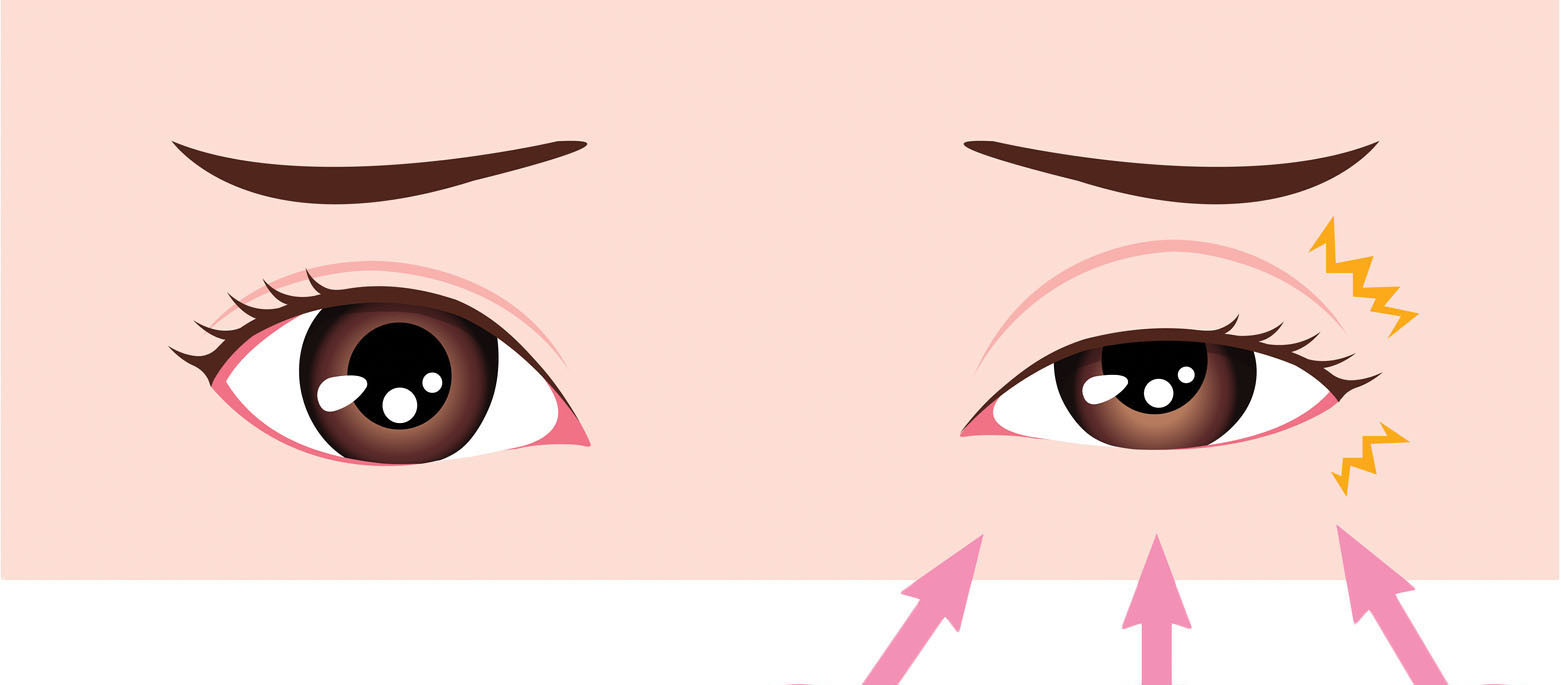
Eyelid myokymia
Most random twitching is eyelid myokymia, a harmless, involuntary contraction of the orbicularis oculi muscle. It typically affects one eyelid, comes and goes, and usually lasts minutes to days. Rarely, it may last weeks.
Common triggers
- Stress and anxiety.
- Fatigue and lack of sleep.
- Caffeine and alcohol.
- Eye strain from screens or uncorrected vision.
- Dry eyes.
- Allergies and use of antihistamines.
- Nutritional deficiencies, such as magnesium, though evidence is limited.
- Smoking.
- Certain medicines.
What helps
- Get 7 to 9 hours of sleep.
- Cut caffeine.
- Take screen breaks using the 20-20-20 rule: every 20 minutes, look at something 20 feet away for 20 seconds.
- Use lubricating eye drops.
- Apply a warm compress.
- Manage stress through exercise and relaxation.

Blepharospasm
A rare neurological condition with forceful, involuntary blinking and eyelid closure in both eyes, which can interfere with vision. It affects about 5 in 100,000 people. Botulinum toxin injections are the main treatment.
Hemifacial spasm
Twitching that involves one side of the face, including the eyelid, cheek and mouth. It is caused by irritation of the facial nerve, often by a blood vessel.
See a doctor if
Twitching lasts more than a few weeks, closes the eye completely, involves other facial muscles, comes with eyelid drooping, redness, swelling or discharge, or happens after a head injury. Seek emergency care for twitching with weakness, facial droop or trouble speaking.
Eyelid myokymia
A twitching eyelid, called eyelid myokymia, is a small involuntary muscle spasm that usually affects the lower or upper lid of one eye and is common. Triggers include stress, fatigue, caffeine, alcohol, eye strain from screens, dry eyes and allergies. It usually resolves in a few days to a few weeks. Reducing caffeine, getting 7 to 9 hours of sleep, using lubricating eye drops and taking screen breaks following the 20-20-20 rule (every 20 minutes look 20 feet away for 20 seconds) help.

When a twitch needs a doctor
Benign essential blepharospasm is a neurological condition that causes forceful blinking and eyelid closure, affecting an estimated 50,000 Americans, and it is treated with botulinum toxin injections. Hemifacial spasm involves one side of the face. See a doctor if the twitch lasts more than a few weeks, closes the eye completely, spreads to other facial muscles, comes with drooping, swelling, red eye or discharge, or follows a head injury.
Based on data from the American Academy of Ophthalmology and the NINDS





