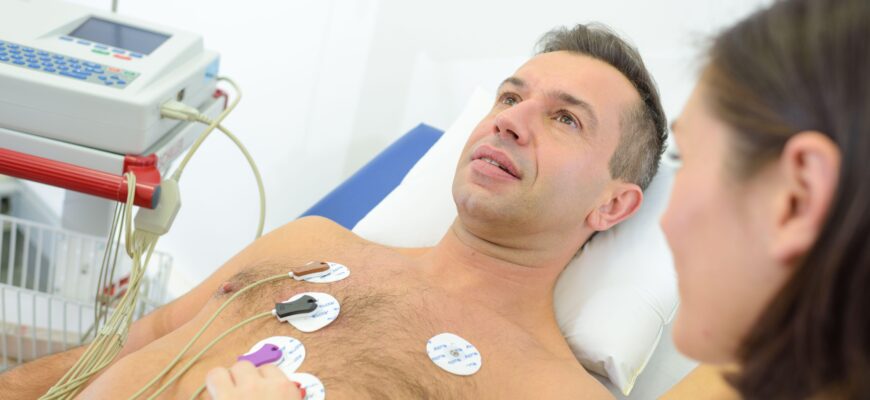
An ECG takes about 5 to 10 minutes, and the actual recording takes only a few seconds.
Time
An electrocardiogram (ECG or EKG) takes about 5 to 10 minutes, including placing electrodes. The actual recording takes about 10 seconds.
Procedure
- 10 sticky electrodes are placed on the chest, arms and legs.
- Lie still and breathe normally.
- The machine records electrical activity as a graph.
Painless
No electricity enters your body.
Uses
Detect arrhythmias, heart attack, enlarged heart and check pacemakers.
Variations
- Stress test ECG.
- Holter monitor (24 to 48 hours).
- Event monitors (up to 30 days).

Results
A doctor interprets it right away.
Preparation
Avoid body lotion and wear loose clothing.
How long an ECG takes
A standard resting 12-lead electrocardiogram (ECG or EKG) takes about 5 to 10 minutes from setup to finish. The actual recording of the heart’s electrical activity lasts only about 10 seconds. Most of the time is spent attaching the electrodes and positioning the patient.
The procedure

- You lie on your back on an exam table. You may need to remove clothing from the chest, and shave small patches of hair for good contact.
- Ten electrodes (sticky patches) are placed on the chest, arms and legs, giving 12 views of the heart.
- Leads connect the electrodes to the ECG machine.
- You stay still and breathe normally, without talking, while the machine records.
- A tracing prints or appears on a screen.
Painless
An ECG sends no electricity into the body. It only records signals from the heart. Removing the patches may pull slightly on skin or hair.
What it shows
An ECG can detect irregular heart rhythms such as atrial fibrillation, signs of a heart attack, an enlarged heart, abnormal conduction like bundle branch block, and effects of electrolyte imbalances and some medicines. It cannot always catch problems that come and go.
Variations
- Stress test (exercise ECG): 30 to 60 minutes, with ECG while you walk on a treadmill.
- Holter monitor: a portable recorder worn for 24 to 48 hours.
- Event monitor: worn for up to 30 days and activated when symptoms occur.
- Implantable loop recorder: tracks rhythm for up to 3 years.
- Smartwatch ECG: gives a single-lead tracing that can detect atrial fibrillation with a high accuracy rate in studies, but it does not replace a medical test.
Results
Often the doctor can review the tracing right away. A cardiologist may read it and give results the same day or in a few days. Normal heart rate is 60 to 100 beats a minute at rest. An abnormal ECG may lead to further tests such as an echocardiogram or stress test.
Preparation
No fasting is needed. Avoid oily creams or lotions on the chest. Wear a two-piece outfit for easy access. Tell the technician about medicines and any heart conditions. Stay relaxed, since movement can create interference on the tracing.

Reading the tracing
An ECG records the heart’s electrical activity using 10 electrodes to create 12 views of the heart. A resting ECG takes about 5 to 10 minutes including setup, and the recording itself takes about 10 seconds. Doctors look at heart rate, rhythm, and signs of heart attack (ST elevation), conduction block, enlargement or electrolyte problems. Event monitors and Holter monitors record for 24 hours to 30 days to catch intermittent arrhythmias. The ECG was invented by Willem Einthoven, who received the Nobel Prize in 1924. Remove oily lotions and avoid metal jewelry that interferes. Results are usually reviewed by a doctor the same day.
Based on data from the American Heart Association




