Brazil speaks Portuguese because it was colonized by Portugal, which claimed the land in 1500.
Reason
Portuguese navigator Pedro Álvares Cabral claimed Brazil for Portugal in 1500. Portugal ruled until 1822.
Today
Brazil is the largest Portuguese speaking country, with over 200 million speakers. Every other South American country but Suriname and Guyana speaks Spanish.
Treaty of Tordesillas
In 1494, Spain and Portugal agreed on a line that put eastern South America in Portugal’s zone.
Indigenous languages
Over 200 are still spoken.
Colonial history
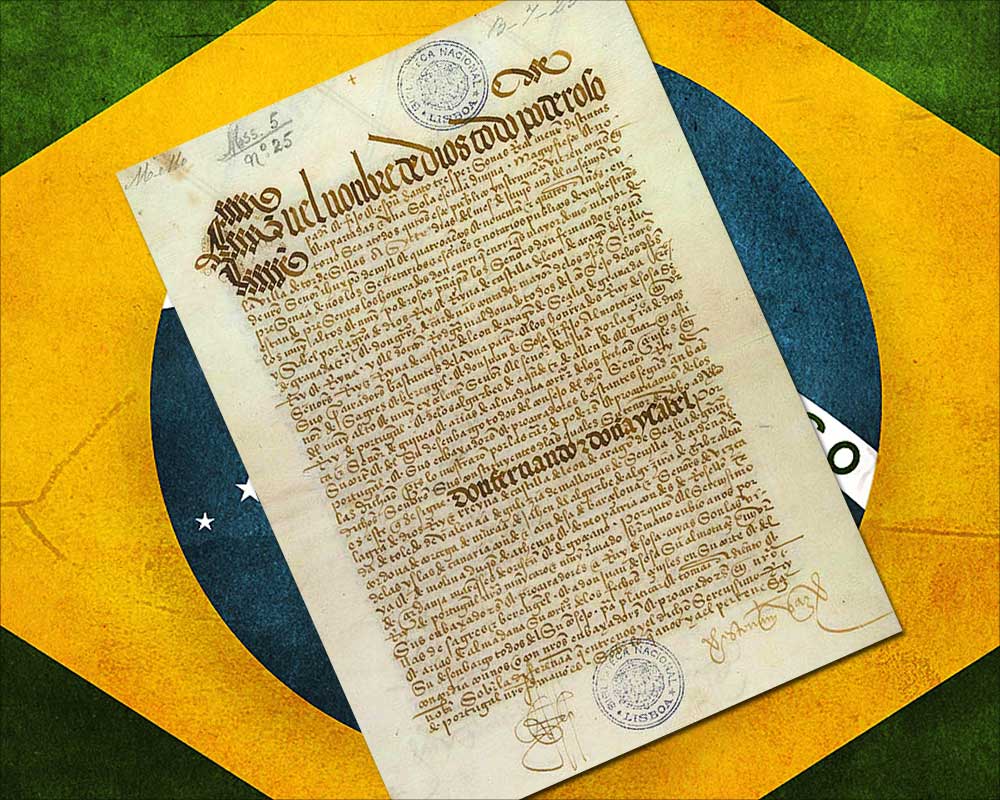
In 1494, the Treaty of Tordesillas, mediated by the Pope, divided newly discovered lands outside Europe between Spain and Portugal along a line 370 leagues west of the Cape Verde Islands. The eastern part, including the bulge of South America that is now Brazil, went to Portugal.
Arrival
Pedro Alvares Cabral landed in Brazil in 1500 and claimed it for Portugal. Colonization began with sugar plantations and the Portuguese language became the language of administration, church and trade.
Royal court
In 1808, when Napoleon invaded Portugal, the Portuguese royal court moved to Rio de Janeiro. In 1822, Brazil declared independence under Prince Pedro, keeping Portuguese as the national language.
Language policy
In the 1750s, the Marquis of Pombal banned the Nheengatu “general language” (based on Tupi) and imposed Portuguese in Brazil.
Today

Portuguese is spoken by about 215 million people in Brazil, which has the largest Portuguese speaking population in the world. Portuguese is the official language, and the country is surrounded by Spanish speaking nations.
Other languages
Brazil has over 200 indigenous languages, about 180 of which are still spoken, along with German, Italian, Japanese and other immigrant languages. Brazilian Sign Language (Libras) is also recognized.
Dialects
Brazilian Portuguese differs from European Portuguese in pronunciation, vocabulary and some grammar. A 1990 orthographic agreement aimed to unify spelling across Portuguese speaking countries.
Population
Brazil has a population of over 210 million people, which makes up about half of South America’s population.
Community of countries
Portuguese is an official language in 9 countries, including Portugal, Angola and Mozambique.
Colonial and royal history
Under the 1494 Treaty of Tordesillas, Spain and Portugal divided newly found lands, and the part that became Brazil fell to Portugal. Pedro Alvares Cabral reached the coast in April 1500. Portuguese settlers established sugar plantations, and the colony received more Portuguese speakers over three centuries. In 1758, the Marquis of Pombal required Portuguese to be used in the colony and discouraged indigenous lingua franca languages. In 1808, the Portuguese royal court fled Napoleon and moved to Rio de Janeiro, making the city the seat of the empire, and Brazil declared independence in 1822.
Language today
Brazil has about 215 million people and is by far the largest Portuguese speaking country, with about three quarters of all Portuguese speakers in the world. Brazilian Portuguese differs from European Portuguese in pronunciation, vocabulary and some grammar. Indigenous peoples still speak around 270 languages, and communities of immigrants speak German, Italian, Japanese and others. Portuguese is the official language, and Brazil is a member of the Community of Portuguese Language Countries, which has nine members.
Based on data from the Brazilian Institute of Geography and Statistics and the Encyclopaedia Britannica