White spots on teeth can be caused by early cavities, too much fluoride (fluorosis), enamel defects, or braces. See a dentist.
Causes
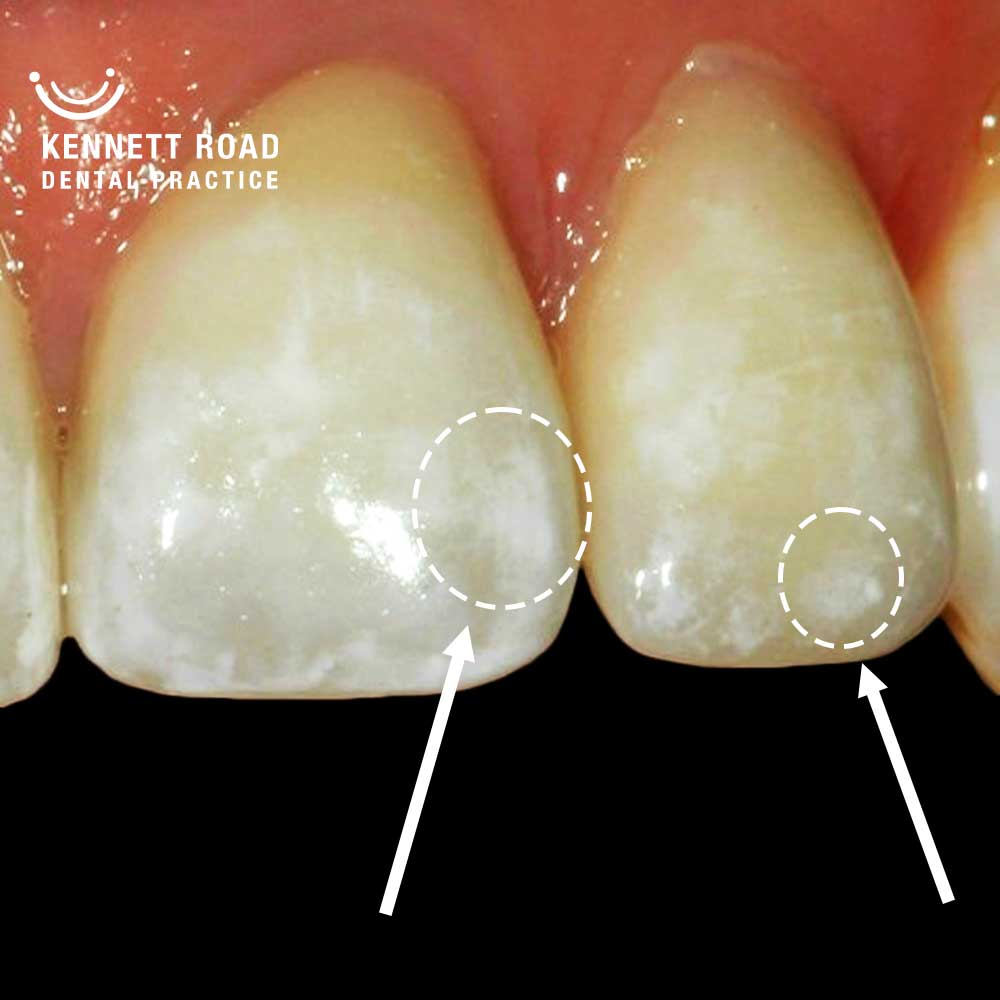
- Early cavities (demineralization), appearing as chalky white spots.
- Fluorosis: too much fluoride during childhood tooth development, giving mild white flecks. In the US, about 25 percent of people 6 to 49 have it (CDC).
- Enamel hypoplasia from illness, fever or nutrition.
- Braces: plaque left around brackets.
- Trauma to baby teeth.
Treatment
Fluoride, remineralizing toothpaste, resin infiltration (Icon), microabrasion, bleaching or veneers.
Prevention
Brush with fluoride toothpaste, floss and limit sugar.
See a dentist
To check whether spots are active decay.
Children
Use a rice-grain amount of toothpaste under 3.
Causes
- Enamel hypomineralization: areas of enamel with less mineral, giving white or yellow spots. It may result from illness or high fever during tooth development in childhood.
- Early tooth decay (white spot lesions): acid from plaque bacteria dissolves minerals just below the surface, leaving chalky white areas. They are often seen around braces.
- Fluorosis: too much fluoride in childhood during enamel formation causes faint white streaks or spots. About 1 in 5 Americans aged 6 to 49 have mild dental fluorosis, according to the CDC.
- Braces: plaque trapped around brackets can cause white marks after removal.
- Dry mouth, a diet high in sugar or acid, mouth breathing and acid reflux.
- Molar-incisor hypomineralization, affecting about 13% of children worldwide.
- Trauma to baby teeth affecting the developing adult tooth.
- Medications such as tetracycline antibiotics in childhood cause discoloration.
Treatment

- Remineralization: fluoride toothpaste, fluoride varnish and prescription high-fluoride toothpaste (5,000 ppm) can reverse early decay. Products with calcium phosphate (MI Paste) help.
- Microabrasion: removes a thin layer of enamel to improve the look of superficial spots.
- Resin infiltration (Icon): fills the porous spot with resin to match natural color.
- Teeth whitening: may even out the color, but can make the spots more noticeable at first.
- Bonding or veneers for severe cases.
Prevention
- Brush twice a day with fluoride toothpaste and floss daily.
- Limit sugary and acidic foods and drinks, such as soda and juice.
- Rinse after eating acidic foods, and wait 30 minutes to brush.
- Have regular dental checkups and cleanings.
- Use a fluoride mouth rinse if recommended.
- Brush carefully around braces.
See a dentist
See a dentist if white spots appear, grow, feel rough or sensitive. Early treatment can stop and reverse decay before a cavity forms.
Children
White spots on a child’s permanent teeth are often hypomineralization or mild fluorosis. Use a pea-sized amount of fluoride toothpaste for ages 3 to 6, and a smear for under 3. Avoid swallowing toothpaste.

Enamel science and numbers
White spots on teeth often mean enamel has lost minerals. Early cavities appear as chalky white spots near the gumline, and they can be reversed with fluoride before holes form. Fluorosis from too much fluoride during childhood tooth development causes faint white streaks and affects about 1 in 4 US adolescents in its mild form, according to CDC data. Enamel hypoplasia, which is thin or missing enamel, can be caused by illness, fever, malnutrition or medicines during development. White spots after braces occur in up to 50 percent of patients who do not clean well. Treatments include fluoride varnish, remineralizing pastes with calcium phosphate, microabrasion, resin infiltration (Icon) and veneers. Brush twice daily with a toothpaste of 1,000 to 1,500 ppm fluoride and limit sugary and acidic drinks. Tooth whitening can make spots more visible temporarily.
Based on data from the CDC and the American Dental Association