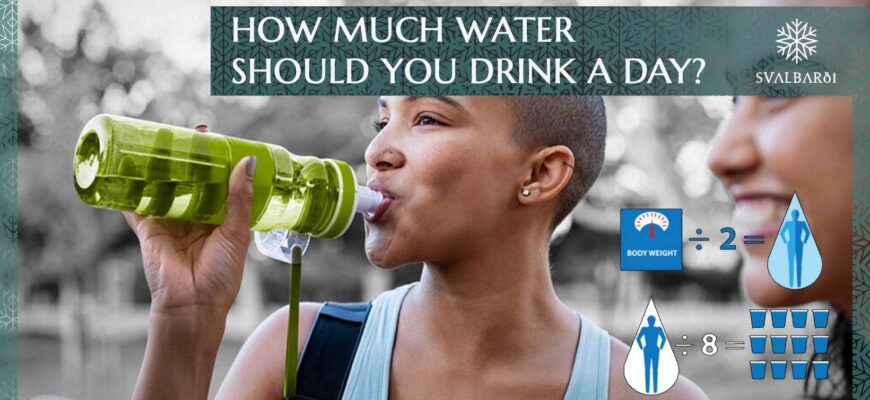
Most adults need about 2 to 3 liters of fluids daily, though needs vary with body size, activity, and climate.
Guidelines
The National Academies of Sciences recommends about 3.7 liters (125 oz) of total water a day for men and 2.7 liters (91 oz) for women, including all fluids and food. About 20 percent comes from food, so drinks should total around 3 liters for men and 2.2 liters for women.
Needs increase with
Heat, exercise, pregnancy, breastfeeding and illness.
Signs of good hydration
Pale yellow urine, rare thirst.
Too much
Overhydration (hyponatremia) can be dangerous in endurance athletes.
Other fluids
Tea, coffee, milk and juice count. Soup and fruit contribute.
Tip

Drink when thirsty and with meals.
Conditions
Kidney, heart or liver problems may limit fluids, so follow your doctor.
Guidelines
There is no single rule for everyone. The National Academies of Sciences set adequate total water intake at about 3.7 liters a day for men and 2.7 liters for women, and this includes water from food and other drinks. Food provides roughly 20% of intake. That means men need about 3 liters and women about 2.2 liters from beverages. The popular advice of eight 8-ounce glasses (1.9 liters) is a rough target, not a scientific requirement.
Needs increase with
- Hot weather and high altitude.
- Exercise: add about 400 to 800 milliliters per hour of activity.
- Pregnancy (about 3 liters in total fluids) and breastfeeding (about 3.8 liters).
- Fever, vomiting and diarrhea.
- High protein or high fiber diets.
- Some medicines, like diuretics.

Signs of good hydration
Pale yellow urine, urinating every 3 to 4 hours, rarely feeling thirsty, and moist lips. Dark urine, dry mouth, headache, dizziness, constipation and fatigue suggest dehydration. Thirst is a good guide for most healthy adults.
Too much water
Drinking too much too fast can cause hyponatremia, when blood sodium falls too low. Symptoms include nausea, headache, confusion and in severe cases seizures. It is a risk for endurance athletes and people with certain health problems. Healthy kidneys can excrete about 0.8 to 1 liter per hour, so drinking more than that for hours can be a risk.
Other fluids
Tea, coffee, milk, juice, soup, and water-rich foods like cucumber, watermelon and oranges all count. Moderate caffeine intake does not cause meaningful dehydration. Sugary drinks and alcohol add calories or have other health effects.
Benefits of staying hydrated
Water helps regulate body temperature, lubricate joints, carry nutrients and remove waste. Studies show even mild dehydration of 1% to 2% of body weight can reduce concentration and mood.
Tip
Carry a bottle, drink a glass with each meal, and add flavor with lemon or berries. A rule of thumb for athletes is to weigh before and after exercise and drink about 1.5 times the weight lost.
Conditions
People with heart failure, kidney disease or liver disease may need to limit fluids and should follow their doctor’s advice.

Fluid intake figures
The National Academies set adequate total water intake at about 3.7 liters per day for men and 2.7 liters per day for women, which includes fluids from food that supply about 20 percent. That means roughly 3.0 liters (13 cups) of beverages for men and 2.2 liters (9 cups) for women. Needs rise in hot weather, in high altitude, during exercise (about 400 to 800 ml per hour), pregnancy (plus 300 ml) and breastfeeding (plus 700 ml). Thirst is a reliable guide for most healthy adults. Urine should be pale yellow. Drinking more than about 1 liter per hour can overload the kidneys and cause hyponatremia.
Based on data from the National Academies of Sciences and the CDC