
Cats groom your hair as a sign of affection and social bonding.
Why
- Affection and bonding (allogrooming).
- Treating you as part of their social group.
- Taste of shampoo, oil or salt.
- Comfort.
Is it okay
Mostly yes. Avoid applying hair products that are toxic to cats, such as essential oils.
Stop it
Redirect with a toy or a treat.
See a vet
If licking is compulsive.
Allogrooming
Mutual grooming between cats is a sign of affection and social bonding. Cats that groom each other tend to share a close relationship. A cat that grooms your hair may be treating you as part of its family.
Mothering instinct

Mother cats groom their kittens. A cat may transfer this instinct to people, particularly if it was separated early from the mother or raised by hand.
Scent mixing
Grooming mixes your scent with the cat’s, creating a shared scent that helps the cat feel secure.
Salt, taste and products
Hair may taste salty, or like shampoo, conditioner or oils. Cats are attracted to certain smells such as coconut or some oils.
Stress relief and comfort
Grooming releases endorphins and helps cats self soothe. Some cats lick hair to calm down.
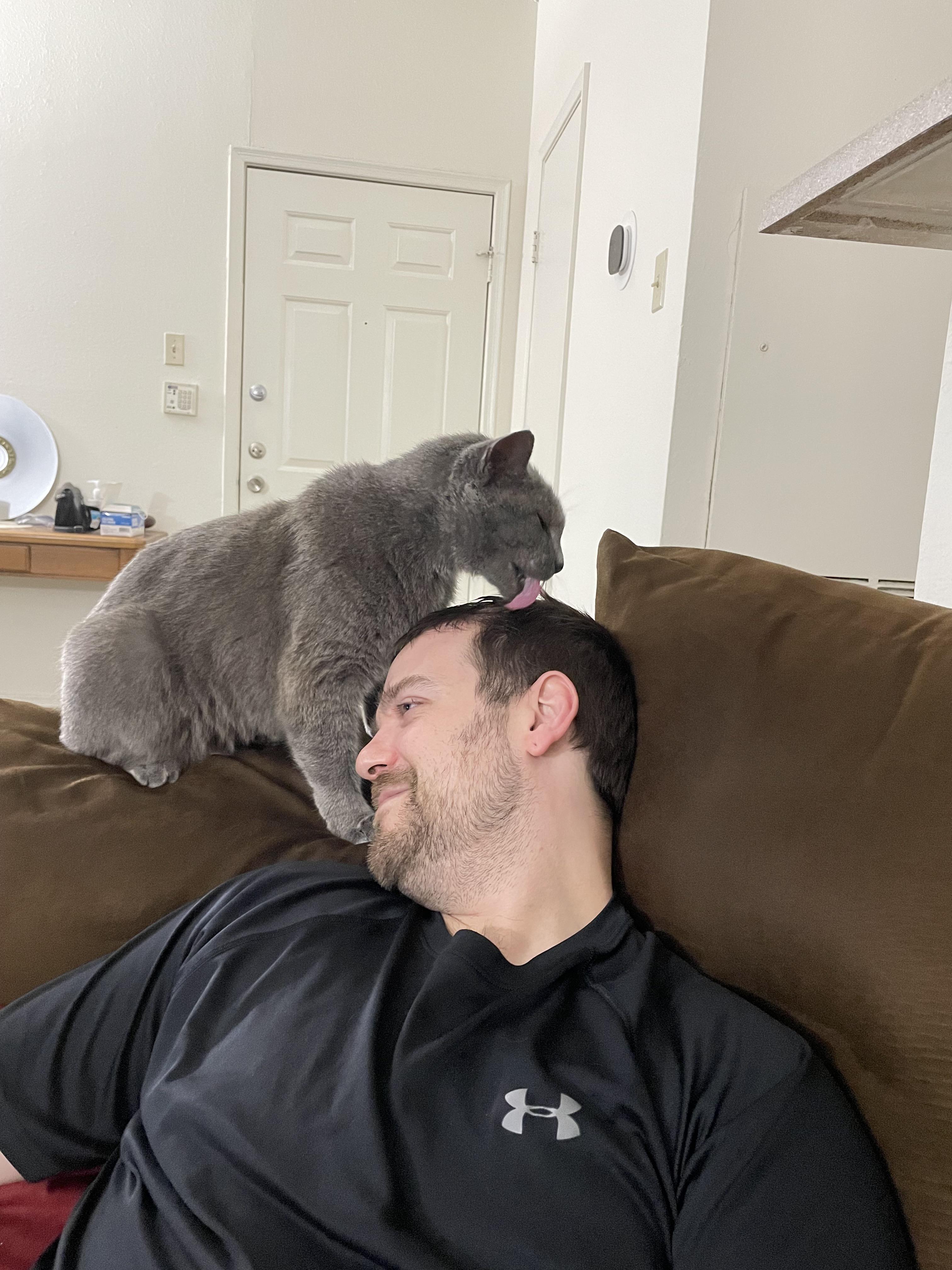
Is it okay
It’s usually harmless. However, ingestion of hair products, essential oils or medicated lotions can harm cats. Watch for drooling, vomiting or lethargy.
Rough tongue
Cat tongues are covered in tiny backward facing barbs made of keratin (papillae), which feel scratchy and may pull hair.
Stopping it
- Gently redirect to a toy or a brush.
- Provide interactive play and scratching posts.
- Reward calm behavior.
- Do not punish.
Excess grooming
Over grooming of themselves, or compulsive licking of people, can result from anxiety, boredom, pain or skin problems.
See a vet if
The cat licks obsessively, shows hair loss, skin lesions or changes in appetite or behavior. Hairballs that cause repeated vomiting or loss of appetite need a vet visit.
Maternal and social grooming
Mother cats lick their kittens to clean them and stimulate elimination, and the behavior stays in adulthood as allogrooming, a way cats show affection to others in their group. When a cat licks your hair, it may be treating you as a family member and mixing scents to build a shared group smell. Hair can also hold salt from sweat and tastes or scents from shampoo, which cats find interesting. Some cats lick to calm themselves in new or stressful situations.

Concerns and limits
A cat’s tongue has backward facing keratin barbs, papillae, that feel scratchy and can pull hair. Swallowed hair can form hairballs. Avoid letting cats lick products with chemicals, as some hair products and medicated shampoos are toxic to cats. Redirect excessive licking with petting, play or a brush. Sudden over grooming of themselves or you, together with hair loss, can reflect anxiety, allergies or skin disease, so see a vet if it becomes compulsive.
Based on data from International Cat Care and the ASPCA




