Chest aches can come from a strained muscle, heartburn, or anxiety, but call emergency services if there is pressure, shortness of breath, or pain spreading to the arm or jaw.
Common causes
- Muscle strain from exercise or coughing.
- Costochondritis, inflammation of cartilage around the ribs.
- Heartburn (acid reflux).
- Anxiety and panic attacks.
- Lung problems such as pneumonia or pleurisy.
- Shingles.
- Heart conditions: angina, heart attack.
Call 911 if
There is chest pressure or tightness, pain spreading to the arm, jaw or back, shortness of breath, sweating, nausea or fainting.
Women
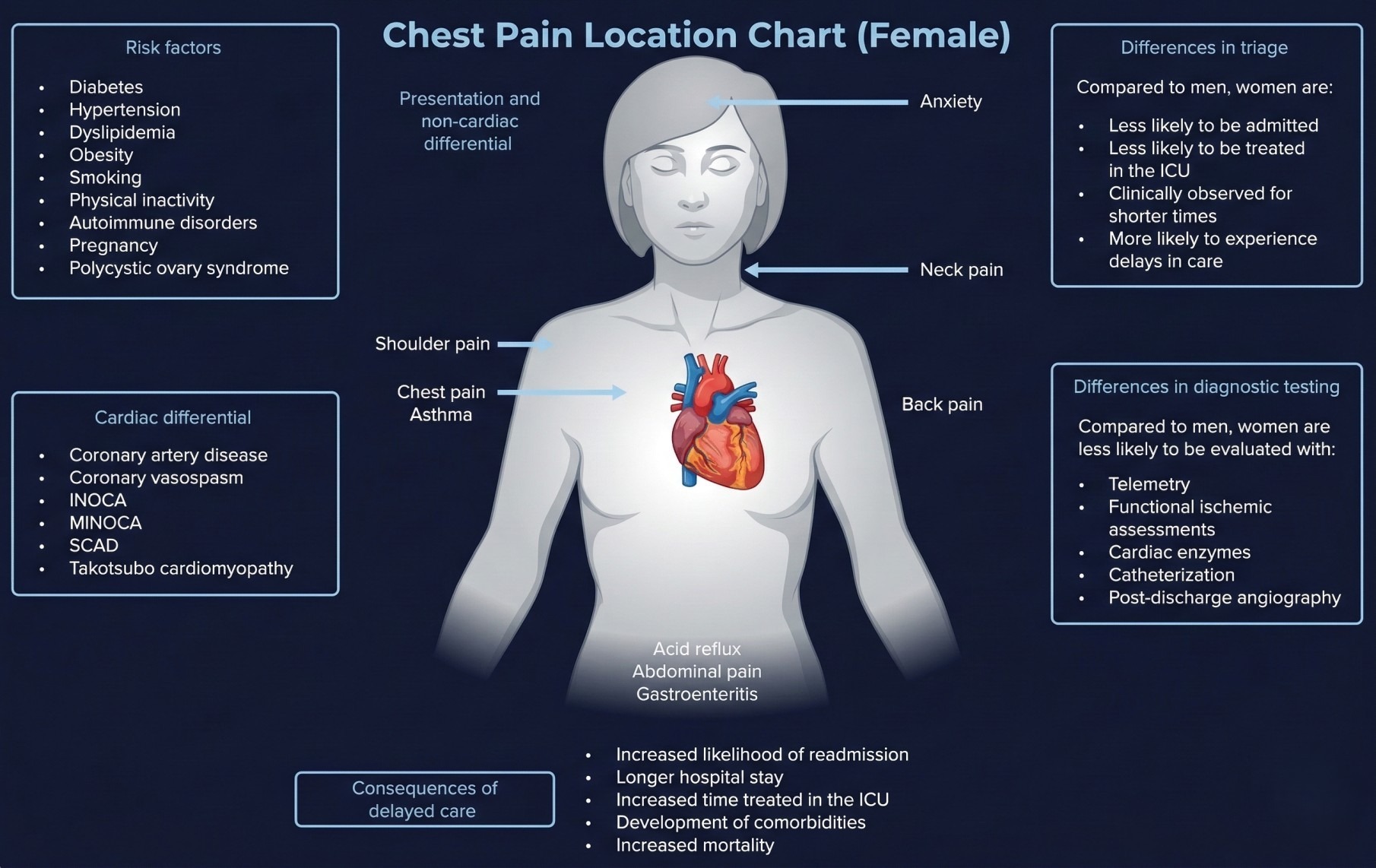
Heart attack symptoms may be subtler, such as fatigue and nausea.
Home care
Rest and pain relievers for mild muscle pain.
Don’t ignore
New chest pain should be evaluated.
What “chest ache” can mean
A chest ache can come from the heart, lungs, esophagus, muscles, ribs, nerves or the mind. Many cases are not dangerous, but heart and lung problems must be ruled out first, since symptoms overlap. In the US, chest pain leads to about 7 million emergency room visits a year, and only a minority turn out to be a heart attack.
Common causes of chest ache
- Muscle strain from exercise, coughing or lifting.
- Costochondritis, inflammation of cartilage joining ribs to the breastbone, which causes pain when pressing the area.
- Acid reflux and heartburn, with burning behind the breastbone.
- Anxiety and panic attacks.
- Respiratory infection, bronchitis or pneumonia.
- Pleurisy, inflammation of the lung lining.
- Shingles, a painful rash along one side of the chest.
Heart related pain
Angina, which is chest pressure from reduced blood flow, usually appears during exertion and eases within minutes of rest. A heart attack causes similar pain that lasts longer than 15 to 20 minutes, which may spread to the arm, neck or jaw, with sweating, nausea or shortness of breath. Other serious causes include aortic dissection (tearing pain in the chest or back), pericarditis and pulmonary embolism.
Women and other groups
Women are more likely than men to have a heart attack without classic chest pain. They may feel unusual fatigue, back or jaw pain, nausea, shortness of breath or indigestion. Older adults and people with diabetes can also have mild or atypical symptoms.
Tests
- ECG, which shows heart rhythm and signs of injury, done within 10 minutes of arrival.
- Blood troponin, repeated over a few hours.
- Chest X-ray, CT scan, stress test or echocardiogram, depending on the findings.
Call 911 if
The ache is crushing, spreads to the arm, jaw or back, comes with shortness of breath, cold sweat, dizziness or fainting, or lasts more than a few minutes. Don’t wait to see if it passes, and do not drive yourself.
Home care for minor pain
For pain clearly from muscles, use rest, a warm pack and an anti-inflammatory medicine such as ibuprofen if you can take it. Reduce reflux with smaller meals, avoiding late eating and elevating the head of the bed. If pain returns without a clear cause, see a doctor.
Chest wall and digestive causes
Many chest aches are not from the heart. Costochondritis causes sharp pain that rises when you press on the rib cartilage and is common in people under 40. Acid reflux causes burning behind the breastbone, especially after meals or when lying down, and affects about 20 percent of US adults. Muscle strain from coughing or lifting causes pain with movement. Shingles can cause burning chest pain before a rash. Pain with pressure, sweating, nausea or spreading to the arm or jaw needs emergency evaluation.
Based on data from the American Heart Association and the Cleveland Clinic