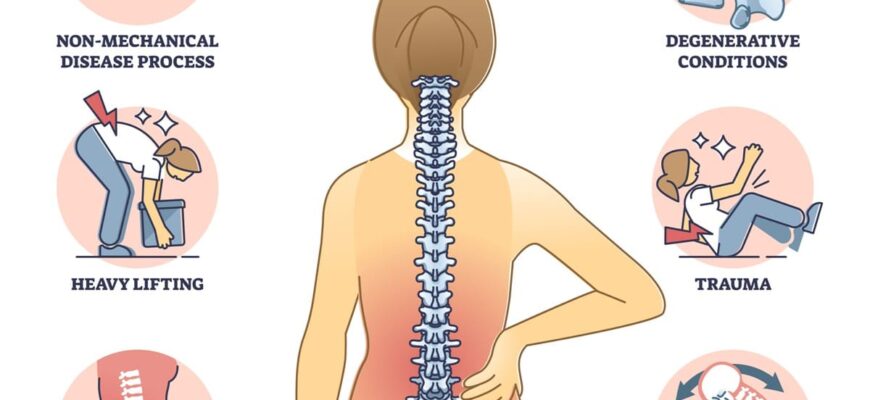
Lower back pain when running is often caused by weak core muscles, poor form, or tight hips. Strengthen your core and see a doctor if it persists.
Common causes
- Weak core and glutes.
- Tight hip flexors and hamstrings.
- Poor form or overstriding.
- Worn shoes.
- Muscle strain.
- Disc or joint problems.
What helps
- Core exercises like planks.
- Stretching hips.
- Shorter strides.
- New running shoes every 300 to 500 miles.
See a doctor
If you feel numbness, tingling or pain that persists.
Mechanical load

Each running stride puts forces of 2 to 3 times body weight through the body. If core and hip muscles are weak, the lower back takes extra load. Up to 80% of people have back pain at some point in their lives.
Common causes in runners
- Muscle strain or fatigue in the lower back, glutes or hip flexors.
- Poor running form: overstriding, leaning forward, or an arched back.
- Weak core and glute muscles.
- Tight hip flexors or hamstrings.
- Worn shoes that lose cushioning, typically after 300 to 500 miles.
- Sudden increases in mileage or intensity (more than 10% a week).
- Running on hard or uneven surfaces.
- Leg length differences.
Spinal causes
Disc herniation, sciatica, spinal stenosis, stress fractures of the vertebrae (spondylolysis) in young athletes and sacroiliac joint dysfunction.

What helps
- Rest and then ease back with lower mileage.
- Heat or ice.
- NSAIDs short term.
- Strengthen the core (planks, bird dogs), glutes (bridges) and hips.
- Stretch hip flexors, hamstrings and piriformis.
- Run with a slight forward lean from the ankles, and shorter, quicker steps (about 170 to 180 steps per minute).
- Replace shoes regularly.
- Cross training with swimming or cycling.
See a doctor if
Pain is severe, lasts more than 1 to 2 weeks, radiates down the leg, comes with numbness, weakness, fever or loss of bladder or bowel control, or follows a fall. A physical therapist or sports medicine doctor can analyze your gait and plan rehab.
Load, form and training errors
When running, each footstrike sends a force of about 2.5 to 3 times body weight through the legs and spine. Weak core and glute muscles, tight hip flexors and hamstrings, overstriding, leaning too far forward and fatigued form can strain the lower back. Sudden increases in mileage, hill running, old shoes and hard surfaces add load. Spinal causes include muscle strain, facet joint irritation, disc problems and spondylolysis, a stress fracture in the spine seen in young athletes.

Prevention and when to seek care
Strengthen the core, glutes and hips with planks, bridges and squats twice a week, stretch hips and hamstrings, shorten stride and increase mileage by no more than about 10 percent per week. Replace running shoes every 300 to 500 miles. Ice or heat and NSAIDs can ease soreness. See a doctor if pain lasts over 2 weeks, is sharp or radiates down the leg, or comes with numbness, weakness, fever or trouble controlling bladder or bowels, which is an emergency.
Based on data from the American Academy of Orthopaedic Surgeons and the American College of Sports Medicine