A hotel has interior corridors and more amenities, while a motel has rooms opening to outdoor parking and is aimed at road travelers.
Hotels
Hotels have interior corridors and lobbies, often with front desks, restaurants and room service, pools and meeting rooms. Many are in cities and tall buildings.
Motels
Motels (motor + hotel) have rooms opening directly to outdoor parking, usually one or two floors. They are along highways and cost less. Amenities are basic.
Origin
The first motel, the Milestone Mo-Tel, opened in San Luis Obispo, California, in 1925.
Cost
Motels typically run $50 to $100 a night, hotels $100 to $300 or more.
Safety
Interior corridors are considered safer by some travelers.

Who uses them
Motels suit road trips and short stays.
Decline
Many old motels have closed or turned into other uses.
Hotels in more detail
Hotels are usually larger, multi-story buildings with indoor corridors and rooms reached through a lobby. They often include services such as front desk staff, housekeeping, room service, restaurants, meeting rooms, fitness centers and pools. Star ratings and brand tiers (economy to luxury) set the level of service. The US has about 54,000 hotels and motels with over 5 million rooms, according to the American Hotel and Lodging Association.
Motels in more detail
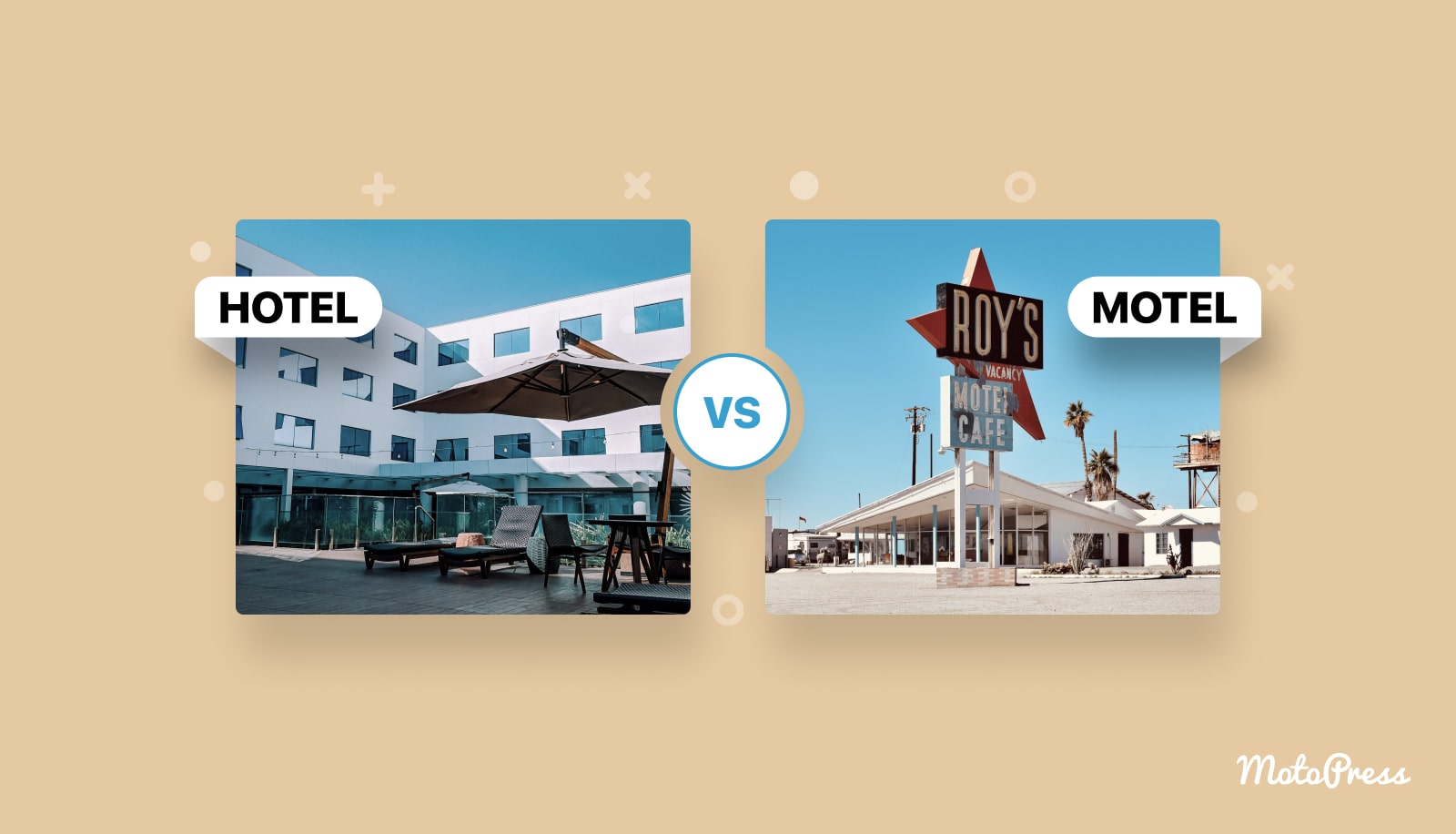
The word motel combines “motor” and “hotel”. Motels are usually one or two stories with rooms that open directly to the parking lot, so guests can park next to their door. They cater to travelers on road trips and often have simple rooms and fewer amenities.
Origin
The first motel, the Milestone Mo-Tel, opened in San Luis Obispo, California, in 1925. Motels boomed in the 1950s and 1960s as car travel and the interstate highway system grew. The Holiday Inn chain started in 1952 in Memphis, Tennessee, and Route 66 became lined with motels.
Cost
Motels are typically cheaper. The average US motel room costs around $60 to $100 per night, compared with a hotel at about $150 to $170 per night nationally (STR averages). Hotels charge more for location, services and brand. Resort fees can add $20 to $50 a night at some hotels.
Safety considerations
Exterior entrances can make motels feel less secure, though many have cameras and good lighting. Ask for a room on an upper floor or near the office, use the deadbolt and the chain lock, and check reviews. Hotels with interior corridors and key card elevators restrict access to guests.
Who uses them
Motels suit budget travelers, drivers on long road trips, and those who want easy parking. Hotels suit business travelers, tourists in cities, and people who want services, a restaurant or conference facilities. Extended stay hotels offer kitchenettes for longer stays.
Decline
The number of independent motels fell after interstates bypassed old highways and chains moved to bigger hotels. About 20,000 motels remain, many independent and family run, and a number have been renovated as boutique or retro style stays.

Costs, amenities and rules
US hotel rooms averaged about 155 USD per night in 2023, according to STR, while motel rates are often 60 to 100 USD. Hotels offer lobbies, front desks, interior corridors, elevators and amenities such as restaurants, fitness centers and meeting rooms. Motels typically have exterior entrances and parking by the room door. The word motel is a blend of motor and hotel, coined in 1925 at the Milestone Mo-Tel in San Luis Obispo, California. The number of motels in the US peaked in the 1960s with highway expansion, and has declined since. Both must follow state and local lodging safety and fire codes.
Based on data from STR and the American Hotel and Lodging Association