A hurricane is a huge rotating storm that forms over warm ocean water, while a tornado is a much smaller, narrow funnel of rotating air from a thunderstorm over land.
Hurricane
- Huge rotating storm that forms over warm ocean water (80°F or more).
- 100 to 400 miles wide.
- Winds of 74 mph or more.
- Lasts days.
Tornado
- Narrow column of spinning air from a thunderstorm.
- Under a mile wide.
- Winds up to 300 mph.
- Lasts minutes.
Link
Hurricanes can spawn tornadoes.
Season
Atlantic hurricane season runs June 1 to November 30.
Formation
Hurricanes form over warm ocean water of at least 26.5 degrees C (80 degrees F), fed by evaporation. Tornadoes form from rotation within thunderstorms over land.
Size
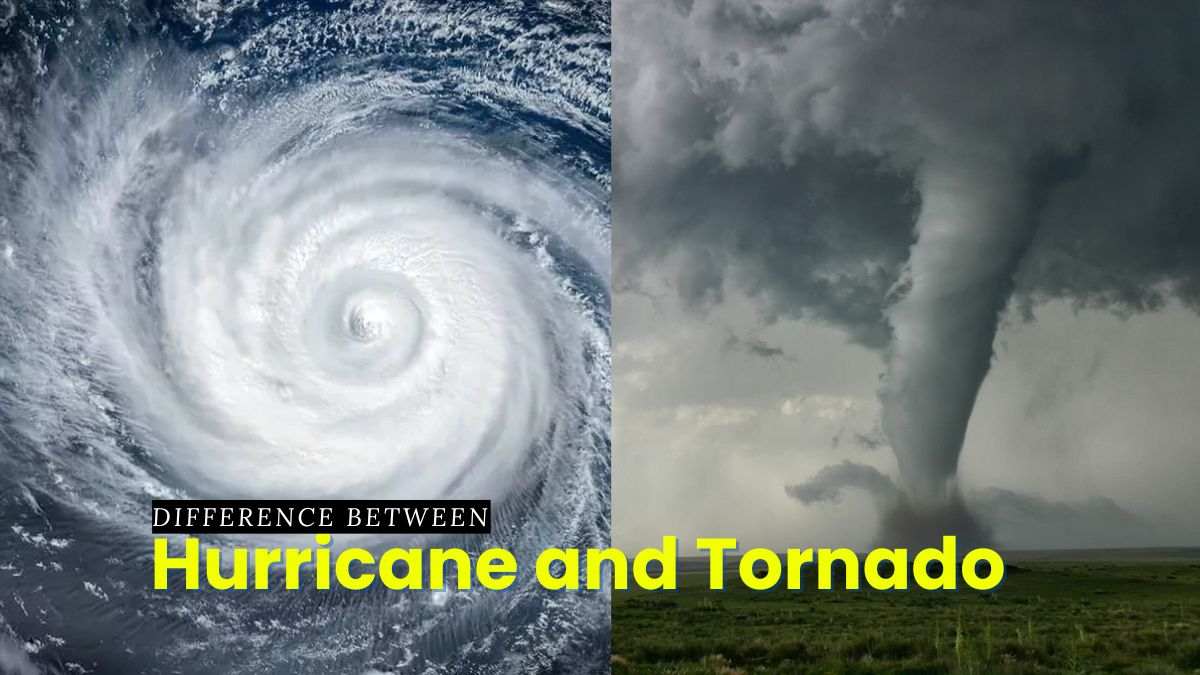
Hurricanes are hundreds of miles wide, and a hurricane can be 100 to 500 miles across, lasting days to weeks. Tornadoes are typically 100 to 500 yards wide, lasting seconds to an hour.
Wind speeds
Hurricanes: sustained winds of at least 74 mph (Category 1 to 5 on the Saffir-Simpson scale; Category 5 is 157 mph or higher). Tornadoes: 65 mph to over 200 mph on the Enhanced Fujita scale (EF0 to EF5).
Damage
Hurricane damage comes from storm surge (the leading cause of hurricane deaths), wind, flooding rain and tornadoes. Tornado damage is extreme but along a narrow path.
Season
Atlantic hurricane season runs June 1 to November 30, peaking around September 10. Tornado season is spring in the southern plains, though tornadoes happen year-round.

Warning time
Hurricanes can be forecast days ahead, giving time to evacuate. Tornado warnings average 13 minutes.
Link
Hurricanes can spawn tornadoes, especially in the right front quadrant of the storm after landfall. Hurricane Ivan in 2004 produced 120 tornadoes.
Costs and deaths
Hurricane Katrina in 2005 killed more than 1,800 people and caused about 125 billion dollars in damage. The 2011 Joplin tornado killed 158 people.
Other names
Hurricanes are called typhoons in the Northwest Pacific and cyclones in the Indian Ocean and South Pacific.
Safety
Hurricane: follow evacuation orders, and stock supplies. Tornado: go to the lowest floor, interior room.
Size, formation and duration
A hurricane is a large tropical cyclone that forms over warm ocean water of at least 80 F (26.5 C) and can be 300 miles wide or more, lasting days to weeks. It has sustained winds of at least 74 mph, and the Saffir-Simpson scale rates categories 1 to 5, with category 5 above 157 mph. A tornado is a narrow rotating column of air from a thunderstorm, usually less than a mile wide and lasting minutes, but with winds that can exceed 200 mph.

Hazards and season
The deadliest hazard in hurricanes is storm surge, followed by flooding and wind. Hurricane Katrina in 2005 caused about 1,400 deaths and an estimated 125 billion USD in damage. The Atlantic hurricane season runs June 1 to November 30, peaking in September. Tornado season peaks in spring, and tornadoes have little warning, averaging about 13 minutes. Hurricanes can spawn tornadoes. Prepare with an emergency kit, evacuation plan and a weather radio, and follow official guidance from local emergency management.
Based on data from NOAA and the National Hurricane Center