Snoring happens when relaxed tissues in the throat vibrate as you breathe during sleep. Loud snoring with pauses in breathing can signal sleep apnea.
Why
When you sleep, throat muscles relax. Air makes the soft palate and tongue base vibrate.
Who snores
About 45% of adults snore occasionally, and 25% habitually.
Risk factors
Excess weight, alcohol, nasal congestion, sleeping on your back and age.
Sleep apnea
Loud snoring with pauses, gasping or daytime fatigue may mean obstructive sleep apnea.
Remedies
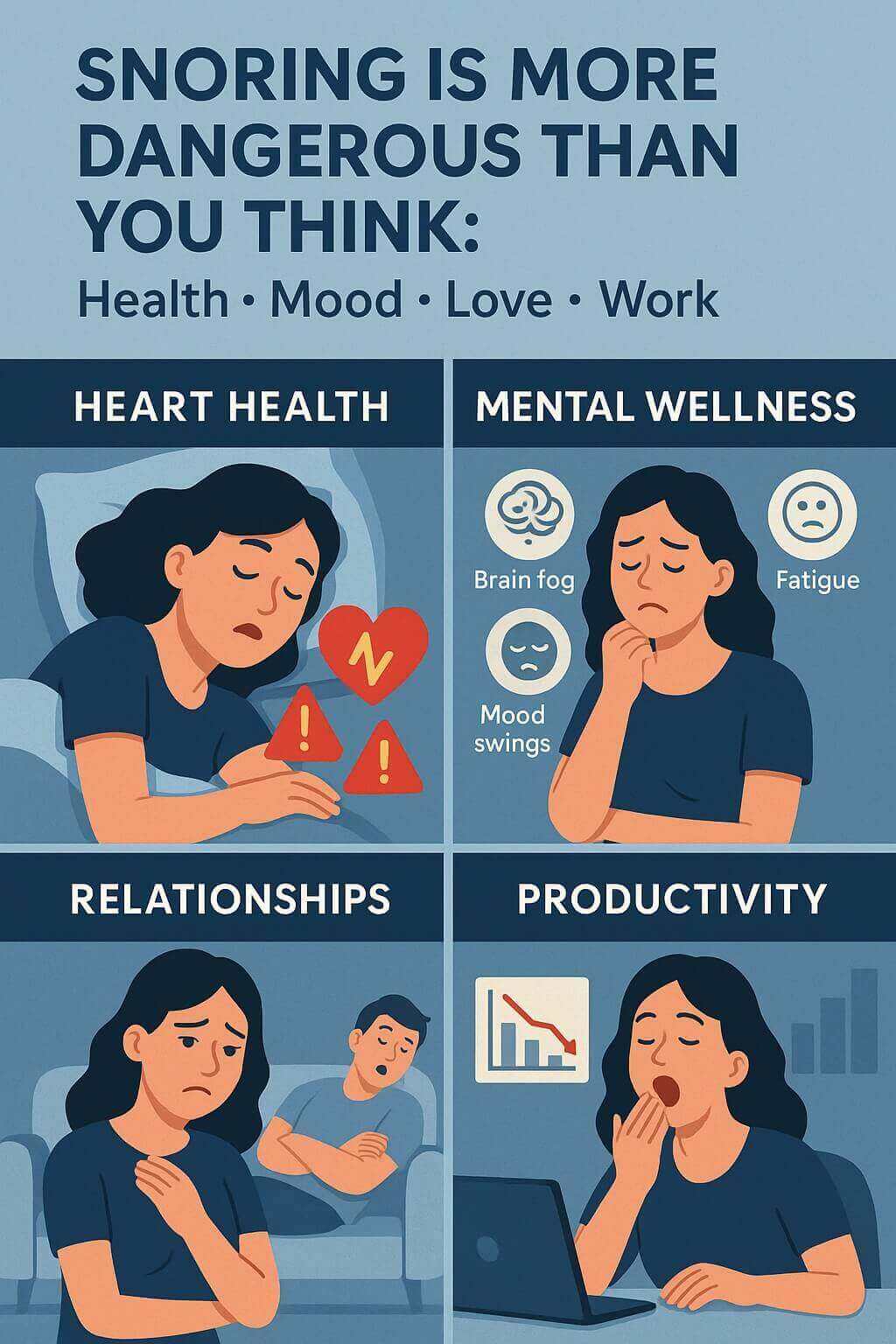
Sleep on your side, lose weight, avoid alcohol and treat nasal congestion.
Mechanism
Snoring is the sound of vibrating tissue in the upper airway: the soft palate, uvula, tonsils and tongue base. Air flowing through a narrowed passage during sleep makes tissues vibrate.
Prevalence
About 45% of adults snore occasionally and 25% snore habitually, according to the American Academy of Otolaryngology. It’s more common in men and with age.
Risk factors
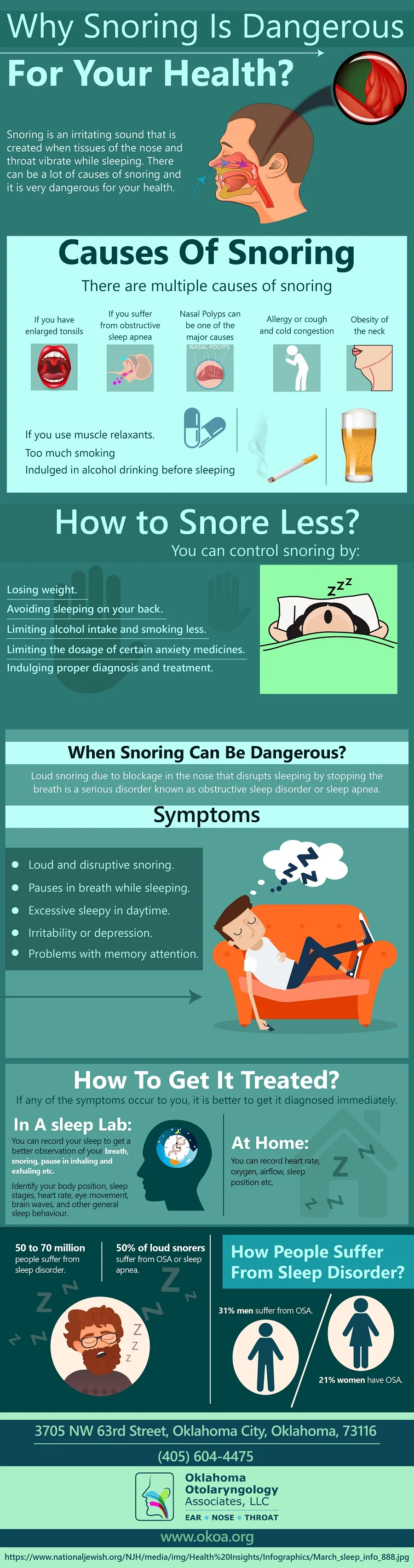
- Being overweight, as extra tissue around the neck narrows the airway.
- Nasal congestion or a deviated septum.
- Alcohol and sedatives before sleep, which relax throat muscles.
- Sleeping on the back.
- Enlarged tonsils or adenoids.
- Smoking.
- Pregnancy.
- Family history and anatomy (a long soft palate or a small jaw).
Obstructive sleep apnea
Loud snoring with pauses in breathing, gasping or choking, and daytime sleepiness can signal obstructive sleep apnea, which affects about 30 million American adults, though many are undiagnosed. Untreated sleep apnea raises risks of high blood pressure, heart disease, stroke and diabetes.
Remedies
- Sleep on your side with a body pillow or a positional device.
- Lose weight if overweight.
- Avoid alcohol 3 to 4 hours before bed.
- Treat nasal congestion with saline rinses or strips.
- Raise the head of the bed.
- Quit smoking.
- Dental devices (mandibular advancement) made by a dentist.
- CPAP for sleep apnea.
- Surgery in selected cases.
See a doctor if
Snoring is loud and chronic, with breathing pauses, excessive daytime sleepiness, morning headaches or high blood pressure. A sleep study can diagnose apnea.
Mechanism and prevalence
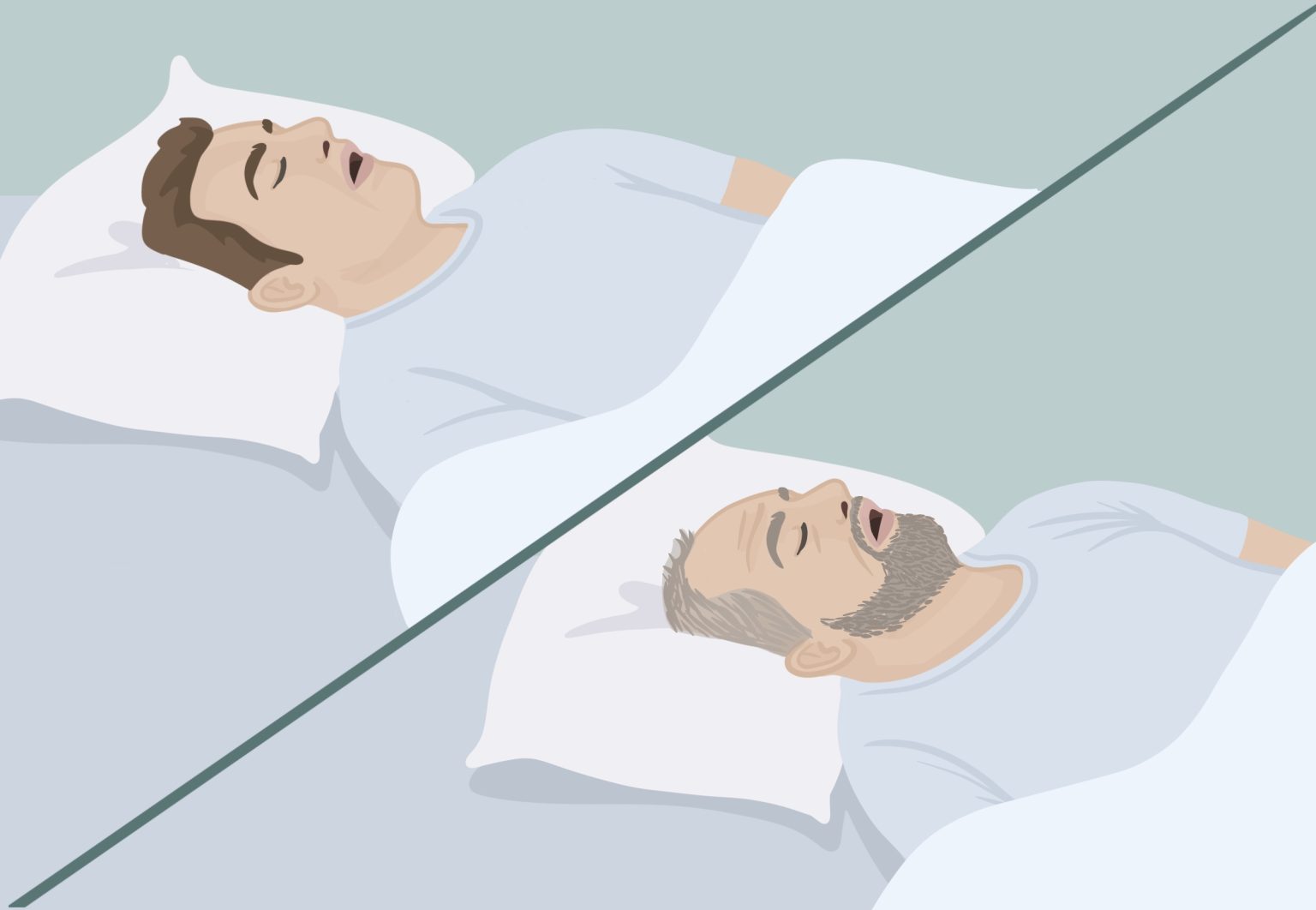
Snoring occurs when relaxed tissues in the throat vibrate as air passes during sleep. The American Academy of Sleep Medicine estimates about 90 million American adults snore, and about 37 million do so regularly. Risk factors are being overweight, male sex, age, alcohol before bed, nasal congestion, sleeping on the back, enlarged tonsils and smoking. Loud snoring with gasping, pauses in breathing, morning headaches and daytime sleepiness may be obstructive sleep apnea, which affects an estimated 30 million US adults, most of them undiagnosed.
Treatments
Try sleeping on your side, losing excess weight, avoiding alcohol near bedtime, treating nasal allergies and using nasal strips. Dentist fitted oral appliances can help mild cases, while CPAP therapy is the standard treatment for sleep apnea. The Inspire implant, approved by the FDA in 2014, stimulates a nerve to keep the airway open for selected patients. Surgery may help specific anatomic problems. Untreated sleep apnea raises the risk of high blood pressure, heart disease, stroke and accidents, so see a doctor for sleep study evaluation.
Based on data from the American Academy of Sleep Medicine