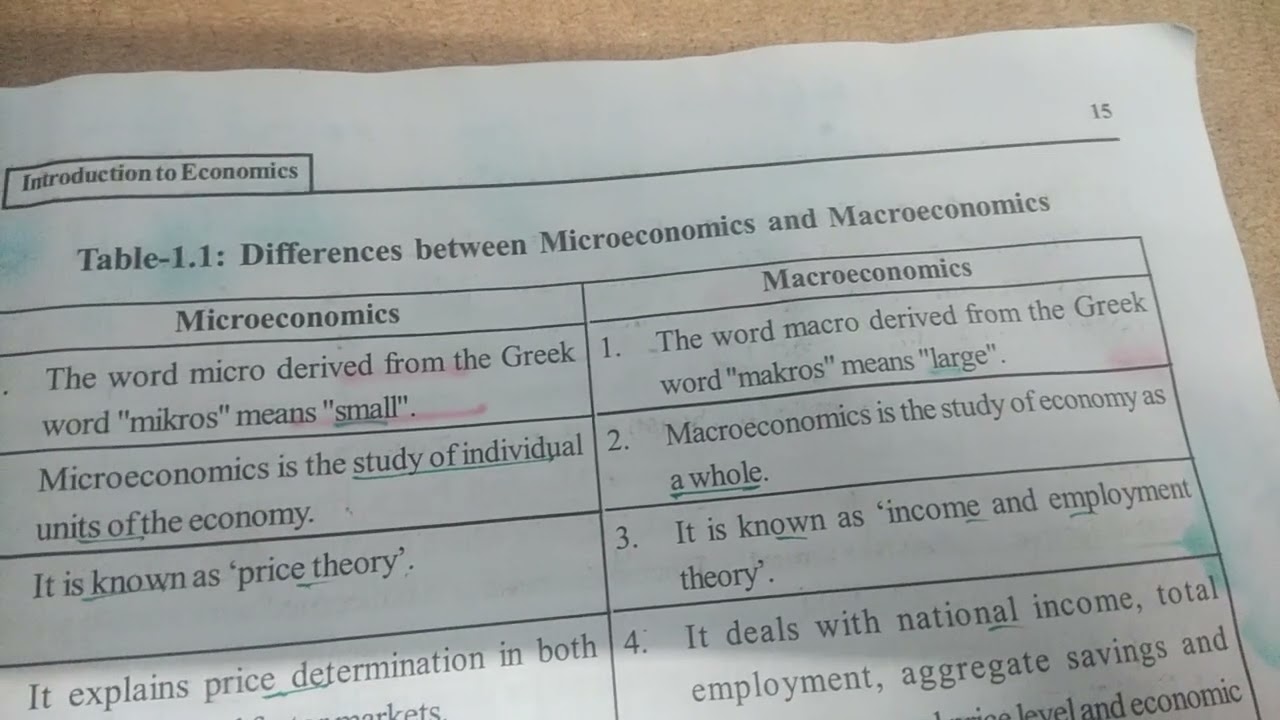
Microeconomics studies individual consumers and firms, while macroeconomics studies the whole economy, including growth, inflation, and unemployment.
Microeconomics
Studies individual consumers, firms and markets. Topics: supply and demand, prices, costs and competition.
Macroeconomics
Studies the whole economy. Topics: GDP, inflation, unemployment, interest rates and fiscal policy.
Example
Micro: why a coffee shop sets a price. Macro: why national inflation rose.
Link
They are connected. Individual choices add up to national trends.
Key thinkers
Adam Smith (micro), John Maynard Keynes (macro).
Scope

Microeconomics studies individual decisions of households, firms and markets: prices, supply and demand, consumer choice, production costs and competition. Macroeconomics studies the economy as a whole: GDP, inflation, unemployment, interest rates, trade and economic growth.
Main questions
- Micro: Why does a coffee shop charge a certain price? How do minimum wages affect hiring in a market?
- Macro: What causes recessions? How does the central bank control inflation?
Key concepts in microeconomics
Supply and demand, elasticity, opportunity cost, marginal utility, market structures (perfect competition, monopoly, oligopoly), externalities and game theory.
Key concepts in macroeconomics
GDP, inflation (CPI), unemployment rate, fiscal policy (government spending and taxes), monetary policy (interest rates, money supply), business cycles and the balance of payments.
Example numbers
US GDP was about 27.4 trillion dollars in 2023, according to the Bureau of Economic Analysis. The Federal Reserve targets 2% inflation.
Connection between the two
Macro outcomes result from the combined effect of micro decisions, and microeconomic foundations are used in macro models.
Key thinkers
Micro: Adam Smith, Alfred Marshall. Macro: John Maynard Keynes, Milton Friedman, Friedrich Hayek (in debates about policy). The field of macroeconomics grew after the Great Depression of the 1930s.
Careers
Micro is used in business pricing, antitrust and labor economics. Macro is used in policy analysis at central banks and government agencies.
Methods
Economists use data and models, including regression, and experiments.
Core questions and examples
Microeconomics studies individual decisions by households and firms and how markets set prices, including supply and demand, elasticity, costs, competition and consumer choice. Macroeconomics studies the economy as a whole, including output (GDP), inflation, unemployment, interest rates and government policy. For example, US GDP was about 27.4 trillion USD in 2023, and the annual inflation rate peaked at 9.1 percent in June 2022. Micro asks why a coffee costs 4 USD, while macro asks why prices rise across the economy.

Origins and connection
Macroeconomics as a separate field grew from the Great Depression and John Maynard Keynes’s 1936 book The General Theory of Employment, Interest and Money. The two branches are connected, since aggregate outcomes are built from individual choices, and policy such as interest rate changes by the Federal Reserve affects household and business decisions. Students usually take microeconomics first. Both use models, data and graphs to explain trade offs.
Based on data from the Bureau of Economic Analysis and the Bureau of Labor Statistics