
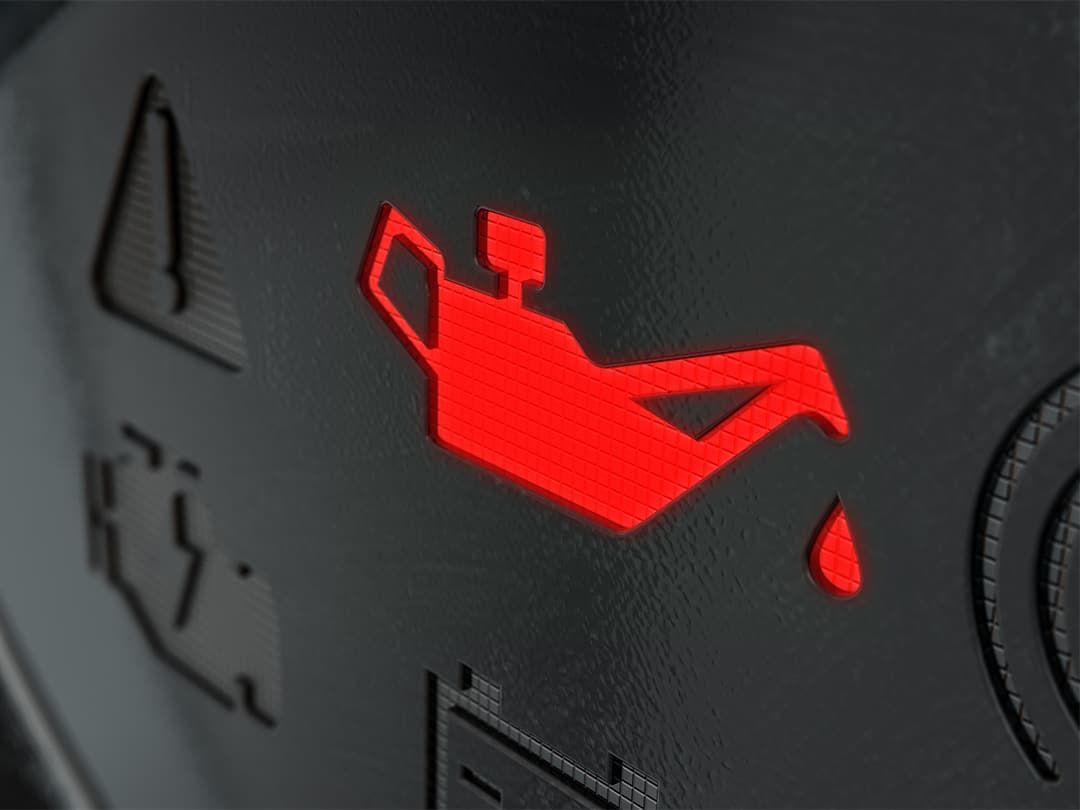
Low oil pressure means the engine is not getting enough oil circulation. Stop driving, check the oil level, and get it checked to avoid serious engine damage.
What it means
Low oil pressure means oil isn’t circulating properly through the engine. Oil lubricates and cools moving parts, so low pressure can quickly cause severe damage.
Causes
- Low oil level (most common).
- Worn oil pump or bearings.
- Clogged oil filter.
- Wrong oil viscosity.
- Faulty oil pressure sensor.
- Oil leaks.
What to do
Pull over safely, turn off the engine, wait a few minutes and check the dipstick. Add oil if low. Don’t keep driving if the warning light stays on.
Normal pressure
Typically 20 to 65 psi at operating temperature, with a minimum of about 10 psi per 1,000 rpm in many engines.
Cost
A new sensor is cheap ($20 to $100). An engine rebuild costs thousands.
Tow
Tow it to a mechanic if the light persists.
What the light means
The oil pressure warning light, usually a red oil can symbol, means the engine is not getting enough oil pressure to lubricate moving parts. It is different from the “check oil level” or maintenance light. Engines rely on oil pressure to keep metal parts such as bearings, camshaft and crankshaft from touching. Without it, damage can start within minutes.
Causes
- Low oil level, from leaks or burning oil. This is the most common and cheapest cause.
- Worn oil pump or clogged oil pickup screen.
- Clogged or wrong oil filter.
- Oil too thin from age, heat or fuel dilution, or the wrong viscosity.
- Faulty oil pressure sensor or sending unit, which gives a false warning and costs $20 to $100 to replace.
- Worn engine bearings, which let oil escape and drop pressure.
- Oil leak from the pan, gasket or filter.
- Blocked oil passages from sludge when oil changes are skipped.
What to do
- Pull over safely and turn the engine off right away. Driving even a few minutes with no oil pressure can destroy an engine.
- Wait 5 to 10 minutes, then check the dipstick on level ground. Add the oil type listed in the owner’s manual if low.
- Look under the car for leaks.
- If the oil level is fine and the light stays on after restart, do not drive. Have the car towed.
Normal pressure
Most gasoline engines read about 10 psi at idle when warm and 25 to 65 psi when driving, though specifications vary. A mechanical gauge can verify actual pressure and confirm whether a sensor is at fault. A flickering light at idle on a hot engine can mean worn bearings or thin oil.
Cost
- Oil top up and change: $50 to $120.
- Oil pressure sensor: $100 to $250 at a shop.
- Oil pump replacement: $500 to $1,500, or more for engines with the pump behind the timing cover.
- Engine rebuild or replacement: $3,000 to $7,000 or more.
Tow
When in doubt, tow. A tow costs about $75 to $200, a small price compared with engine replacement. Regular oil changes at the interval in the manual, usually 5,000 to 7,500 miles for synthetic oil, prevent most pressure problems.
Oil pressure facts and risk
Normal engine oil pressure is about 20 to 65 psi when warm at driving speeds, and about 10 psi at idle in many cars, according to repair guides. The warning light is typically set to come on below about 5 to 7 psi, a point where parts are at risk of metal to metal contact. Common causes are low oil level, worn oil pump, clogged oil filter, wrong oil viscosity, a failing pressure sensor and worn engine bearings. A sensor replacement may cost about 100 to 250 USD, while a new oil pump can cost 500 to 1,200 USD or more, and engine rebuilds cost thousands. Check the oil with the engine off on a level surface after waiting 5 to 10 minutes. If the level is low, add the oil type listed in the owner’s manual. If the light stays on or you hear knocking, do not keep driving because engine seizure can happen in minutes.
Based on data from AAA and vehicle manufacturer service guides







