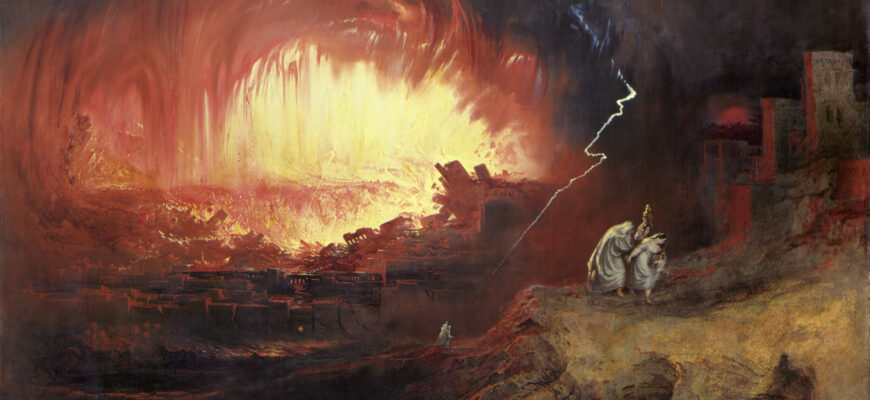
In Genesis, God destroys Sodom and Gomorrah for the cities’ wickedness. Interpreters have emphasized injustice and lack of hospitality, among other sins.
The account
Genesis 18 and 19 describe God destroying Sodom and Gomorrah with fire and sulfur because of the cities’ great sin. Abraham intercedes for Sodom, and God agrees to spare it if ten righteous people are found.
Interpretations
- Inhospitality and violence: Genesis 19 shows the mob threatening Lot’s guests.
- Injustice and arrogance: Ezekiel 16:49 says Sodom was proud, overfed and didn’t help the poor and needy.
- Sexual sin: Jude 7 and traditional readings emphasize sexual immorality.
Scholars and faith traditions differ on emphasis.
Archaeology
Tall el-Hammam in Jordan has been proposed as a site, but this is debated.
Lesson
Judgment on persistent wickedness, and mercy toward Lot’s family.
The account
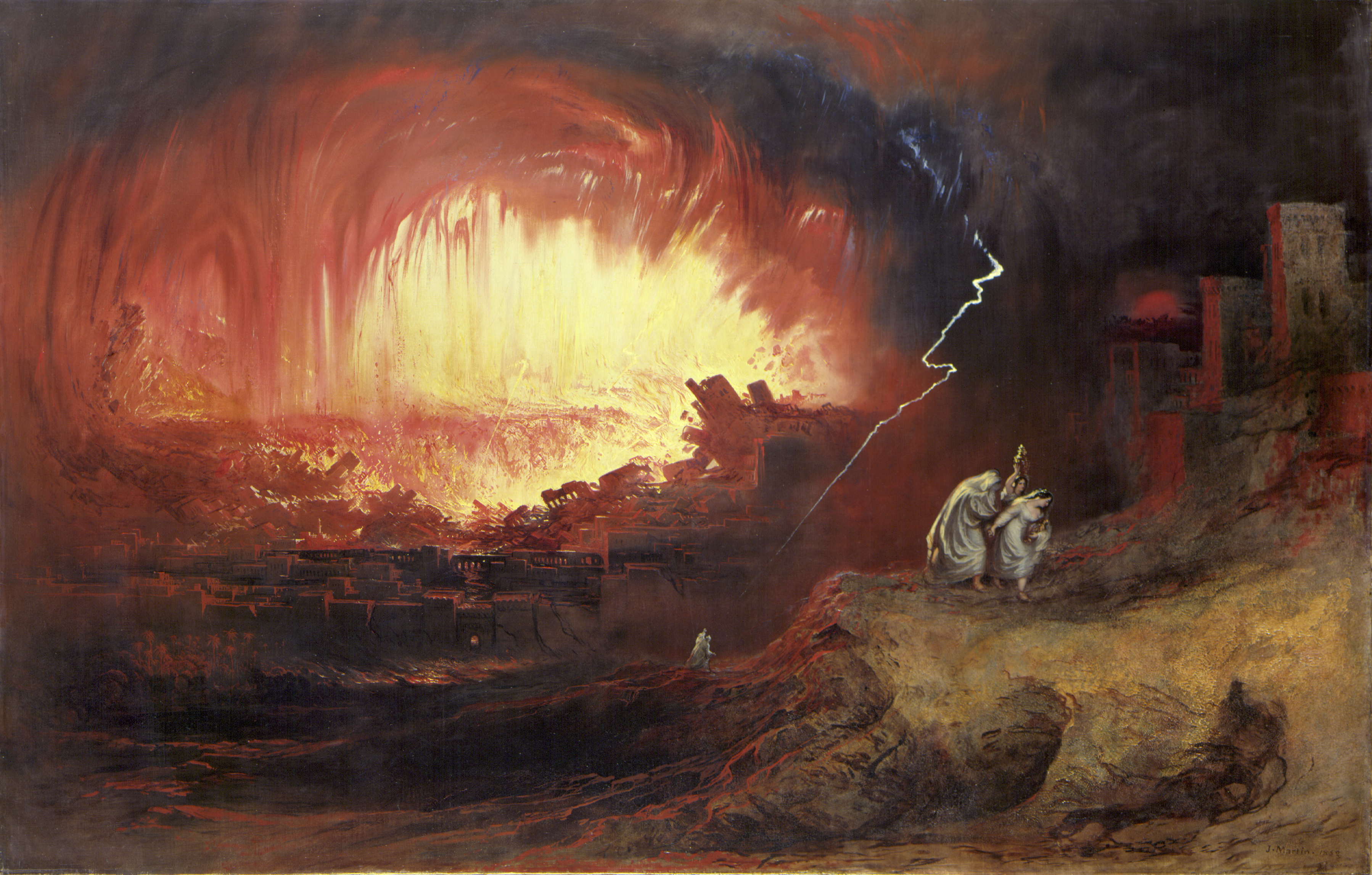
Genesis 18 and 19 tell of two cities, Sodom and Gomorrah, destroyed by “brimstone and fire from the Lord out of heaven.” Abraham pleads with God to spare the cities if as few as ten righteous people can be found. Two angels visit Lot in Sodom, and the men of the city demand to harm them. Lot and his daughters escape, and Lot’s wife looks back and becomes a pillar of salt. The cities are described as part of the plain near the Dead Sea.
Interpretations

- Inhospitality and violence: many scholars note that the sin at issue is the violent mistreatment of strangers. Ezekiel 16:49 says Sodom’s guilt was that it was “arrogant, overfed and unconcerned” and did not help the poor and needy.
- Sexual sin: traditional Christian and Jewish interpretation has also emphasized sexual immorality, citing Jude 7. The term “sodomy” derives from the story. Others argue that the story concerns sexual violence and abuse of hospitality, not consensual relationships.
- Pride and injustice, as in the prophets Isaiah and Jeremiah.
- Judgment on wickedness in general, and a warning about divine justice.
- Islamic tradition tells a similar story of Lot (Lut) and his people in the Quran.
Archaeology
Some scholars propose that the sites lie near the Dead Sea. Tall el-Hammam in Jordan has been suggested by some researchers, who claim a cosmic airburst destroyed the city around 1650 BCE, though this claim is disputed by other archaeologists. There is no consensus that Sodom and Gomorrah existed as described. The area has sulfur, bitumen and salt formations, which may have inspired the story. Earthquakes are common along the Dead Sea Rift.
Lesson
Religious readers often take the story as a lesson about divine justice, hospitality, mercy and the need for righteous people, as in Abraham’s plea. Different traditions and scholars draw different conclusions.
This is a topic where religious traditions and scholars hold differing views, and the above shows the main ones.

Textual and scholarly background
The story of Sodom and Gomorrah appears in Genesis 18 and 19, where God tells Abraham about the cities’ grave sin and Abraham asks whether the righteous will be spared. Two angels visit Lot in Sodom, the townspeople threaten them, and the family is led out before fire and sulfur fall on the cities. Lot’s wife looks back and is turned into a pillar of salt. Other biblical writers, such as Ezekiel (16:49), describe the sin as arrogance, excess of food and neglect of the poor, while Jewish and Christian traditions have also stressed lack of hospitality and sexual violence. Modern scholars debate the interpretation. Tall el-Hammam in Jordan has been proposed by some archaeologists as a possible site, but the identification is disputed among archaeologists, and no consensus exists. The text is a religious narrative, and views vary among traditions.
Based on data from the Encyclopaedia Britannica and biblical studies references