Folic acid is the synthetic form of vitamin B9 that the body must convert, while folinic acid is an active form the body can use directly.
Folic acid
Synthetic vitamin B9 in supplements and fortified foods. The body converts it to the active form, methylfolate. Some people convert it poorly.
Folinic acid
Also called leucovorin, it is a reduced active form of folate that doesn’t need the DHFR enzyme step.
Uses
- Folic acid: pregnancy to prevent neural tube defects, 400 micrograms daily.
- Folinic acid: rescue after methotrexate chemotherapy, and for some folate deficiencies.
Talk to a doctor
Before using either for medical reasons.
Chemical forms
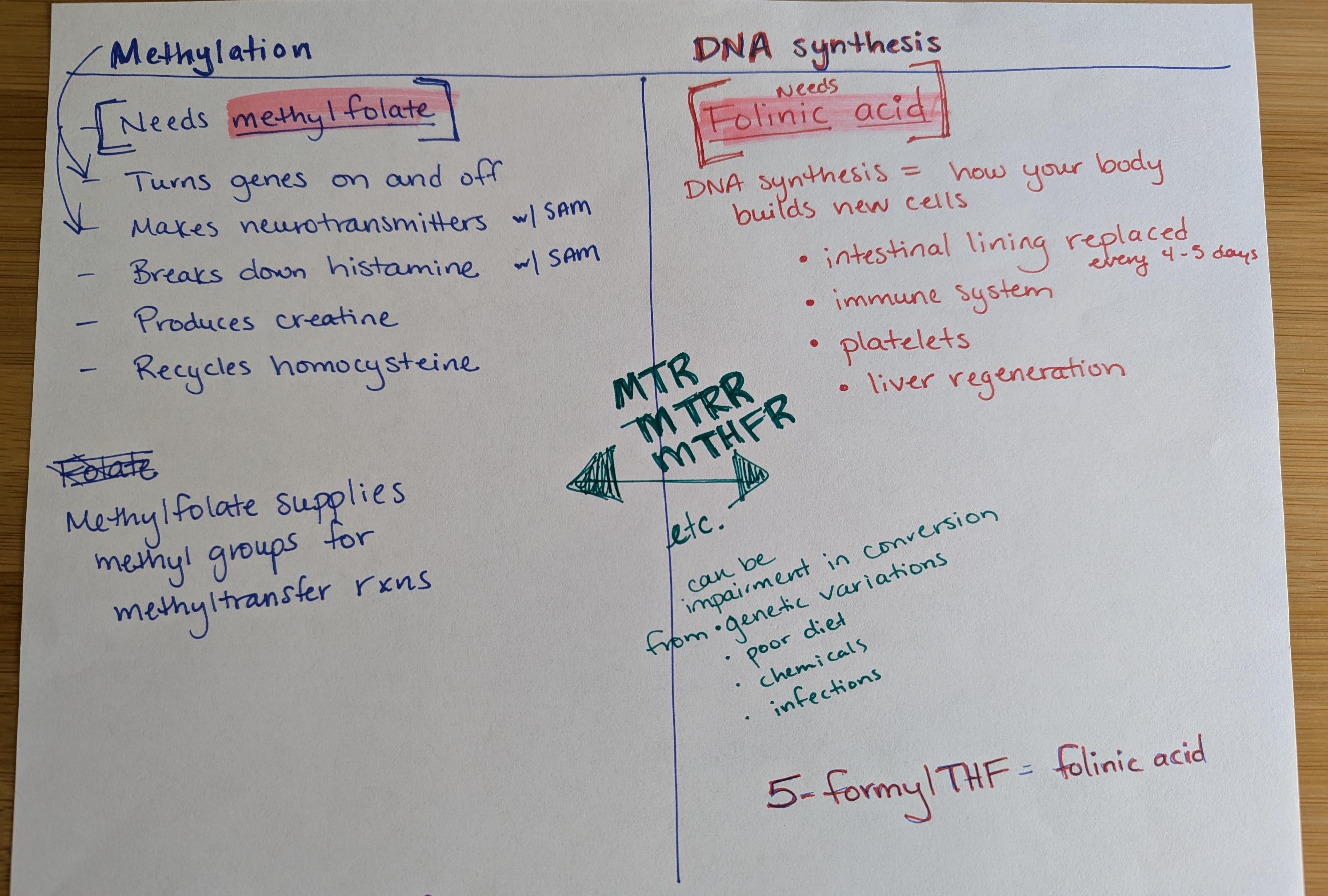
Folic acid is the synthetic form of vitamin B9 used in supplements and fortified foods. Folate is the natural form found in leafy greens, beans, citrus and liver. Folinic acid (leucovorin) is a reduced, active form that does not need to be converted by the enzyme dihydrofolate reductase (DHFR).
Pregnancy
The CDC recommends that women who could become pregnant take 400 micrograms of folic acid daily, from at least one month before conception, to reduce neural tube defects such as spina bifida by up to 70%. Women with a prior pregnancy affected by neural tube defects are advised a higher dose of 4,000 micrograms under medical supervision.
Medical uses of folinic acid
- To rescue normal cells after high dose methotrexate chemotherapy.
- As part of colorectal cancer regimens with 5-fluorouracil.
- To treat megaloblastic anemia caused by folate deficiency when DHFR is inhibited.
- In cerebral folate deficiency, under specialist care.
- To reduce toxicity of some antibiotics and antiparasitic drugs like pyrimethamine.
MTHFR gene
Some people have variants in the MTHFR gene. Most do not need special forms of folate, and expert groups do not recommend routine testing.

Autism and folinic acid research
Small trials have examined folinic acid for language in some children with autism and cerebral folate receptor antibodies. Results are early, and it is not an established treatment. Do not give it without a prescriber.
Deficiency symptoms
Fatigue, pale skin, mouth sores, irritability and anemia.
Safety
Folic acid at high doses can mask vitamin B12 deficiency. The upper limit for adults is 1,000 micrograms of synthetic folic acid per day.
Food fortification
In the US, enriched grain products have been fortified with folic acid since 1998, and rates of neural tube defects have fallen by about 35%.
Chemical forms and body use
Folic acid is the synthetic form of vitamin B9 used in supplements and fortified foods, and the body must convert it through the enzyme DHFR to active forms. Folate is the natural form in foods such as leafy greens, beans and citrus. Folinic acid (leucovorin) is a reduced form of folate that does not require that first step. Doctors use leucovorin to counter the effects of methotrexate, a drug used in cancer and autoimmune diseases, and to treat certain folate related anemias. For pregnancy, the CDC recommends 400 micrograms of folic acid daily, starting at least one month before conception, because it lowers the risk of neural tube defects by up to 70 percent.

Genes, research and safety
Variants in the MTHFR gene are common, and the American College of Medical Genetics advises against routine MTHFR testing. Small studies have examined leucovorin for some children with autism and speech problems, but evidence is early, and it should be used only under medical guidance. Folate deficiency causes anemia, fatigue and mouth sores. High doses of folic acid can mask a vitamin B12 deficiency, so talk to your doctor. The upper limit for folic acid from supplements is 1,000 micrograms per day for adults.
Based on data from the CDC and the NIH Office of Dietary Supplements