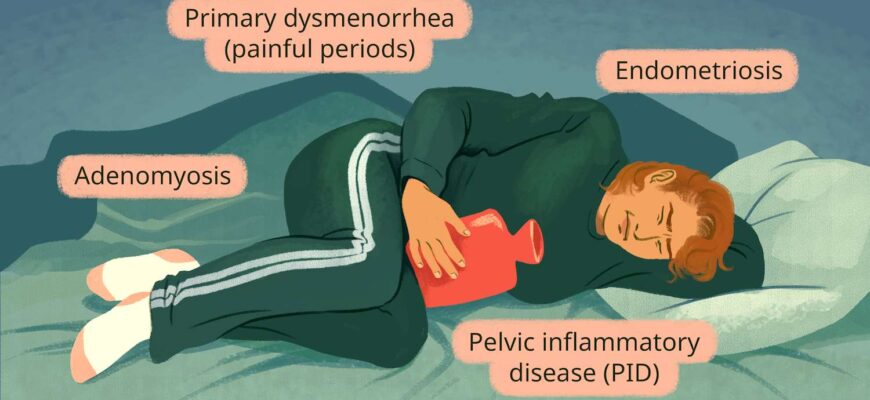
Period cramps occur when the uterus contracts to shed its lining, triggered by hormone-like chemicals called prostaglandins.
The cause
Before and during your period, the uterus lining releases prostaglandins. They make the uterine muscle contract to shed the lining. Higher levels cause stronger cramps.
Types
- Primary dysmenorrhea: common, no underlying disease.
- Secondary: caused by endometriosis, fibroids or adenomyosis.
Relief
- Heat on the lower abdomen.
- NSAIDs such as ibuprofen.
- Exercise.
See a doctor
If pain is severe, gets worse over time, or does not improve with medicine.
Prostaglandins

Before a period, the uterine lining releases prostaglandins. These hormone like compounds make the uterine muscle contract to shed the lining. High levels cause stronger contractions and pain, and they can lead to nausea, diarrhea and headaches.
Prevalence
Dysmenorrhea affects more than half of menstruating people for 1 to 2 days each month, according to ACOG. Pain is severe in about 10% to 15%.
Primary versus secondary
- Primary: pain without another disease, starting in the teens or early twenties, often easing with age or after childbirth.
- Secondary: caused by conditions such as endometriosis, fibroids, adenomyosis, pelvic inflammatory disease or an IUD.
Treatment

- NSAIDs such as ibuprofen or naproxen, started at the first sign of pain or bleeding, work by blocking prostaglandins.
- Hormonal birth control reduces the thickness of the lining and the pain.
- Heat on the lower abdomen can be as effective as medicine.
- Regular exercise is associated with less pain.
- Some studies show that vitamin B1, magnesium and omega-3 can help, but evidence is limited.
Diet and lifestyle
Reducing caffeine, salt and alcohol around periods may help some people. Sleep and stress management also matter.
When to see a doctor
Seek help if pain stops you from normal activity, worsens over time, begins after age 25, comes with heavy bleeding, fever or pain during sex, or does not improve with treatment.
Endometriosis
This condition affects about 1 in 10 women of reproductive age, and diagnosis often takes years. Surgery (laparoscopy) is the standard for confirmation.
Risk factors and care
Primary dysmenorrhea, cramps without another disease, usually begins within 6 to 12 months of the first period and often improves with age and after childbirth. Risk factors include early puberty, heavy bleeding, smoking, a family history and never having been pregnant. Secondary dysmenorrhea comes from conditions such as endometriosis, adenomyosis and fibroids, and pain often starts later in life, worsens over time or comes with pain during sex. Endometriosis affects about 1 in 10 women of reproductive age, and the average delay in diagnosis is 7 to 10 years.

Evidence for treatments
NSAIDs such as ibuprofen and naproxen reduce pain in most women by blocking prostaglandins. Hormonal birth control, including pills, patches, rings and hormonal IUDs, lowers prostaglandin levels by thinning the uterine lining. Heat therapy, regular aerobic exercise and TENS have shown benefit in small studies. See a doctor if cramps keep you from school or work, do not respond to NSAIDs, start after age 25 or come with fever, heavy bleeding or unusual discharge.
Based on data from ACOG and the Endometriosis Foundation of America







