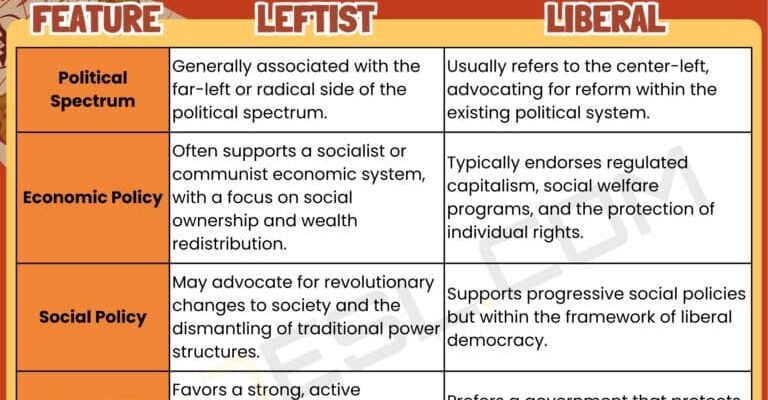
Liberals generally favor individual rights and reform within a market system, while leftists tend to seek deeper structural change, often questioning capitalism.
Liberals
Support individual rights, civil liberties, democracy and regulated capitalism with reform through existing institutions.
Leftists
Seek deeper change toward greater economic equality, often through collective ownership, strong unions or democratic socialism.
Overlap
Both support social progress, but leftists are further from the center.
Terms
In the US, “liberal” often means center left. Elsewhere, “liberal” can mean market liberal.
Examples
Liberal: Democratic party centrists. Leftist: democratic socialists or social democrats.
Liberal in the US
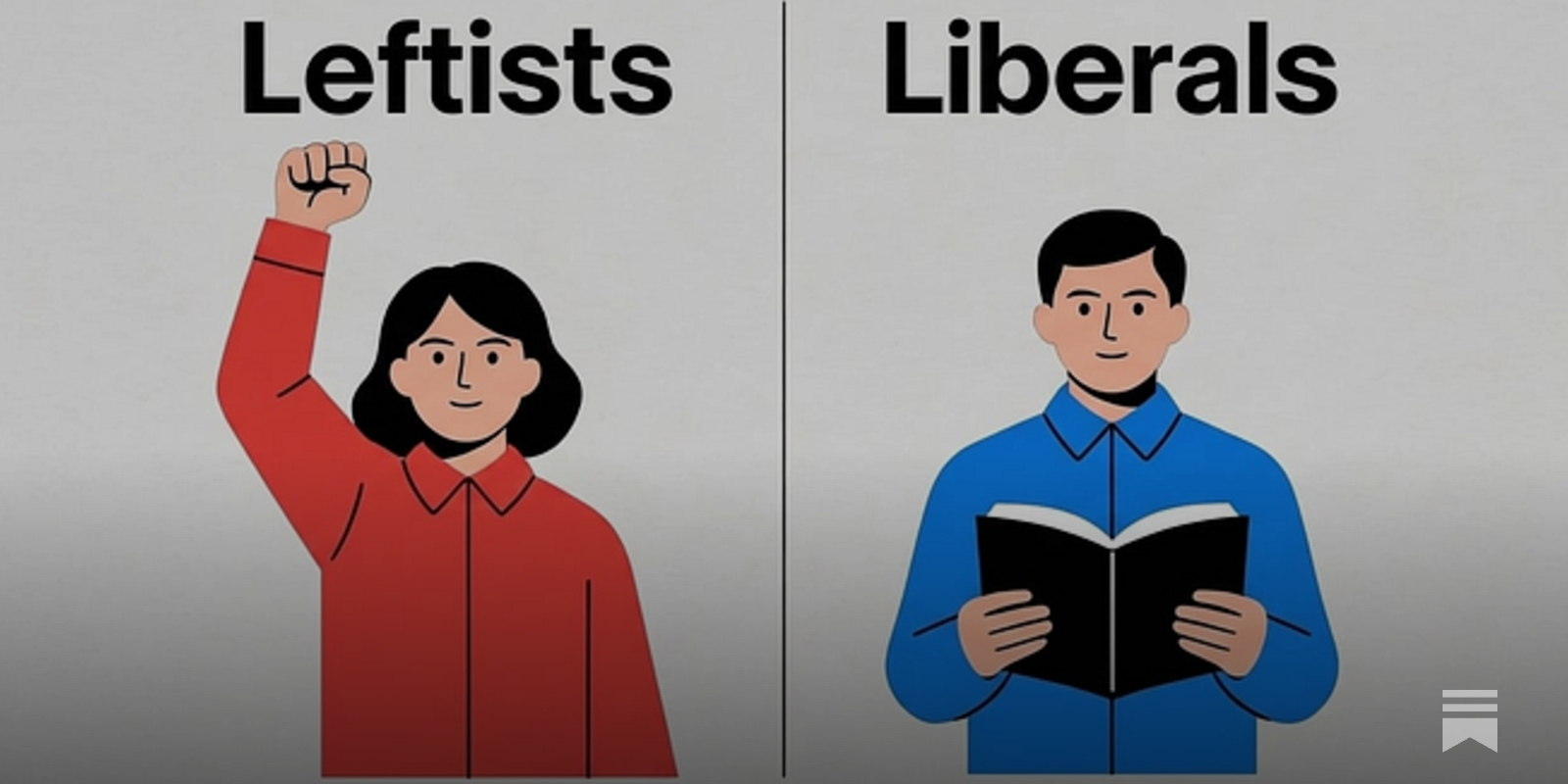
In American politics, a liberal generally favors a regulated market economy with a social safety net, civil rights protections and a role for government in healthcare, education and the environment. Liberals in the US are mostly associated with the Democratic Party.
Classical liberalism
In the broader historical sense, liberalism emphasizes individual rights, rule of law, free markets and limited government. In Europe and elsewhere, “liberal” can describe centrist or pro market parties.
The left
“Leftist” usually describes people further left on the economic spectrum, who seek deeper structural changes: stronger labor power, public ownership of some industries, large wealth redistribution or the replacement of capitalism. The term covers democratic socialists, social democrats, communists and anarchists.
Disagreements between the groups
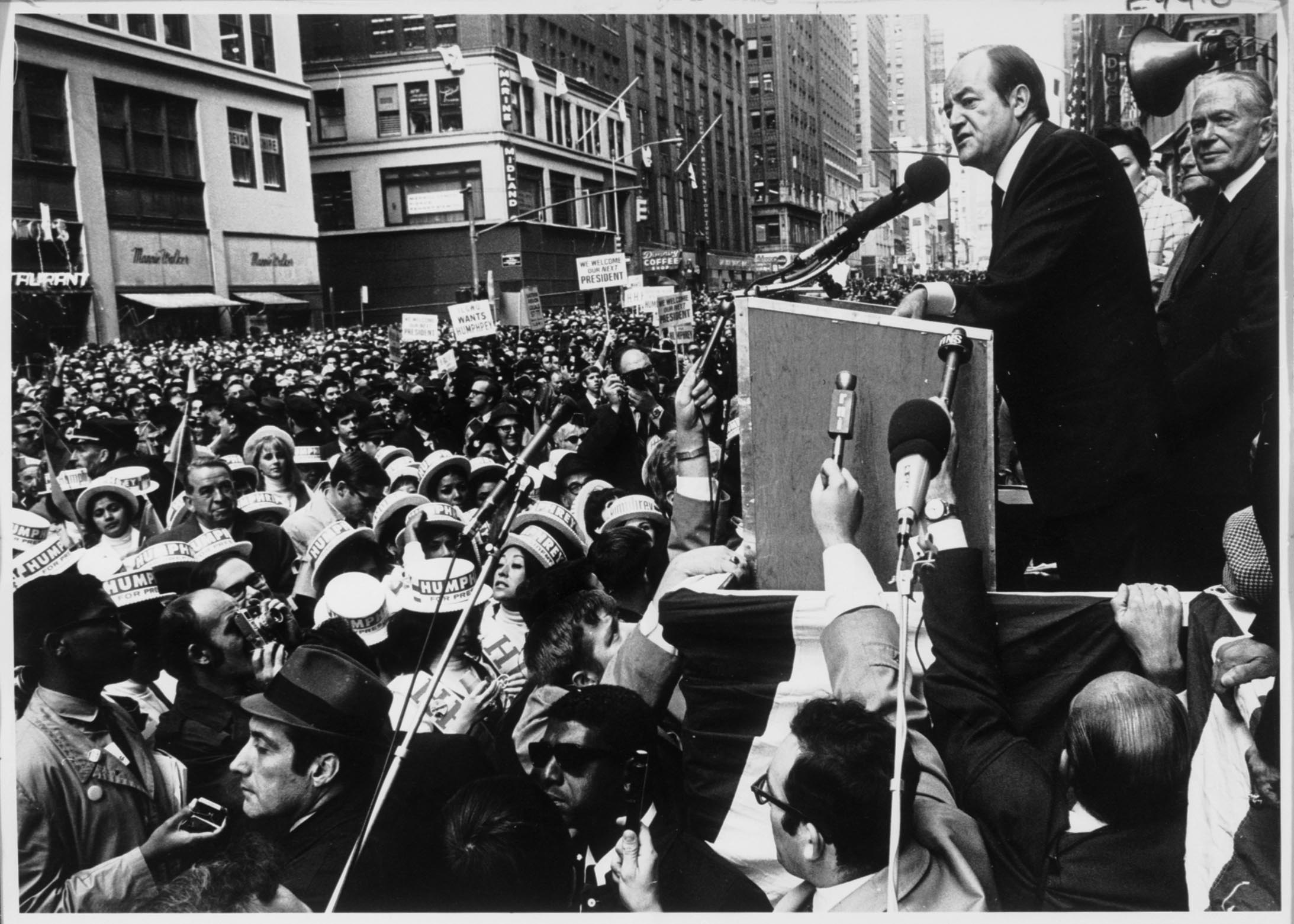
- Liberals tend to work within existing institutions and markets, while leftists seek to change the system more fundamentally.
- Leftists often criticize liberals for gradual reform or for supporting corporate power. Liberals often counter that radical change risks stability and rights.
Overlap
Both support civil rights, social programs and equality, though in varying degrees. In practice, many people hold mixed views.
Surveys
Pew Research Center’s political typology surveys show a range of groups within the Democratic coalition, from progressive left to moderate liberals.
Left and right terms
The terms left and right come from the French National Assembly of 1789, where supporters of the revolution sat on the left of the presiding officer.
Caution
Definitions vary by country and person, and political labels are often used loosely, so it helps to ask what someone specifically supports.
Political definitions
In the United States, “liberal” usually describes someone on the center left who supports government action on social and economic issues, civil rights and regulation. Classical liberalism, the tradition of Locke and Adam Smith, stresses individual liberty, limited government and free markets, and in Europe or Australia “liberal” can mean that. “Leftist” generally describes positions further left, often favoring greater economic equality, strong labor rights and public ownership or a larger welfare state, and includes socialists, social democrats and communists, who disagree among themselves.
Differences and how the labels began
Liberals tend to work within capitalism and reform it, while many leftists seek deeper structural change. The terms left and right come from the 1789 French National Assembly, where supporters of the revolution sat on the left. Gallup surveys show that about a quarter of Americans identify as liberal, about a third as conservative and a third as moderate. People often use the terms loosely or as insults, so it helps to define them in each conversation. Views vary by country and individual, and people may be liberal on some issues and not on others.
Based on data from Gallup and the Stanford Encyclopedia of Philosophy