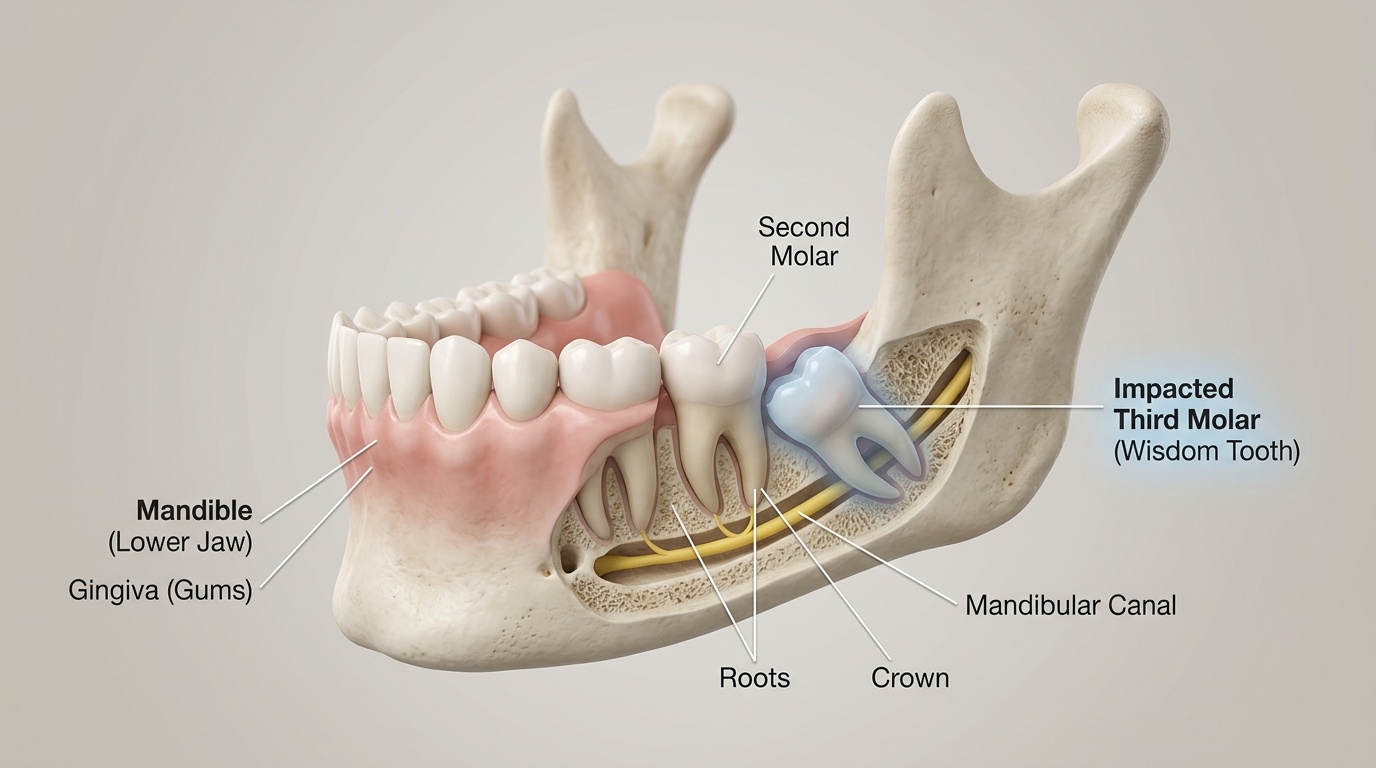
Initial recovery from wisdom teeth removal takes 3 to 4 days, with full recovery in about 1 to 2 weeks.
Timeline
- First 3 to 4 days: peak swelling and discomfort.
- Within a week: swelling decreases.
- 1 to 2 weeks: most people return to normal activities. The gums take 3 to 4 weeks to heal and the bone up to 6 months.
Care
- Bite on gauze for bleeding.
- Ice packs 20 minutes on, 20 off, for the first 24 hours.
- Soft foods.
- No straws, smoking or spitting.
- Salt water rinses after 24 hours.
Dry socket
Occurs in 2 to 5 percent, causing severe pain 2 to 4 days after surgery.
Call the dentist if
Fever, pus, severe pain or heavy bleeding.

Pain control
Ibuprofen and prescribed medicines as directed.
Timeline in detail
Recovery from wisdom tooth removal generally takes 3 to 7 days for the initial healing, but complete healing of the gums and bone takes 4 to 6 weeks, or longer for bone. Most people return to work or school within 2 to 3 days, though impacted teeth or surgical removal may need up to a week.
- Day 1: bleeding, swelling begins. Rest, bite on gauze, and use ice packs.
- Days 2 to 3: swelling peaks, then eases. Stiff jaw and mild bruising.
- Days 4 to 7: pain and swelling decrease, you can eat soft foods.
- Weeks 2 to 4: gum tissue closes over the sockets.
- Weeks 6 to 8 or later: bone fills the socket.

Care
- Bite gently on gauze for 30 to 45 minutes and replace as needed.
- Use ice packs on the cheek 15 minutes on and 15 minutes off for the first 24 to 48 hours.
- Eat soft cool foods such as yogurt, applesauce, mashed potatoes and soup for several days. Avoid crunchy, hot or spicy foods.
- Do not use a straw, smoke or spit for at least 24 to 72 hours, as suction can dislodge the clot.
- Begin gentle salt water rinses after 24 hours, a half teaspoon of salt in a cup of warm water.
- Brush the other teeth gently, and avoid the surgical area for the first day.
- Keep the head elevated when sleeping.
- Avoid strenuous exercise for 3 to 5 days.
Dry socket
Dry socket occurs when the blood clot is lost or fails to form, exposing bone and nerves. It affects about 2% to 5% of extractions, and up to 20% of impacted lower wisdom teeth. Symptoms appear 2 to 4 days after surgery: severe throbbing pain spreading to the ear, bad taste or odor, and visible bone. Risk factors are smoking, birth control pills, past dry socket and poor oral care. The dentist cleans the socket and places a medicated dressing, giving relief within minutes to hours.
Call the dentist if
Bleeding continues after 24 hours, pain worsens after day 3, there is a fever over 101 F, pus, swelling that increases after day 3, numbness lasting more than a day, or difficulty swallowing or breathing.
Pain control
Ibuprofen 400 to 600 milligrams with acetaminophen 500 to 1000 milligrams, taken together or alternating, relieves pain as well as or better than opioids according to studies, with fewer risks. The dentist may prescribe stronger medicine for a short time. Start the first dose before the numbness wears off.
Pain peaks and eating
Most people have the worst pain and swelling on days 2 and 3 after wisdom teeth removal, and swelling usually peaks at about 48 hours then fades over a week. Full healing of the gum can take 3 to 4 weeks, and the bone beneath fills in over several months. Dry socket occurs in about 2 to 5 percent of extractions and as many as 20 percent for impacted lower teeth, and shows up 3 to 5 days after surgery as severe pain and a bad taste. Avoid smoking, straws and spitting for at least 72 hours, since suction can dislodge the clot. Eat soft foods like yogurt, mashed potatoes and soup for the first few days. Rinse with warm salt water 24 hours after the surgery, 8 ounces of water with half a teaspoon of salt. Fever, pus, swelling that gets worse after day 3 or numbness lasting beyond the anesthetic need a call to the surgeon.
Based on data from the American Association of Oral and Maxillofacial Surgeons