- Understanding How Much of Earth’s Water Is Salt Water
- The Composition of Earth’s Water
- What Is Salt Water?
- How Much of Earth’s Water Is Salt Water?
- Why Is Most of Earth’s Water Salt Water?
- The Role of Salt Water in the Ecosystem
- Salt Water vs Fresh Water: Which Is Better for Human Use?
- Desalination: Turning Salt Water into Fresh Water
- Future of Water Availability on Earth
- Common Mistakes About Salt Water on Earth
- Table: Salt Water vs Fresh Water Comparison
- Frequently Asked Questions
Understanding How Much of Earth’s Water Is Salt Water
Earth is often called the “blue planet” due to the vast amounts of water covering its surface. However, a critical differentiation can be made between the kinds of water present, primarily categorized into salt water and fresh water. This article explores the quantity of salt water on Earth, alongside addressing common queries related to this topic.
The Composition of Earth’s Water
Water covers a significant portion of Earth’s surface, approximately 71%. The total volume of water on Earth is about 1.386 billion cubic kilometers. However, it’s crucial to understand the distribution between salt water and fresh water to appreciate fully its availability and uses.
What Is Salt Water?
Salt water, commonly known as seawater or saline water, is water that contains a significant concentration of dissolved salts. These salts make it unsuitable for human consumption and many forms of agriculture without treatment processes like desalination.
How Much of Earth’s Water Is Salt Water?
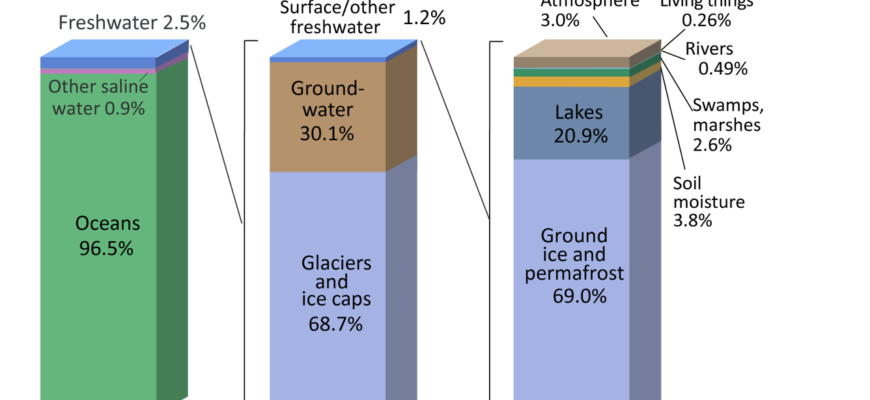
The estimation is that around 97.5% of Earth’s water is salt water found primarily in oceans and seas. This leaves a mere 2.5% as fresh water, available in rivers, lakes, ice caps, glaciers, and underground aquifers. With such a high percentage of salt water, understanding its role in our ecosystem is vital.
Why Is Most of Earth’s Water Salt Water?
The Earth’s water cycle contributes significantly to maintaining ocean salinity. Rivers and rainfall, processes through the water cycle, transport minerals and salts from the land into the sea. Over millions of years, this has led to the accumulation of salts, maintaining the ocean’s saline condition.
The Role of Salt Water in the Ecosystem
Salt water plays a critical role in Earth’s climate regulation, weather systems, and the global ecosystem. It is home to a diverse range of marine species and supports over half of the world’s oxygen production through phytoplankton photosynthesis. The oceans influence weather patterns and climate through heat distribution carried by major currents such as the Gulf Stream.
Salt Water vs Fresh Water: Which Is Better for Human Use?
For direct human use, fresh water is preferable due to its low salinity, making it suitable for drinking, agriculture, and industry. However, technologies such as desalination allow salt water to be converted to fresh water in regions facing water shortages, albeit at a higher cost and environmental impact.
- Drinking: Fresh water is safe for consumption, while salt water requires desalination.
- Agriculture: Fresh water supports crop growth without the risk of soil salinization.
- Industry: Many industries use fresh water for cooling and processing.
Desalination: Turning Salt Water into Fresh Water
Desalination is a process that removes salts and minerals from salt water, making it suitable for human use. While this technology offers solutions to water scarcity, it is often resource-intensive and costly. The environmental impact, including brine disposal, is also a concern.
Future of Water Availability on Earth
With increasing demand for fresh water due to population growth and climate change, the exploration of utilizing salt water through innovative technologies is crucial. Conservation and sustainable management of existing fresh water resources remain priorities for ensuring future water security.
Common Mistakes About Salt Water on Earth
Some common misconceptions include the belief that the conversion of salt water to fresh water is simple and inexpensive. Furthermore, the idea that Earth has an unlimited supply of water ignores the limited availability of accessible fresh water and the challenges posed by desalination.
Table: Salt Water vs Fresh Water Comparison
| Aspect | Salt Water | Fresh Water |
|---|---|---|
| Volume on Earth | 97.5% | 2.5% |
| Usability | Limited without treatment | Mostly available for direct use |
| Cost of Conversion | High (desalination needed) | Low |