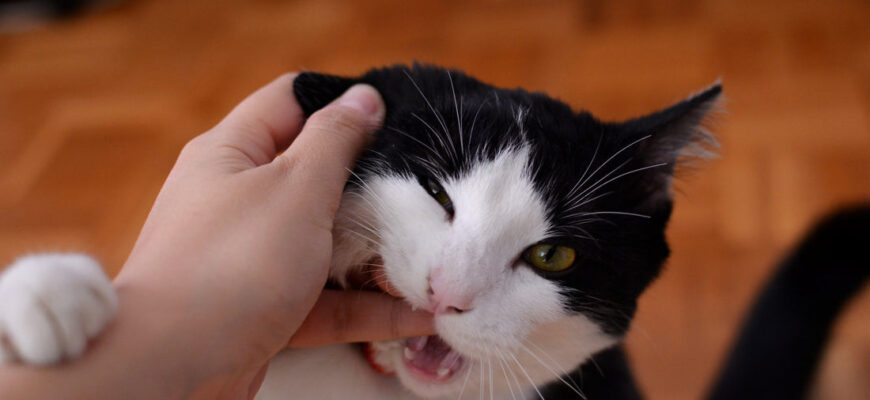
A cat that bites while you pet it is often overstimulated and telling you it has had enough.
Why it happens
- Overstimulation: too much petting.
- Petting sensitive areas such as the belly or base of the tail.
- Play aggression.
- Pain or illness.
Warning signs
Twitching tail, flattened ears, dilated pupils and skin rippling.
What to do
- Stop petting when you see the signs.
- Pet the head, cheeks and chin.
- Keep sessions short.
- Don’t punish. Walk away.
See a vet
If biting is sudden or new, as it can signal pain.
Why cats bite while being petted

Petting-induced aggression, sometimes called overstimulation, occurs when petting becomes too much. A cat may enjoy being touched, then reach a threshold of sensory overload and bite to end it.
Warning signs
- Tail twitching or thumping.
- Skin rippling along the back.
- Ears turning sideways or flattening (“airplane ears”).
- Dilated pupils.
- Stiffening, turning the head toward your hand.
- Low growl.
Other causes
- Play behavior, especially in kittens that were not taught bite inhibition.
- Redirected aggression from something the cat saw outside.
- Pain, such as arthritis, dental disease or skin problems when touched in a sensitive spot.
- Fear.
- Love bites, gentle nips as part of grooming.
Preferred petting areas
Cats usually enjoy being touched on the cheeks, chin and the base of the ears, where they have scent glands. Many dislike petting on the belly, base of the tail or paws.
What to do
- Pet for short periods of 1 to 2 minutes and watch for early warning signs.
- Stop and let the cat leave before it bites.
- Use toys, wand toys or other objects to play, not hands.
- Never yell or hit the cat, which increases fear.
- Reward calm behavior with treats.
Bite care
Cat bites can cause serious infections because bacteria like Pasteurella are carried deep into tissue. Wash the wound well with soap and water and see a doctor within 24 hours, especially if it is deep, swollen, red or on the hand.
See a vet
A sudden change in aggression can be a sign of pain or illness, so a vet check is advised.
Overstimulation and warning signs
Many cats bite during petting because of petting induced aggression, also called overstimulation. Cats have sensitive skin and nerve endings, and repeated stroking can change from pleasant to irritating. Warning signs include a twitching or thumping tail, ears turned sideways or flat, skin rippling on the back, dilated pupils and turning the head toward your hand. Most cats prefer petting on the cheeks, chin and head, and many dislike belly rubs, so avoid the belly, base of the tail and paws. Short sessions of a minute or two, with a pause, help.
Bite care
Stop petting when you see the first signs, and let the cat leave. Never yell or punish. If bitten, wash the wound with soap and running water for at least 5 minutes and seek medical care within 24 hours, because cat bites often cause deep puncture wounds that carry bacteria such as Pasteurella, with infection risk of 30 to 50 percent. Watch for redness, swelling, pus or fever. A tetanus booster may be needed if the last was over 5 years ago. Cat scratch disease from Bartonella can follow a scratch or bite. If a cat suddenly becomes aggressive when touched, a vet check is advised, since pain can be a cause.
Based on data from the CDC and International Cat Care







