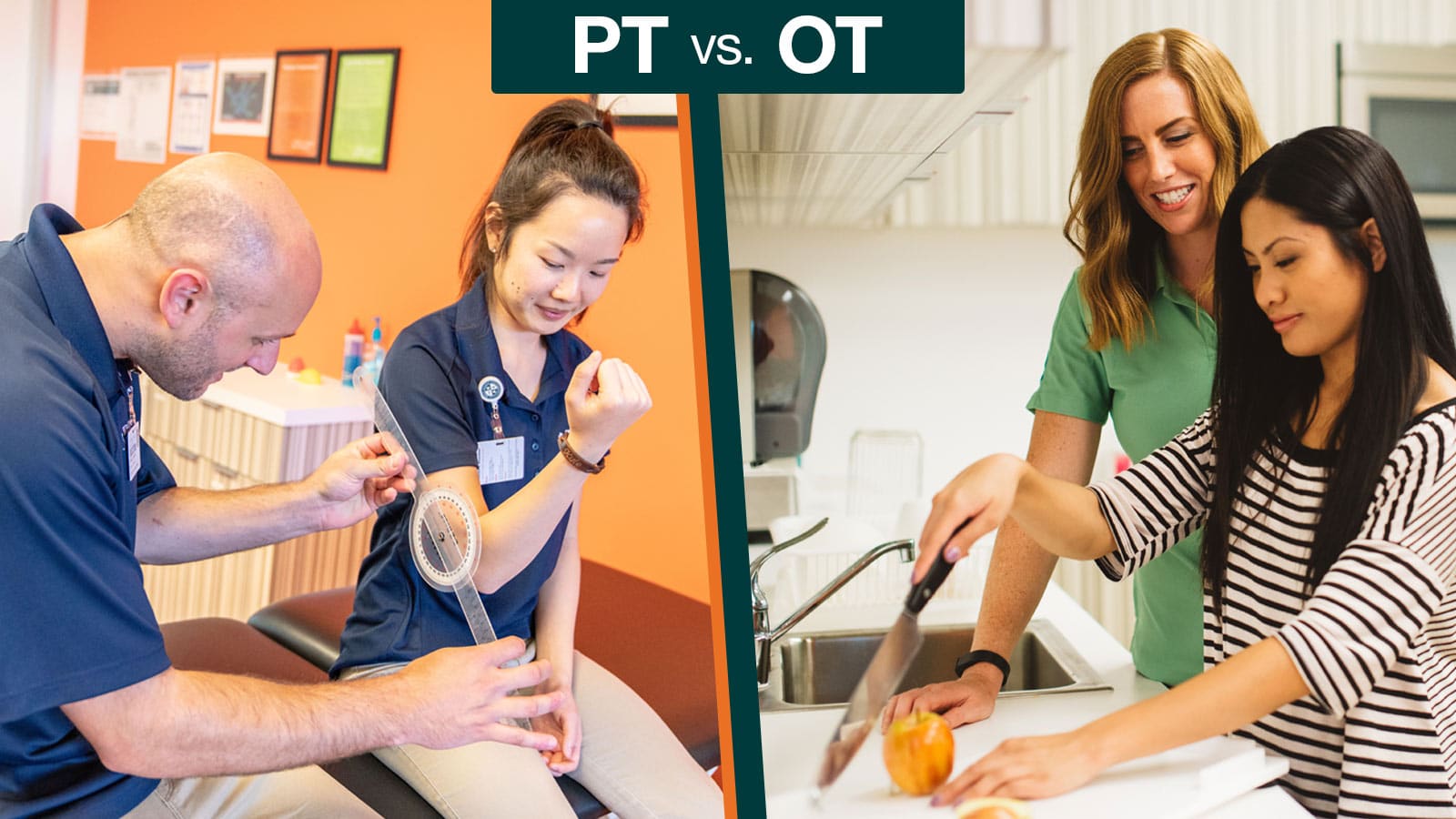
Physical therapy (PT) restores movement and strength, while occupational therapy (OT) helps people perform daily activities and fine motor tasks.
Physical therapy (PT)
PT focuses on movement, strength, balance and pain. A physical therapist treats injuries, surgery recovery, and conditions that affect mobility. Education: Doctor of Physical Therapy (DPT).
Occupational therapy (OT)
OT helps people perform daily activities (dressing, eating, writing, working). Education: master’s or doctorate (OTD).
Example: after a stroke
PT works on walking and strength. OT works on dressing, cooking and fine motor tasks.
Settings
Hospitals, clinics, schools, nursing homes and home health.
Pay
BLS median: about $99,000 (PT) and $96,000 (OT) per year.
Overlap
Both use exercise and education.
Which do you need
A doctor can refer you.
Physical therapy (PT) in detail
Physical therapists focus on movement, strength, balance and pain. They help people recover from injuries, surgery, strokes or chronic conditions, and teach exercises for the body. Physical therapists hold a Doctor of Physical Therapy (DPT) degree, which takes three years after a bachelor’s degree, and must pass a licensing exam. The median pay is about $99,000.
Occupational therapy (OT) in detail
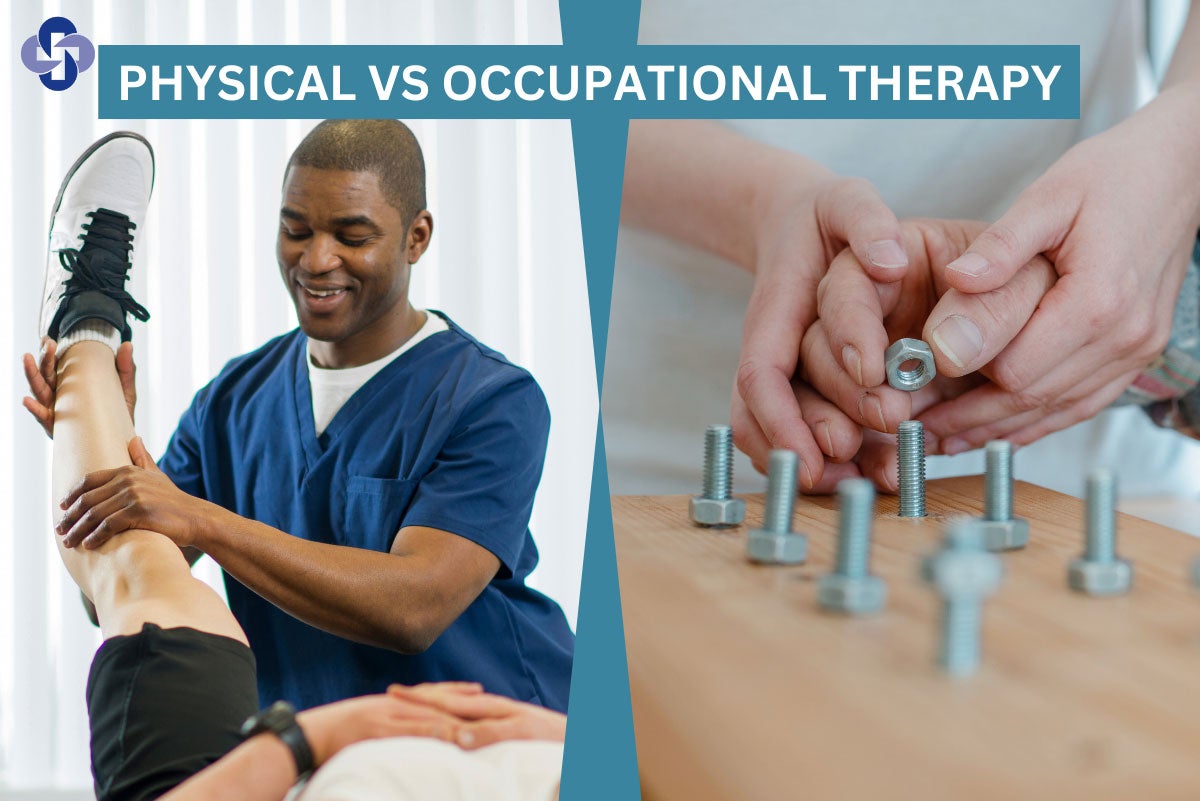
Occupational therapists help people perform the activities of daily life, the “occupations” of living: dressing, cooking, bathing, writing, working, driving and playing. They adapt tasks, teach new methods, recommend equipment and modify environments. They hold a master’s or doctoral degree (MOT or OTD) and must pass a certification exam. The median pay is about $96,000. OT is also used with children for fine motor skills, sensory processing and school tasks.
Example: after a stroke
A physical therapist works on walking, balance, leg strength and moving from bed to chair. An occupational therapist works on using the weak arm and hand to get dressed, eat, write and cook, may assess cognition and home safety, and recommends adaptive tools.
Settings
Both work in hospitals, rehabilitation centers, outpatient clinics, nursing homes, schools and home health. OTs also work in mental health and workplace programs. PTs often work with athletes and orthopedic injuries.
Pay
Median annual pay (BLS, 2023): physical therapists about $99,700 and occupational therapists about $96,400. Growth is projected at about 14% for PT and 12% for OT over 10 years.
Overlap
Both aim to improve function and independence, and there is some overlap in exercises and care for injuries. They often work together in teams. Insurance often covers both with limits on the number of visits.
Which do you need
- Choose PT for pain, injuries, surgery recovery, joint replacement, trouble walking, balance problems and sports injuries.
- Choose OT for difficulty with daily tasks, hand function, workplace ergonomics, sensory or developmental issues in children, and cognitive adaptation.
A doctor can refer you to the right therapist. Many states allow direct access to PT without a referral.

Licensing and employment data
Physical therapists need a Doctor of Physical Therapy degree, which takes about 3 years after a bachelor’s degree, and a state license after passing the NPTE. They treat movement problems such as post surgery weakness, back pain and balance. Occupational therapists need a master’s or doctoral degree and pass the NBCOT exam, and they help people regain skills for daily living and work, such as dressing, cooking and using adaptive equipment. The Bureau of Labor Statistics reports median annual pay of about 99,000 USD for physical therapists and about 96,000 USD for occupational therapists in 2023. After a stroke, PT might focus on walking and leg strength, while OT might work on hand function, dressing and kitchen tasks. Many clinics offer both services. Doctors usually refer patients, and insurance often requires a referral or prior authorization depending on state law and plan.
Based on data from the Bureau of Labor Statistics and the American Occupational Therapy Association