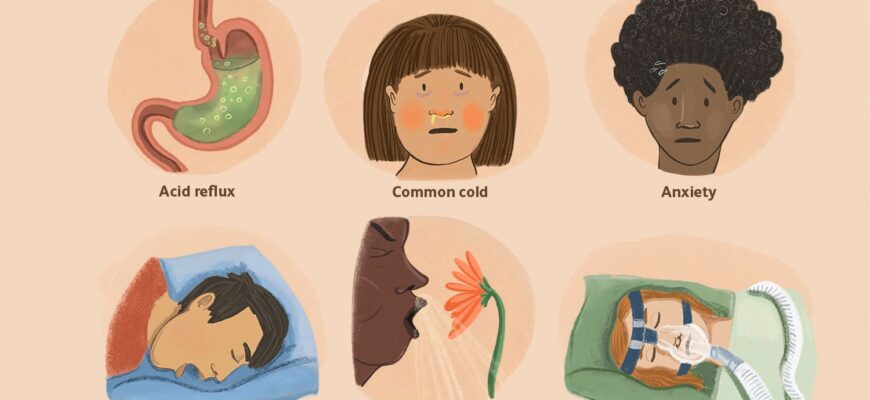
A dry throat is commonly caused by dehydration, mouth breathing, dry air, allergies, or a cold.
Causes
- Dehydration.
- Mouth breathing and snoring.
- Dry air, heating or air conditioning.
- Allergies and postnasal drip.
- Colds and flu.
- Medicines (antihistamines, decongestants).
- Smoking and alcohol.
- Sjogren’s syndrome or acid reflux.
Relief
Drink water, use a humidifier, suck on lozenges and avoid irritants.
Night
Raise your head and treat nasal congestion.
See a doctor if
It lasts more than 2 weeks, or comes with pain, trouble swallowing or fever.
Prevention

Stay hydrated.
Tea
Warm tea with honey soothes.
Causes
A dry throat has many causes, from simple to medical.
- Dehydration.
- Mouth breathing, from a stuffy nose, sleep apnea or habit.
- Dry indoor air, particularly in winter and with air conditioning.
- Colds, flu, strep throat and tonsillitis.
- Allergies and postnasal drip.
- Acid reflux (GERD), including silent reflux (LPR).
- Medications: antihistamines, decongestants, antidepressants, blood pressure drugs and others.
- Smoking and secondhand smoke, alcohol.
- Overusing the voice, or shouting.
- Sjogren’s syndrome, an autoimmune disease causing dry mouth and eyes.
- Diabetes, which dries the mouth.
- Anxiety and stress.
- Radiation therapy to the head and neck.

Relief
- Drink water throughout the day, about 2 to 3 liters for most adults.
- Run a cool-mist humidifier to keep humidity at 30% to 50%.
- Suck on sugar-free lozenges, hard candy or chew sugar-free gum to boost saliva.
- Gargle with warm salt water.
- Honey in warm water or tea (not for babies under 1 year).
- Avoid alcohol, caffeine and smoking.
- Use saline nasal sprays to treat a stuffy nose.
- Throat sprays and over-the-counter pain relievers for soreness.
Night
A dry throat on waking is often from mouth breathing during sleep. Use a humidifier in the bedroom, treat nasal congestion, and consider a sleep apnea test if you snore loudly or feel tired. Keep water by the bed.
See a doctor if
Dryness lasts more than two weeks, comes with fever, trouble swallowing, hoarseness for over 2 weeks, ear pain, a lump in the neck, white patches, weight loss or dry eyes. Tests may include a strep test, allergy testing, reflux testing or blood tests.
Prevention
Stay hydrated, treat allergies, avoid smoke, and do not overuse your voice. Review medications with a doctor.
Tea
Warm herbal teas such as chamomile, licorice root or slippery elm can soothe a dry throat. Licorice should be limited, as large amounts can raise blood pressure.

Humidity, mouth breathing and medicines
Dry throat is frequently due to dry indoor air, mouth breathing at night and dehydration. The Environmental Protection Agency suggests keeping indoor humidity between 30 and 50 percent, and winter heating can drop it below 20 percent. Antihistamines, decongestants, some blood pressure medicines and antidepressants dry the mucous membranes. Allergies, colds, flu and strep throat inflame the throat, and sleep apnea affects an estimated 30 million Americans and often causes dry mouth on waking. Smoking and acid reflux irritate throat tissue. Sip water often, use a humidifier, try lozenges or honey (not for babies under 12 months), and avoid alcohol and smoking. Warm tea with honey and lemon is a traditional soother. See a doctor if dryness lasts over 2 weeks, with persistent hoarseness, trouble swallowing, constant thirst with weight loss, or a lump in the neck.
Based on data from the Mayo Clinic and the EPA