
Joints crack because gas bubbles shift in joint fluid or tendons snap over bone. It is usually harmless unless it hurts.
Why joints crack
- Gas bubbles popping in the synovial fluid (cavitation). A 2015 MRI study showed the cracking sound results from a cavity forming in the joint fluid.
- Tendons or ligaments snapping over bone.
- Rough surfaces (crepitus).
Is it harmful
No. Painless cracking is normal, and studies show it doesn’t cause arthritis.
Pain
Cracking with pain, swelling or locking may signal injury or arthritis.
Common joints
Knuckles, knees, neck and back.
Reduce
Stay active and stretch; there’s no need to stop if painless.
See a doctor if

Cracking comes with pain or swelling.
Knuckle cracking
A study by Dr. Donald Unger cracked one hand’s knuckles for 60 years with no arthritis difference.
Why joints crack
Cracking, popping or clicking sounds from joints are very common. There are three main explanations:
- Gas bubbles: joints are surrounded by synovial fluid containing dissolved gases. When a joint is stretched, pressure drops and gas forms a bubble that collapses with a pop. A 2015 MRI study in PLOS ONE showed that the cavity forms when knuckles are cracked, and a 2018 study suggested the sound comes from bubble collapse. The knuckle cannot be cracked again for about 20 minutes while gas redissolves.
- Tendons and ligaments snapping over bone as they move.
- Rough cartilage surfaces rubbing in joints with arthritis, causing a grinding noise (crepitus).
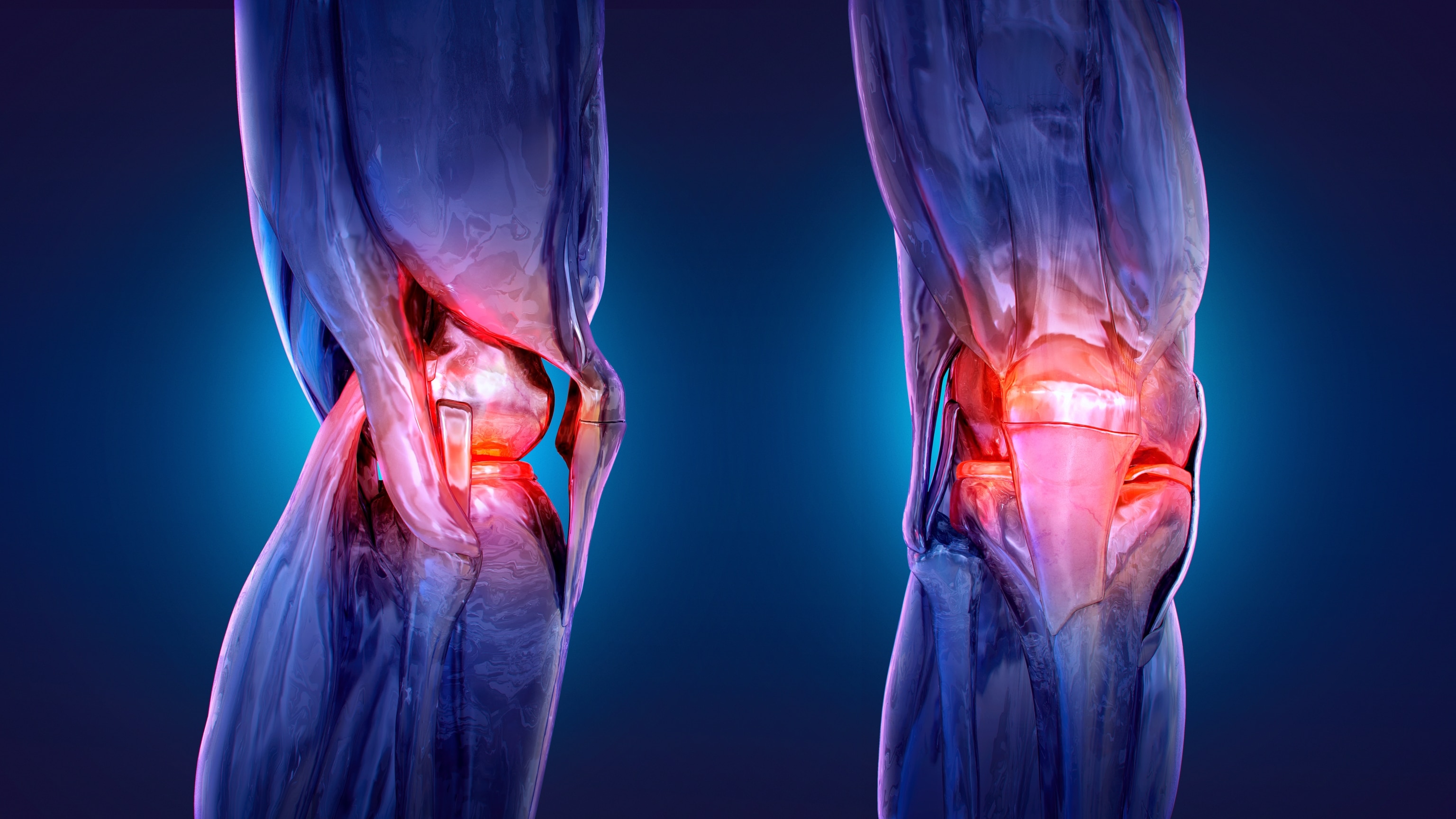
Is it harmful
For most people, painless cracking is harmless. Studies, including one by Dr. Donald Unger, who cracked the knuckles of only his left hand for 60 years, found no difference in arthritis between hands. A large 2011 study of 215 people found no link between knuckle cracking and hand osteoarthritis. Some studies show habitual knuckle crackers may have reduced grip strength or hand swelling, but the evidence is limited.
Pain
Cracking with pain, swelling, locking, a feeling that the joint gives way, or after an injury may signal a problem such as a meniscus tear, ligament injury or arthritis.
Common joints
Knuckles, knees, neck, back, ankles, shoulders and hips are common. Knees crack in about 20% of the population without pain. Cracking in the knee when climbing stairs may be from the kneecap tracking. Neck cracking, especially with forceful manipulation, has a rare risk of vessel injury.
Reduce it
- Stay active and keep a healthy weight to ease the load on joints.
- Strengthen the muscles around joints with exercise, especially quadriceps and glutes for the knees.
- Stretch and move regularly after sitting still.
- Work on posture and use good ergonomics.
- Do not force joints to crack.
See a doctor if
Cracking comes with pain, swelling, redness, locking, instability or loss of motion. Tests include examination, X-rays or MRI.
Knuckle cracking
About 25% to 54% of people crack their knuckles. The habit is common and harmless in most cases, but can annoy others.
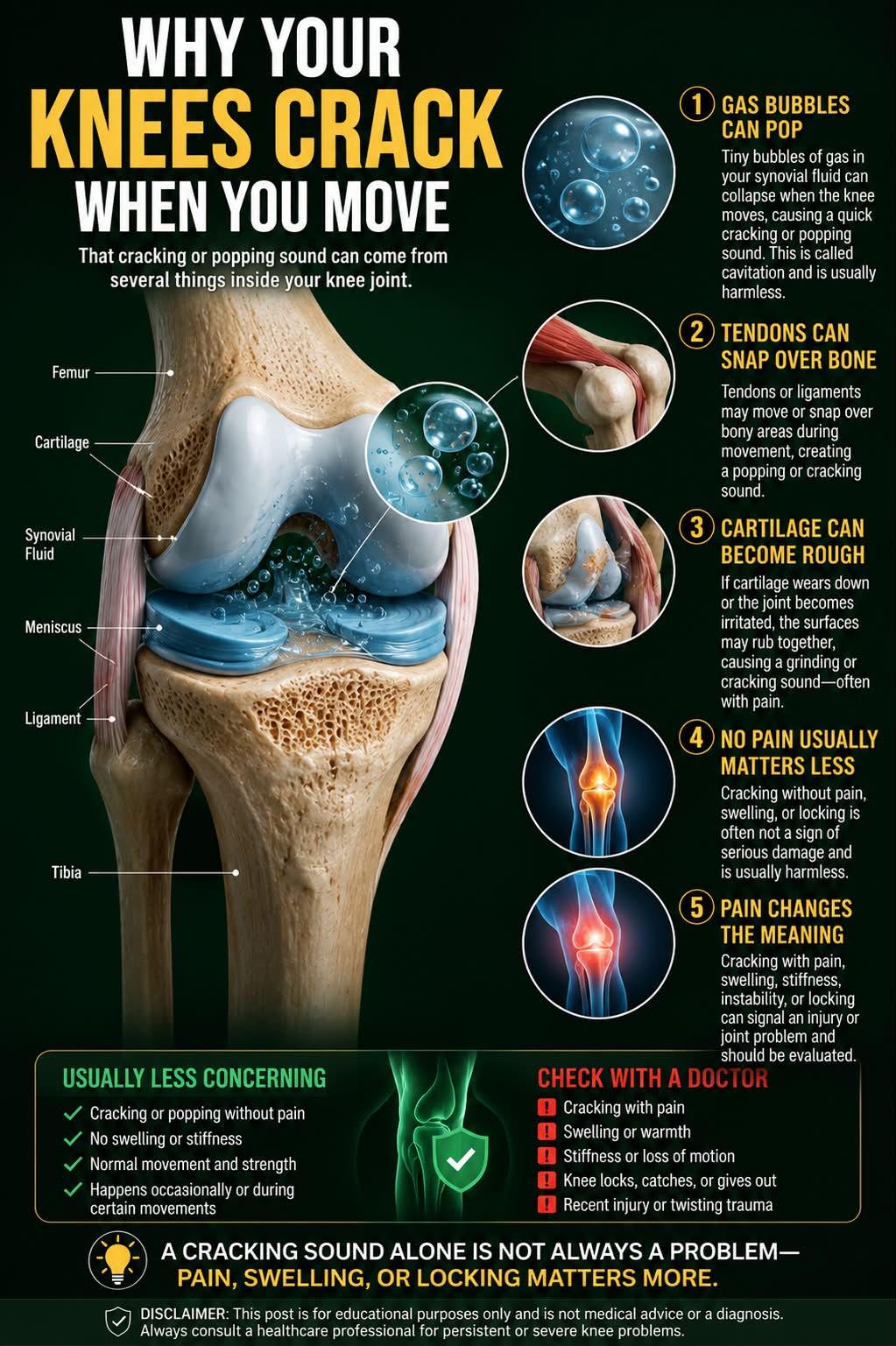
Mechanisms and meaning
Joint popping has two main sources: gas bubbles in joint fluid collapsing or forming, as shown in a 2015 MRI study of knuckle cracking in PLOS ONE, and tendons or ligaments sliding over bone. Painless cracking is common and usually harmless. A 2011 study in the Journal of the American Board of Family Medicine found no link between habitual knuckle cracking and hand arthritis. Cracking with pain, swelling, locking or a feeling of instability can point to cartilage damage, meniscus tears or arthritis. About 1 in 3 adults over 45 has knee crackling with movement, sometimes called crepitus. Weak muscles around joints, long sitting and stiffness after inactivity increase popping. Regular movement, strength training and a warm up can reduce noise. Weight loss lowers load on knees, since each pound lost removes about 4 pounds of pressure on the knee when walking. See a doctor if popping is painful or follows an injury.
Based on data from the Arthritis Foundation and the journal PLOS ONE







