Asparagus provides folate, vitamin K, fiber, and antioxidants.
Nutrition
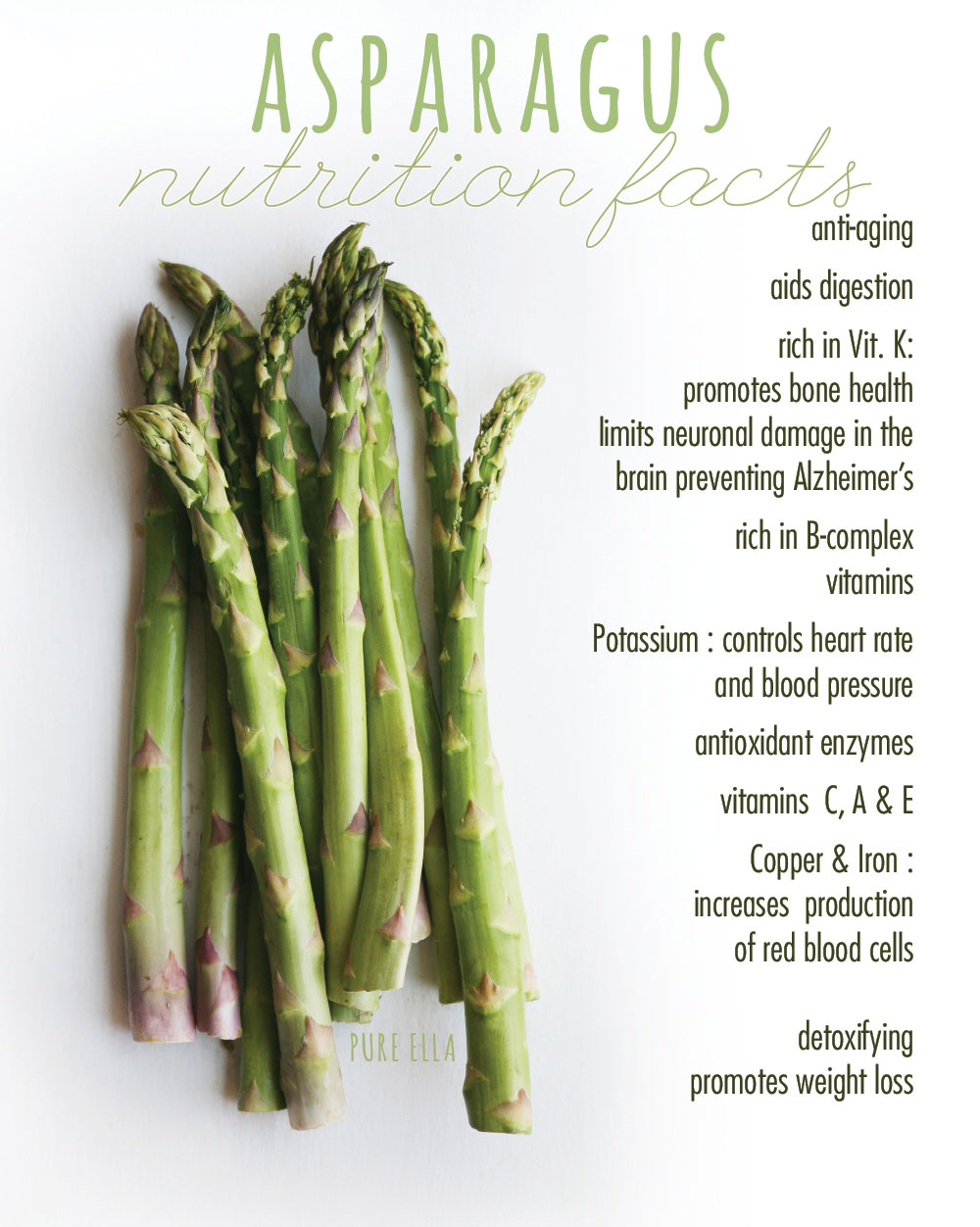
Six spears of cooked asparagus (90 g) have about 20 calories, 2 g of fiber, 2.2 g of protein, 70 mcg of folate (18 percent DV), 46 mcg of vitamin K (38 percent DV) and 0.8 g of vitamin A (USDA).
Benefits
- Folate supports cell growth and is important in pregnancy.
- Vitamin K for bones and clotting.
- Fiber and prebiotic inulin for gut bacteria.
- Antioxidants (glutathione, rutin).
Smell
Asparagus makes urine smell because of asparagusic acid breakdown. Not everyone can smell it.
Cautions
Vitamin K may affect warfarin.
Cooking
Steam or roast for 5 to 8 minutes.
Season
Spring.
Nutrition data
A half cup (90 grams) of cooked asparagus (about 6 spears) has about 20 calories, 3.7 grams of carbohydrate, 1.8 grams of fiber, 2.2 grams of protein and less than 0.5 gram of fat. It supplies about 70% of the daily value of vitamin K, 34% of folate, 18% of vitamin A, and 12% of vitamin C, plus iron, potassium, vitamin E and B vitamins. Asparagus is one of the best vegetable sources of folate.
Benefits

- Folate: needed for DNA synthesis and prevention of neural tube defects in pregnancy. Adults need 400 micrograms a day, and 600 micrograms in pregnancy.
- Vitamin K supports blood clotting and bone health.
- Fiber and prebiotics: asparagus contains inulin, which feeds beneficial gut bacteria.
- Antioxidants: glutathione, flavonoids such as rutin, and anthocyanins in purple asparagus.
- Low calorie and mild natural diuretic effect due to asparagine.
- Heart health: potassium helps balance sodium, and fiber supports cholesterol control.
- Some lab and animal studies suggest benefits for liver and blood sugar, but human evidence is limited.
Smell
Eating asparagus gives some people strong-smelling urine within 15 to 30 minutes. It is caused by sulfur compounds from the breakdown of asparagusic acid, including methanethiol. It is harmless. Only about 40% to 60% of people produce the smell, and fewer can smell it, depending on genetics. A genetic variant in olfactory receptors helps explain who smells it.
Cautions
- Vitamin K can interact with warfarin; keep intake consistent.
- People with gout may be advised to limit it because of purines, though evidence is mixed.
- Asparagus has a diuretic effect, so those on lithium should be careful.
- Rare allergy, especially in people allergic to other plants in the Liliaceae family.
Cooking
Snap off woody ends, and cook by steaming for 3 to 5 minutes, roasting at 425 F for 10 to 12 minutes, grilling or sautéing. Do not overcook, since it turns mushy and loses nutrients. Raw young spears are good in salads.
Season
Peak season for asparagus in the US is April to June. Choose firm, straight spears with tight tips. Store upright in a glass with water in the fridge for up to 4 days.

Folate and vitamin K figures
A cup of cooked asparagus (180 grams) provides about 40 calories, 4 grams of protein, 3.6 grams of fiber, 268 micrograms of folate (67 percent of the daily value) and 91 micrograms of vitamin K (about 76 percent of the daily value). It also gives vitamin A, vitamin C and some iron. Asparagus contains asparagine and the prebiotic fiber inulin, which feeds gut bacteria. About 40 to 60 percent of people produce urine with a strong sulfur smell after eating asparagus, due to the breakdown of asparagusic acid, and the ability to smell it is also genetic. Roasting at 400 F for 10 to 12 minutes or steaming for 3 to 5 minutes keeps color and nutrients. Thick spears are not tougher than thin ones, but trim the woody ends. The vitamin K content matters for those on warfarin, who should keep their intake steady.
Based on data from the USDA FoodData Central and the NIH