Tornadoes form when warm, moist air meets cool, dry air and winds at different heights create a spinning column in a thunderstorm.
How they form
Tornadoes form in supercell thunderstorms. Warm moist air from the Gulf meets cool dry air, and wind shear at different heights makes a rotating updraft (mesocyclone).
Scale
The Enhanced Fujita scale rates from EF0 (65 to 85 mph) to EF5 (over 200 mph).
Where
The US has about 1,200 tornadoes a year, more than any other country. Most hit in Tornado Alley in spring.
Safety
Go to a basement or interior room on the lowest floor.
Supercell storms
Most strong tornadoes come from supercell thunderstorms, which have a rotating updraft called a mesocyclone. Wind shear (wind that changes speed or direction with height) creates horizontal rolling air that gets tilted vertical by the updraft.

Ingredients
- Warm moist air near the surface, often from the Gulf of Mexico.
- Cold dry air aloft.
- An unstable atmosphere.
- A lifting trigger such as a front or dry line.
- Wind shear.
Formation
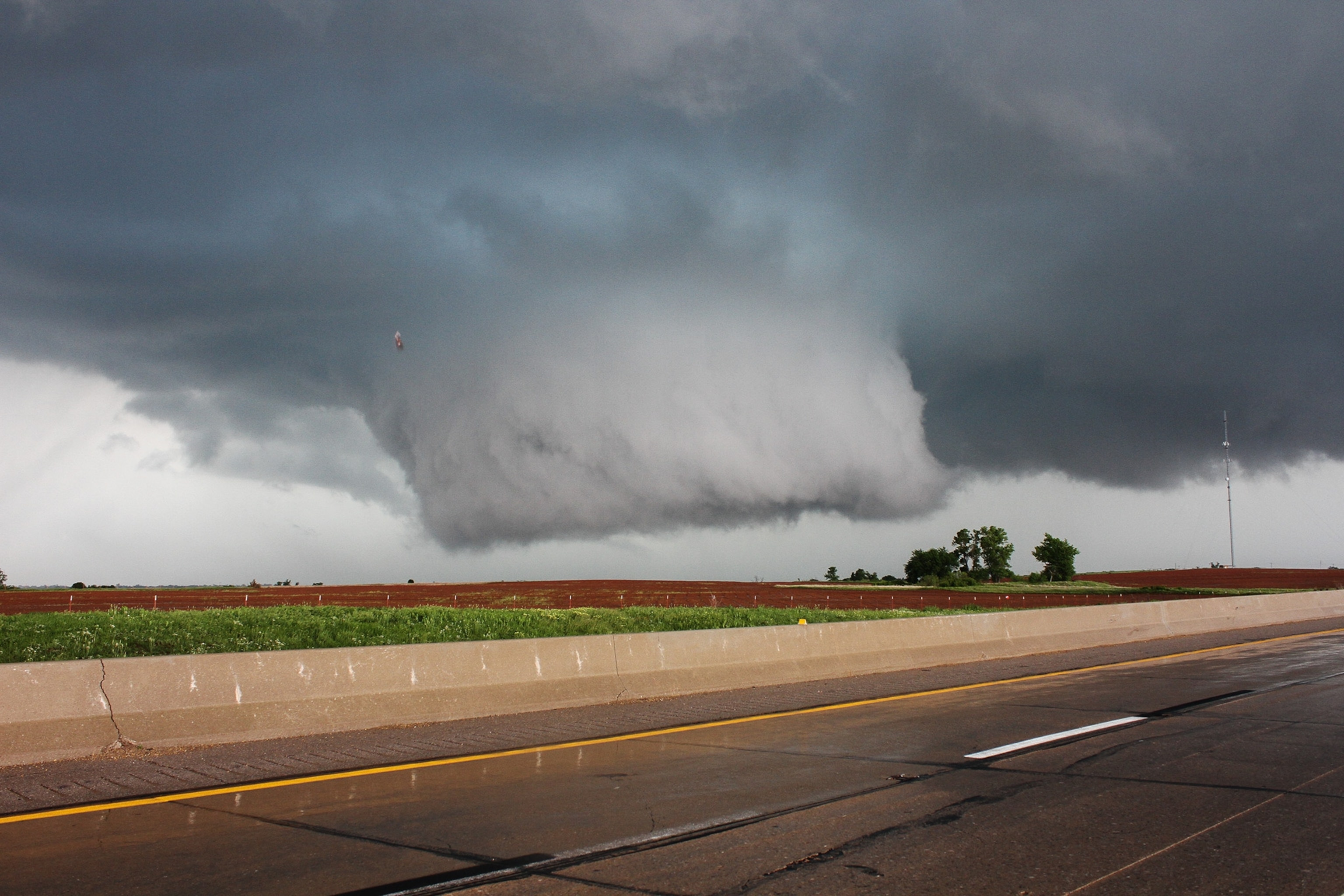
A funnel cloud descends from the base of the storm, and when it touches the ground it is a tornado. The rear flank downdraft helps tighten rotation.
Enhanced Fujita scale
EF0 (65 to 85 mph), EF1 (86 to 110), EF2 (111 to 135), EF3 (136 to 165), EF4 (166 to 200), EF5 (over 200 mph). About 75% of US tornadoes are EF0 or EF1, and less than 2% reach EF4 or EF5.
Frequency
The US sees about 1,200 tornadoes a year, more than any other country. The central US known as Tornado Alley, plus Dixie Alley in the Southeast, are prime areas. Peak season is spring, and tornadoes can occur year-round.
Warning times
Average warning time is about 13 minutes.
Safety
- Go to the lowest floor, an interior room with no windows, or a storm shelter.
- Cover your head with a mattress or helmet.
- Do not shelter under an overpass.
- If in a vehicle with no shelter nearby, seek the lowest ground and cover your head.
- Have a weather radio and alerts on your phone.
Watch versus warning
A tornado watch means conditions are favorable. A warning means a tornado is occurring or indicated by radar, and you should take shelter at once.
Storm structure and scale
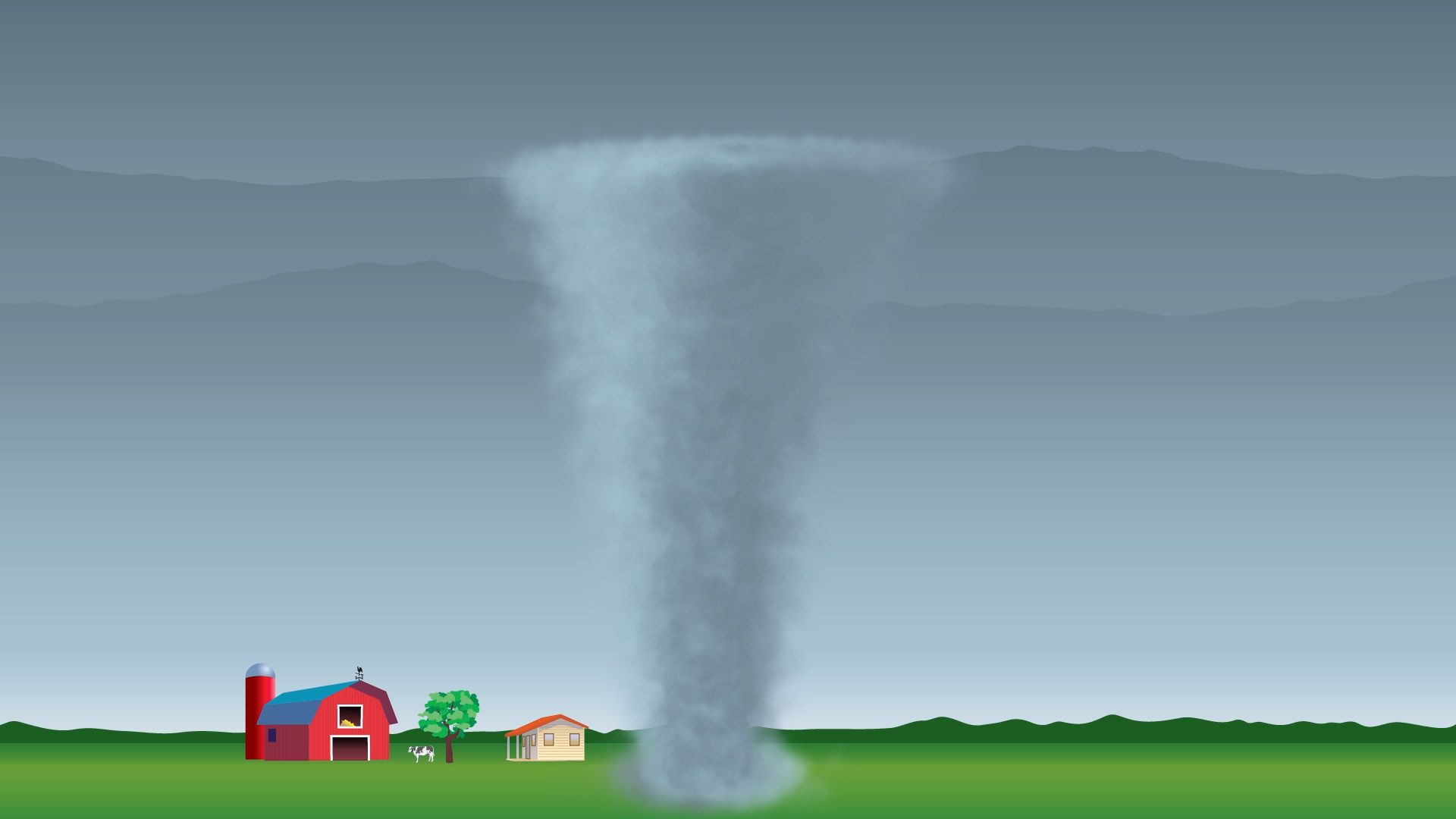
Most strong tornadoes form from supercell thunderstorms, which have a rotating updraft called a mesocyclone. The ingredients are warm moist air at low levels, cooler dry air above, lift from a front or dryline, and wind shear, which changes wind speed and direction with height. The Enhanced Fujita scale rates tornadoes from EF0 (65 to 85 mph) to EF5 (over 200 mph) based on damage. The US has about 1,200 tornadoes a year, more than any other country, mostly in the central Plains and Southeast. On May 22, 2011, an EF5 tornado hit Joplin, Missouri, killing 158 people.
Warnings and safety
A tornado watch means conditions favor tornadoes, while a warning means one has been seen or indicated by radar and you should take shelter at once. Average warning lead time is about 13 minutes. Go to the lowest floor, an interior room with no windows, such as a basement, storm shelter or bathroom, and cover your head. Mobile homes and vehicles are not safe, and avoid overpasses. Keep a weather radio and phone alerts on, and know your community’s safe places.
Based on data from NOAA and the National Weather Service