The digestive system breaks food down in the mouth, stomach, and small intestine, absorbs nutrients, and the large intestine absorbs water and forms waste.
Path of food
- Mouth: chewing and saliva (amylase starts breaking down starch).
- Esophagus: muscles push food down in about 8 seconds.
- Stomach: acid and enzymes (pepsin) break down protein over 2 to 4 hours.
- Small intestine (about 20 feet): bile and pancreatic enzymes digest food, absorbing most nutrients over 3 to 6 hours.
- Large intestine: absorbs water and forms stool in 10 to 59 hours.
Helper organs
Liver (bile), gallbladder (stores bile) and pancreas (enzymes).
Total time
Food moves through in 24 to 72 hours.
Gut bacteria
Trillions of bacteria help digestion.
Length

About 30 feet from mouth to anus.
Path of food
The digestive tract is a continuous tube about 9 meters (30 feet) long in adults:
- Mouth: chewing breaks down food and saliva with amylase begins starch digestion.
- Esophagus: muscle waves (peristalsis) push food to the stomach in about 5 to 8 seconds.
- Stomach: stores food, mixes it with acid (pH 1.5 to 3.5) and pepsin, which breaks down protein. Food stays 2 to 5 hours and becomes a liquid called chyme.
- Small intestine: about 6 meters long. The duodenum receives bile and pancreatic enzymes, and the jejunum and ileum absorb most nutrients through villi, which give the surface an area of roughly 30 square meters.
- Large intestine (colon): about 1.5 meters, absorbs water and electrolytes and forms stool.
- Rectum and anus: store and release stool.
Helper organs
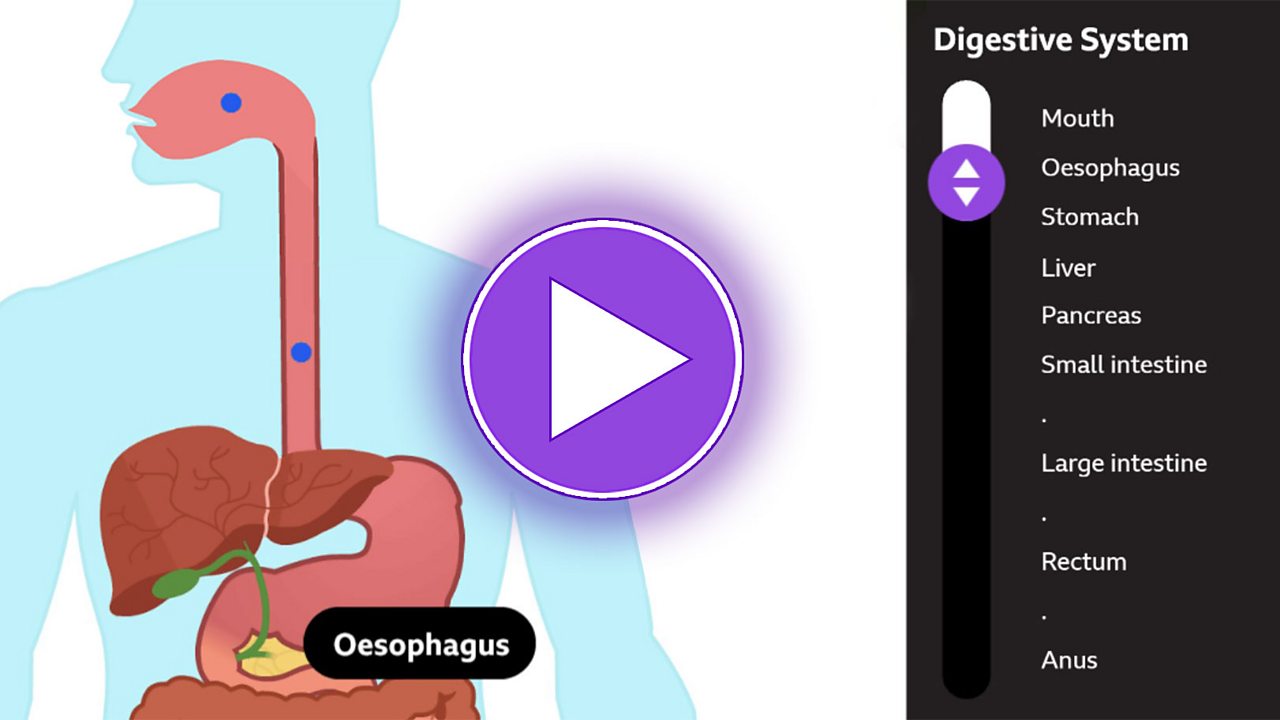
- Liver: makes bile, processes nutrients and detoxifies the blood.
- Gallbladder: stores and concentrates bile, which helps digest fats.
- Pancreas: releases enzymes (lipase, protease, amylase) and bicarbonate into the small intestine, and insulin into the blood.
- Salivary glands produce about 1 to 1.5 liters of saliva a day.
Total time
Food takes about 6 to 8 hours to pass through the stomach and small intestine, and 12 to 48 hours in the colon. The whole trip commonly takes 24 to 72 hours, depending on diet, age and sex. Women tend to have slower transit than men.
Gut bacteria
The gut holds trillions of microbes, about 38 trillion bacteria, that help break down fiber, make vitamins K and B12, and train the immune system. Short-chain fatty acids from fiber fermentation feed colon cells. An imbalanced microbiome is linked to conditions such as inflammatory bowel disease, obesity and diabetes. Diverse diets rich in fiber support healthy bacteria.
Length
The small intestine is the longest part of the digestive tract, with a length of about 6 to 7 meters. The tract’s lining is replaced every 3 to 5 days. The enteric nervous system, with over 100 million nerve cells, controls digestion and is sometimes called the second brain.
Common problems
Acid reflux, irritable bowel syndrome, celiac disease, gallstones, ulcers and constipation are common disorders. A diet with 25 to 38 grams of fiber, enough water and regular activity supports digestion.

Organ-by-organ numbers
Digestion starts in the mouth, where amylase begins starch breakdown and chewing reduces food to a bolus. Food passes through the esophagus in about 5 to 10 seconds and reaches the stomach, where acid with a pH of 1.5 to 3.5 and pepsin break down protein over 2 to 4 hours. In the small intestine, which is about 20 feet long, bile from the liver and enzymes from the pancreas complete digestion, and nutrients are absorbed through villi that give a surface area of roughly 30 square meters. Water is absorbed in the large intestine, which is around 5 feet long. Total transit time from eating to stool is commonly 24 to 72 hours. The gut holds about 38 trillion bacteria, according to estimates. Fiber of 25 to 38 grams daily supports regular bowel movements. Persistent pain, blood in stool or unexplained weight loss should be checked by a doctor.
Based on data from the NIDDK and the Cleveland Clinic