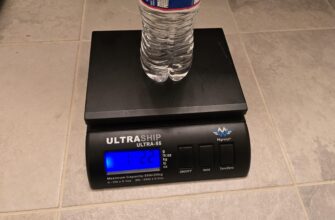
- Understanding the Weight of 40 oz of Water: A Comprehensive Guide
- Introduction
- What is 40 oz of Water in Pounds?
- Converting 40 oz of Water to Grams
- Why Understanding Water Weight Matters
- Common Mistakes in Measuring Water Weight
- How Temperature Affects Water Weight
- Which Measurement Tools to Use for Precision
- Comparing Measurement Units: Ounces, Pounds, and Grams
- Is It Possible to Convert Fluid Ounces Directly to Weight?
- FAQs
- How much does 40 oz of water weigh?
- What is the best tool for measuring water weight?
- Can temperature affect the weight of water?
- Why is it essential to understand water weight?
- Are fluid ounces and weight ounces the same?
Understanding the Weight of 40 oz of Water: A Comprehensive Guide
Water is a fundamental component of life and understanding its properties, such as weight, is crucial for various fields including science, cooking, and daily life. This article will explore the question: “How much does 40 oz of water weigh?” We’ll delve into various aspects surrounding this query to offer a comprehensive answer.
Introduction
Water is measured in various units depending on the context. For weight, understanding conversions between ounces, pounds, and grams is essential. The weight of water can affect everything from cooking recipes to scientific experiments.
What is 40 oz of Water in Pounds?
To determine how much 40 oz of water weighs, you need to convert fluid ounces to pounds. Water has a density of about 1 gram per milliliter, making the conversion relatively straightforward.
- 1 fluid ounce (oz) = 0.0625 pounds (lbs)
Therefore, 40 oz of water is approximately 2.5 pounds.
Converting 40 oz of Water to Grams
Grams are another standard unit of measurement for weight. To convert fluid ounces of water to grams:
- 1 oz of water = approximately 28.3495 grams
Thus, 40 oz of water weighs about 1,133.98 grams.
Why Understanding Water Weight Matters
The weight of water is crucial for multiple reasons, such as in dietary planning, scientific experiments, and shipping. Knowing the exact weight can impact the accuracy of recipes, formulations, and various daily and professional applications.
Common Mistakes in Measuring Water Weight
Some common errors occur when people measure water weight. These include misreading measuring equipment and not accounting for temperature changes which can slightly alter water’s density.
How Temperature Affects Water Weight
While water’s density is generally considered to be 1 g/ml, temperature can affect this. Water expands when heated and contracts when cooled. You should take these variations into account for precise measurements, particularly in scientific settings.
Which Measurement Tools to Use for Precision
For precise measurements of water weight, using calibrated tools like electronic scales, graduated cylinders, and balance scales is advisable. These tools can help you achieve accurate results and avoid common measurement errors.
Comparing Measurement Units: Ounces, Pounds, and Grams
Understanding the relationship between different measurement units can aid in converting water weight seamlessly:
| Unit | Equivalent in Water (40 oz) |
|---|---|
| Fluid Ounces (oz) | 40 oz |
| Pounds (lbs) | 2.5 lbs |
| Grams (g) | 1,134 g |
Is It Possible to Convert Fluid Ounces Directly to Weight?
Yes, it is possible to convert fluid ounces directly to weight using a factor specific to the substance being measured. For water, you can use its density as the conversion factor.
FAQs
How much does 40 oz of water weigh?
40 oz of water weighs approximately 2.5 pounds or 1,134 grams.
What is the best tool for measuring water weight?
Electronic scales and calibrated balance scales are the best tools for measuring water weight accurately.
Can temperature affect the weight of water?
Yes, temperature can affect the density of water, slightly altering its weight in terms of volume.
Why is it essential to understand water weight?
Understanding water weight is crucial for accurate measurements in cooking, scientific analysis, and industrial applications.
Are fluid ounces and weight ounces the same?
No, fluid ounces measure volume while weight ounces measure weight; they correspond closely only for substances like water.