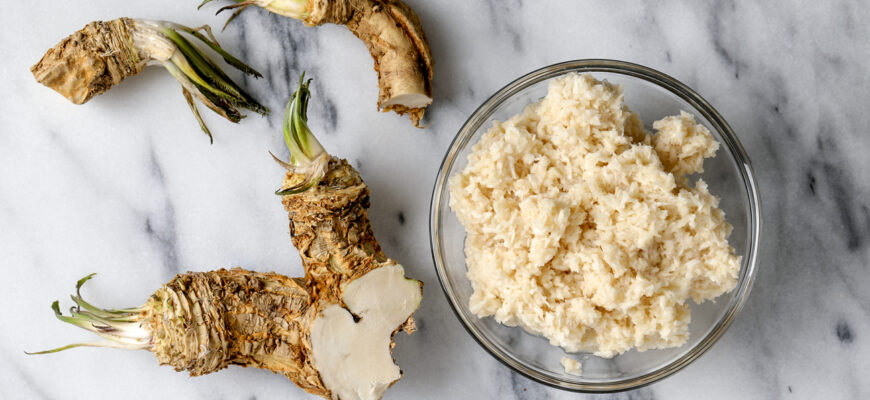
Horseradish contains compounds that may clear sinuses and have antibacterial effects, but it is very pungent.
Compounds
Horseradish contains glucosinolates (sinigrin). Crushing it releases allyl isothiocyanate, the pungent compound that clears sinuses.
Possible benefits
- Temporarily relieves nasal congestion.
- Antibacterial effects in lab studies.
- Glucosinolates are being studied for cancer prevention, but human data are limited.
Nutrition
A tablespoon has about 7 calories and 3 mg of vitamin C, and it is high in sodium in prepared form.
Cautions
It can irritate the stomach and mouth. Avoid large amounts if you have ulcers, thyroid problems or are pregnant.
Use

Add to roast beef, sauces and bloody Marys. Freshly grated is strongest, and fades within weeks in vinegar.
Family
It’s in the mustard family.
Compounds
Horseradish gets its pungent bite from glucosinolates, mainly sinigrin. When the root is cut or ground, an enzyme (myrosinase) turns sinigrin into allyl isothiocyanate, the volatile oil that stings the nose and sinuses. The effect fades within minutes after grating, and vinegar added shortly after grating stops the reaction and fixes the heat level.
Possible benefits
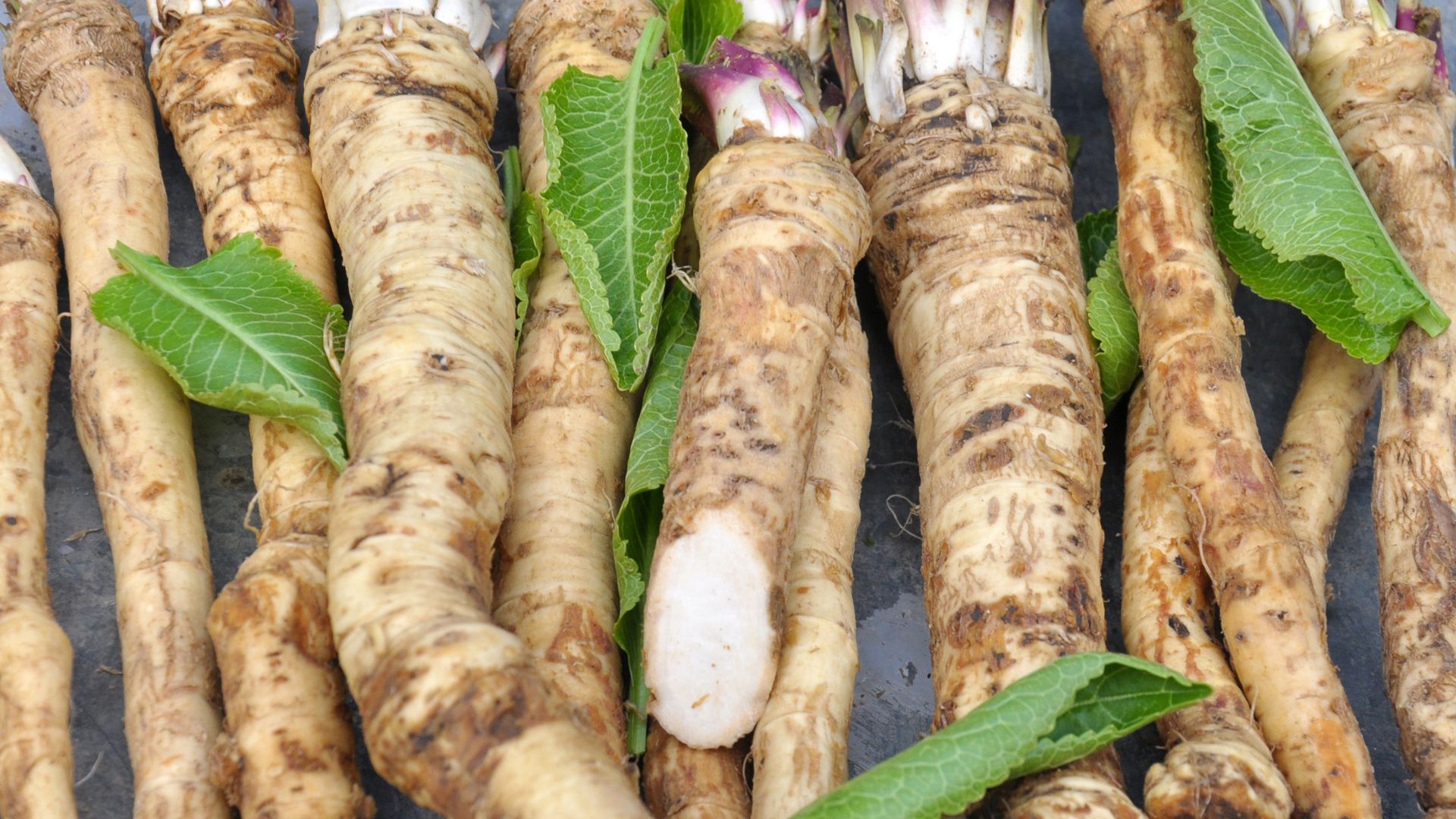
- Isothiocyanates have shown antibacterial and antifungal effects in laboratory studies, including against E. coli and Staphylococcus.
- Lab research suggests isothiocyanates may inhibit cancer cell growth, but this is not shown in humans.
- Sinus relief: horseradish can help thin mucus and relieve congestion temporarily. A German herbal combination of horseradish and nasturtium (Angocin) was studied for sinusitis and urinary infections with some positive results.
- Antioxidants and vitamin C, though portions are small.
- Peroxidase enzymes, which are used in lab tests.
Nutrition
A tablespoon (15 grams) of prepared horseradish has about 7 calories, 1.7 grams of carbohydrate, 0.5 gram of fiber and 8 milligrams of vitamin C. It is low in calories but high in sodium, with about 47 milligrams in a tablespoon. Raw roots contain potassium, folate and small amounts of calcium.
Cautions
- Strong irritant to the stomach, which may cause heartburn in large amounts.
- Can irritate mouth and throat.
- Large amounts may affect thyroid function, as goitrogens can interfere with iodine uptake.
- People with ulcers, kidney disease or inflammatory bowel disease should limit it.
- Not recommended in large amounts during pregnancy.
- Wasabi served in the West is often horseradish colored green.
Use
Grate fresh root and mix with vinegar and salt. Serve with roast beef, prime rib, smoked fish, in cocktail sauce, deviled eggs and Bloody Marys. Store the prepared sauce in the fridge, where flavor weakens in 1 to 3 months. Whole roots keep for several weeks wrapped in the fridge.
Family
Horseradish (Armoracia rusticana) belongs to the Brassicaceae family with mustard, wasabi, cabbage and broccoli. It is native to southeastern Europe and western Asia. The US produces about 6 million gallons of prepared horseradish a year, mostly from Collinsville, Illinois, called the horseradish capital.

Allyl isothiocyanate and the sharp heat
The sharp sting of horseradish comes from allyl isothiocyanate, which forms when cell walls are crushed and the enzyme myrosinase acts on sinigrin. Heat and vinegar stop the reaction, so prepared horseradish added to vinegar right after grating keeps a milder flavor, while waiting several minutes lets the heat build up. The same family of compounds is found in wasabi, mustard and cabbage. One tablespoon (15 grams) of prepared horseradish has about 7 calories and 0.2 grams of fiber, and it is high in sodium at about 47 mg. Lab studies suggest isothiocyanates have antibacterial properties, but human evidence for treating infections is limited. Large amounts can irritate the stomach, and people with thyroid conditions and ulcers should be careful with big portions.
Based on data from the USDA FoodData Central and the NIH