- Introduction: Understanding Butter Measurements
- Butter Measurement: How It Works
- Converting Butter Measurements: Cups, Tablespoons, and Grams
- Why Butter Measurement Is Important
- Alternatives to Butter: Healthier Options
- Common Mistakes When Measuring Butter
- Tips for Accurate Butter Measurement
- How to Soften Butter Quickly
- Is It Possible to Freeze Butter?
- FAQ: Butter Measurement and Use
- How much is a tablespoon of butter in grams?
- Which is better for baking: salted or unsalted butter?
- Can you substitute margarine for butter in all recipes?
- How do you store butter for extended shelf life?
- What is the price difference between butter and margarine?
- Article FAQ Block
Introduction: Understanding Butter Measurements
When it comes to baking and cooking, measurements are crucial for achieving the right taste and texture. A common question that arises in recipes is: “How much is half a stick of butter in cups?” Butter, a fundamental ingredient in many recipes, is often listed in stick measurements. In this article, we’ll delve into the various ways to measure butter, ensuring you have the knowledge to execute your culinary creations flawlessly.
Butter Measurement: How It Works
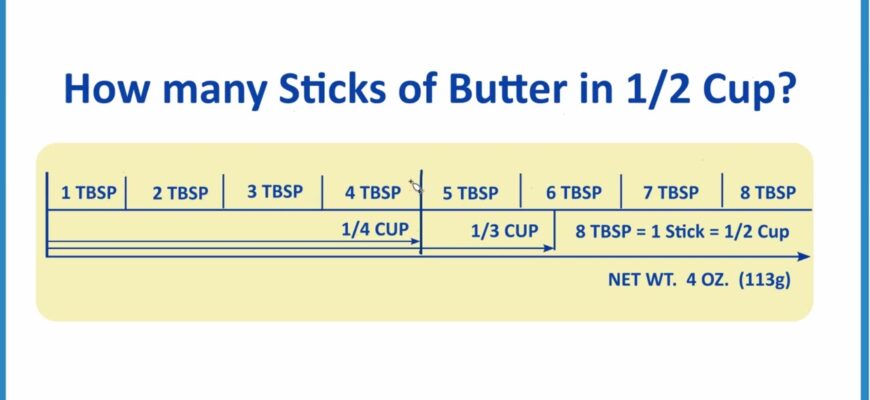
Butter is typically sold in one-pound blocks in the United States, often divided into four sticks. Each stick is equal to half a cup. Thus, when a recipe calls for half a stick of butter, it means you’re using 1/4 cup. For those new to baking or unfamiliar with U.S. measurements, understanding this conversion is essential.
Converting Butter Measurements: Cups, Tablespoons, and Grams
While half a stick of butter is 1/4 cup, knowing other conversions can be helpful, especially if you’re following international recipes. Here’s a simple conversion list:
- 1 stick of butter = 1/2 cup = 8 tablespoons = 113 grams
- 1/2 stick of butter = 1/4 cup = 4 tablespoons = 57 grams
- 1/4 stick of butter = 1/8 cup = 2 tablespoons = 28.5 grams
Having this knowledge at your fingertips will help you seamlessly switch between different measurement systems.
Why Butter Measurement Is Important
Proper butter measurement can make or break a dish. Whether you’re baking a cake or making a sauce, too much or too little butter will affect the outcome. Precision in butter measurement ensures consistency and can be the difference between a culinary masterpiece and a kitchen disaster.
Alternatives to Butter: Healthier Options
If you’re looking to maintain a healthier diet or have a lactose intolerance, alternatives to butter are worth considering. Here are some popular substitutions:
- Olive oil – Ideal for cooking, but not suitable for baking as it can alter flavors.
- Coconut oil – A great substitute in baking, offering a similar texture.
- Margarine – Another straightforward substitute for butter in recipes.
Common Mistakes When Measuring Butter
Despite the simplicity of the task, there are frequent mistakes people make when measuring butter:
- Not leveling off the top of a cup properly when using solid butter.
- Using melted butter instead of solid, which can alter the volume.
By avoiding these mistakes, you can ensure your recipes turn out just as intended.
Tips for Accurate Butter Measurement
To ensure precision in your culinary creations, consider these tips:
- Use a butter knife to level off butter when measuring.
- For exact grams, use a kitchen scale if a recipe requires precision.
- If you’re in a pinch and need to melt butter, wait until it cools before integrating it into some recipes.
How to Soften Butter Quickly
Forgot to take your butter out of the fridge in time? Here are some quick tips to soften butter without melting it:
- Cut the butter into small cubes and let sit at room temperature.
- Flatten the butter between two sheets of wax paper for faster softening.
- Use a rolling pin to gently roll over the butter, softening it through warmth and pressure.
Is It Possible to Freeze Butter?
Yes, freezing butter is entirely possible and can help you extend its shelf life. Wrap it properly in aluminum foil or an airtight container to prevent freezer burn. This way, you can have butter on hand whenever needed, without frequent grocery store trips.
FAQ: Butter Measurement and Use
How much is a tablespoon of butter in grams?
A tablespoon of butter weighs approximately 14 grams.
Which is better for baking: salted or unsalted butter?
Unsalted butter is preferred for baking as it allows for control over the salt content in the recipe.
Can you substitute margarine for butter in all recipes?
While margarine can be substituted for butter in many recipes, the flavor and texture may differ slightly.
How do you store butter for extended shelf life?
To extend butter’s shelf life, keep it in the fridge or freeze it. Ensure it’s well-wrapped to avoid absorbing other flavors.
What is the price difference between butter and margarine?
Generally, margarine is more affordable than butter, but prices can vary depending on the brand and location.
Article FAQ Block
1. How much butter is in half a stick?
Half a stick of butter is equivalent to 1/4 cup or 4 tablespoons.
2. What’s the measurement of 1 stick of butter?
One stick of butter is 1/2 cup or 8 tablespoons.
3. Is it possible to convert butter measurements from cups to grams?
Yes, 1/2 cup of butter equals about 113 grams, while 1/4 cup equals 57 grams.
4. Can you freeze butter?
Yes, freezing butter is possible and helps preserve it for longer periods.
5. What happens if you use too much butter in a recipe?
Using too much butter can alter the texture and flavor, often making the baked goods too greasy.
json







