A sore tongue can be caused by biting it, canker sores, thrush, vitamin B12 or iron deficiency, or irritation from hot or spicy food.
Common causes
- Biting or burning the tongue.
- Canker sores.
- Oral thrush (white coating).
- Vitamin B12, iron or folate deficiency (smooth red tongue, glossitis).
- Irritation from teeth, dentures or braces.
- Tobacco and alcohol.
- Allergic reaction.
- Burning mouth syndrome.
- Geographic tongue.
Home care
Rinse with salt water, avoid spicy or acidic foods and use a soft toothbrush.
See a doctor if
The soreness lasts over 2 weeks, with a lump or white or red patch, bleeding or trouble swallowing.
Serious

Persistent sores can be oral cancer.
Why the tongue gets sore
The tongue is covered with tiny bumps (papillae) containing taste buds, and it has many nerve endings and a thin, constantly renewing surface. This makes it prone to irritation. Most sore tongues heal in 1 to 2 weeks without treatment.
Common causes
- Burns from hot food and drinks (“pizza tongue”).
- Biting or an injury from a sharp tooth, braces or dentures.
- Canker sores, which affect up to 20% of people.
- Irritated papillae (“lie bumps”).
- Oral thrush, a yeast infection with white patches, common after antibiotics or inhaled steroids.
- Geographic tongue, with map-like patches, affecting 1% to 3% of people.
- Vitamin B12, folate, iron or zinc deficiency, causing a smooth, red, painful tongue (glossitis).
- Allergic reactions to food, toothpaste or mouthwash.
- Dry mouth.
- Burning mouth syndrome, often in menopausal women.
- Smoking and alcohol.
- Oral lichen planus.
- Viral infections such as hand, foot and mouth disease.

Home care
- Rinse with warm salt water several times daily.
- Avoid hot, spicy, salty and acidic foods.
- Eat cold or soft foods, like yogurt and ice cream, and suck on ice chips.
- Use a soft toothbrush and mild toothpaste.
- Apply an over-the-counter gel with benzocaine or a protective paste.
- Take ibuprofen or acetaminophen for pain.
- Stay hydrated.
See a doctor or dentist if
The sore lasts longer than two weeks, is very painful, is accompanied by fever, spreads, has white or red patches that do not rub off, or if you have numbness, difficulty swallowing or swollen lymph nodes.
Serious
Persistent ulcers, hard lumps, or red and white patches on the tongue can be signs of oral cancer. About 54,000 Americans are diagnosed each year with oral cavity or pharynx cancer, and the risk is higher with tobacco and heavy alcohol use and HPV. Early detection greatly improves survival. Dentists check the mouth at routine visits.
Nutrient deficiencies and mouth conditions
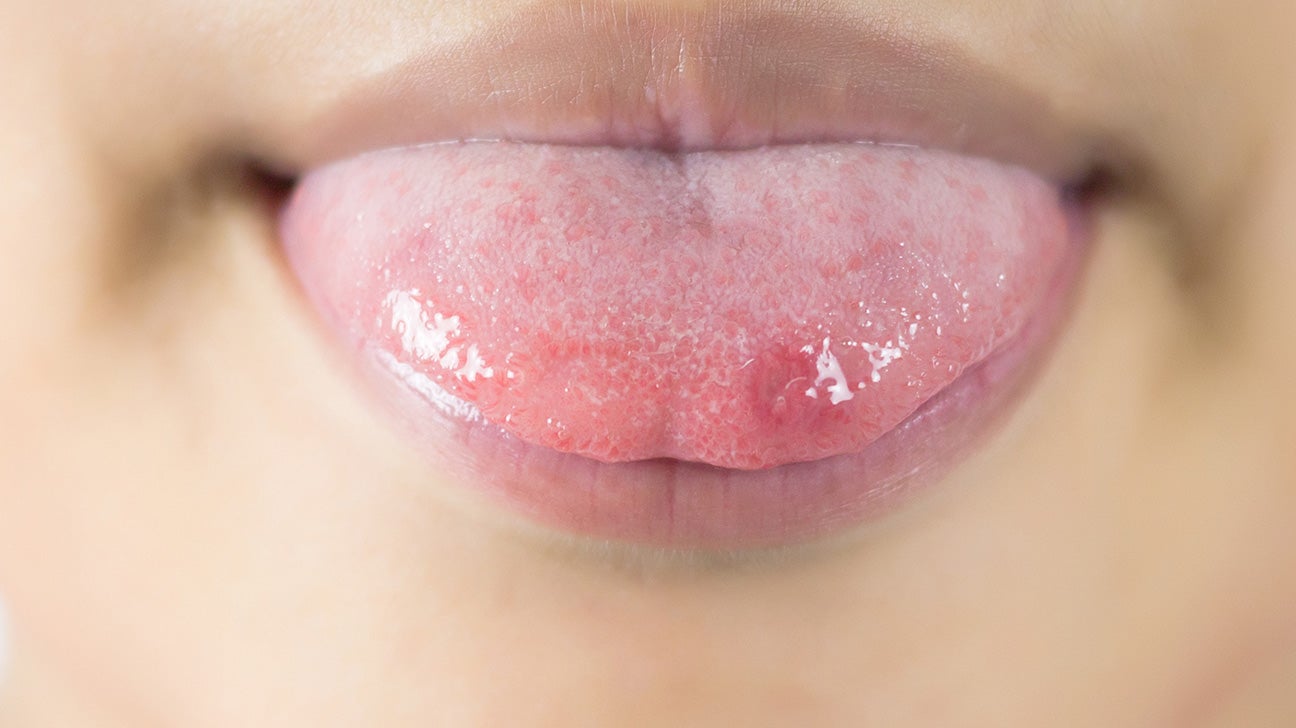
A sore tongue can come from deficiencies in vitamin B12, folate, iron or niacin, which cause glossitis, where the tongue turns smooth, red and swollen. Burning mouth syndrome produces a scalded feeling in the tongue without visible signs and affects about 2 percent of the population, mostly postmenopausal women. Canker sores affect about 20 percent of people and heal in 1 to 2 weeks. Oral thrush appears as white patches that can be scraped, and the risk is higher with inhaled steroids, antibiotics and diabetes. Biting the tongue, hot food burns, braces, ill fitting dentures and acidic or spicy foods are mechanical or chemical causes. Geographic tongue is harmless and shows map like patches. A sore or white or red patch lasting more than 2 weeks, particularly in smokers or heavy drinkers, should be checked for oral cancer, which is diagnosed in about 54,000 Americans each year.
Based on data from the American Dental Association and the American Cancer Society