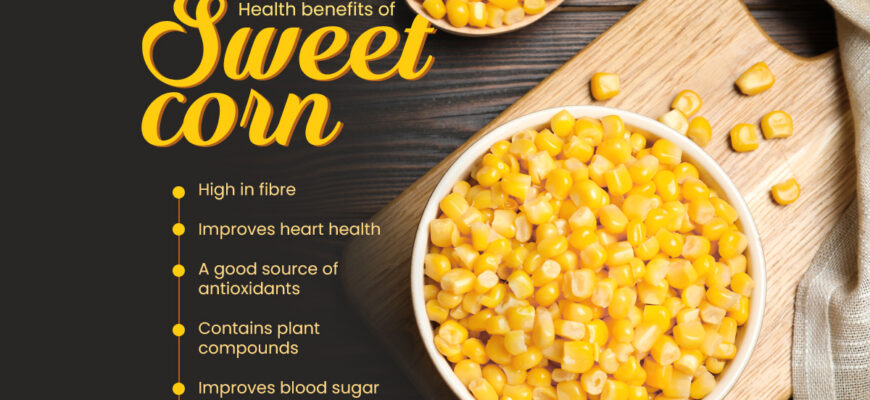
Corn provides fiber, B vitamins, and antioxidants like lutein and zeaxanthin.
Nutrition
One medium ear of corn (90 g kernels) has about 88 calories, 2 g of fiber, 3 g of protein and 14 g of carbohydrate. Corn has lutein, zeaxanthin, B vitamins and magnesium (USDA).
Benefits
- Lutein and zeaxanthin support eye health.
- Fiber supports digestion.
- B vitamins (thiamin, folate).
- Antioxidants like ferulic acid.
Cautions
High glycemic load if processed. Corn syrup and chips are less healthy than whole corn. Some people have corn allergies.
Whole grain
Popcorn is a whole grain.
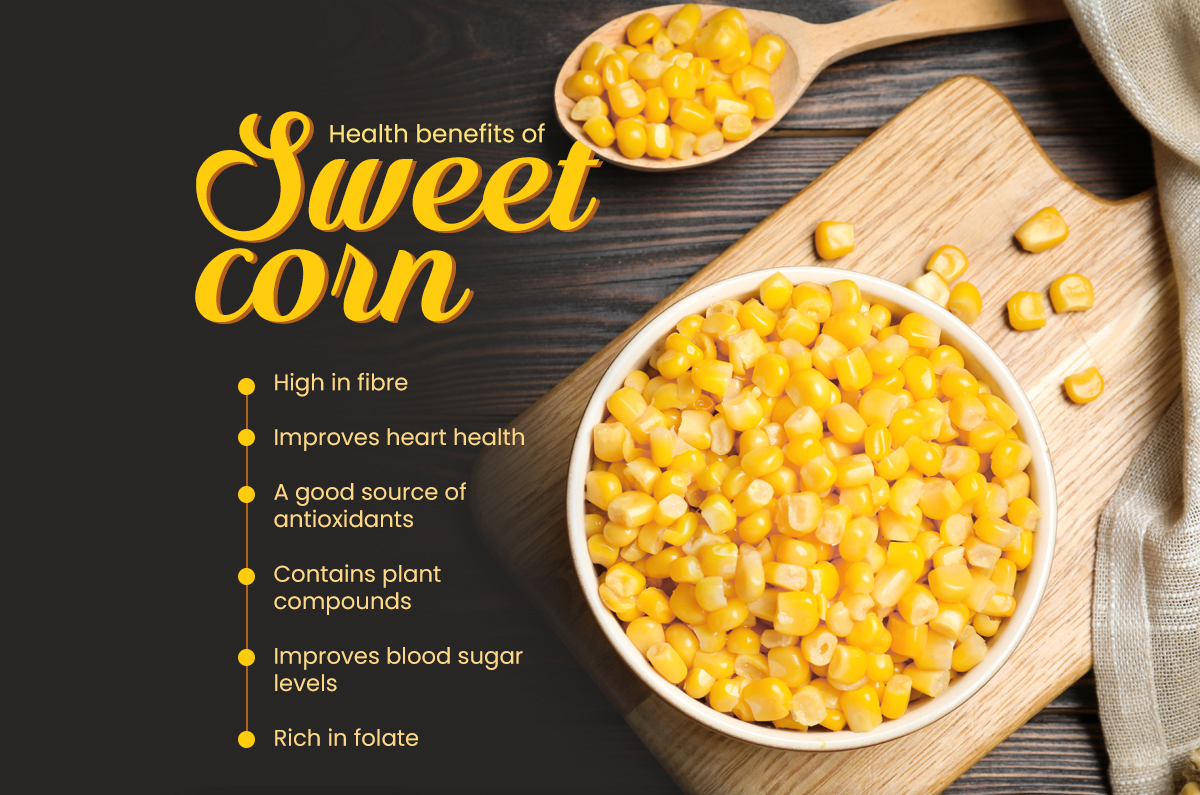
Fact
Nearly all US corn is field corn for animal feed and ethanol, not sweet corn.
Nutrition data
One medium ear of sweet corn (about 90 grams of kernels) has about 88 calories, 19 grams of carbohydrate, 2 grams of fiber, 3 grams of protein and 1 gram of fat. One cup of cooked kernels (about 165 grams) has about 143 calories, 5 grams of fiber and 5 grams of protein. Corn supplies thiamine, folate, vitamin C, magnesium, potassium and phosphorus.
Benefits

- Lutein and zeaxanthin, carotenoids concentrated in the eye. Studies link higher intake with lower risk of age-related macular degeneration and cataracts.
- Fiber supports digestion and gut bacteria. Corn contains insoluble fiber that adds bulk to stool.
- B vitamins support energy metabolism, and folate supports cell growth.
- Ferulic acid, an antioxidant that gets released when corn is cooked.
- Whole corn products are a source of fiber and resistant starch.
- Gluten free grain suited to people with celiac disease.
Cautions
- Sweet corn has a medium glycemic index of 52 to 60, and its starch can raise blood sugar. People with diabetes should watch portions.
- Most US corn is genetically modified, which regulators consider safe. Organic and non-GMO options exist.
- Corn is high in omega-6 fats when made into refined oils and processed foods, and the problem is excess processed food, not whole corn.
- Rarely, corn allergy occurs.
- Pellagra, a niacin deficiency, historically occurred among people eating mostly untreated corn. Nixtamalization with lime releases niacin, so tortillas from treated corn avoid this.
Whole grain
Popcorn is a whole grain, and 3 cups of air-popped popcorn supply about 3.5 grams of fiber with about 90 calories. Whole grain corn products such as cornmeal and grits are only whole if they list the whole grain on the label. Refined corn products like corn syrup are not equally healthy.
Fact
Corn is the most produced grain in the world, with over 1.1 billion tons grown per year, mostly for animal feed, ethanol and processed foods. The US is the largest producer, followed by China and Brazil. Only about 1% of US corn is sweet corn eaten as a vegetable.

Nutrition facts and processed forms
One medium ear of boiled sweet corn (about 90 grams) has around 77 calories, 2.4 grams of fiber and 2.9 grams of protein. Corn contains lutein and zeaxanthin, carotenoids linked to eye health and lower risk of age related macular degeneration. Yellow corn has more of these than white corn. Whole kernel corn counts as a starchy vegetable and has a moderate glycemic index of about 52 for boiled sweet corn. Most field corn grown in the US goes to animal feed, ethanol and processed ingredients such as high fructose corn syrup, not to fresh eating. Popcorn is a whole grain, with 3 cups of air popped popcorn giving about 3.5 grams of fiber and 90 calories. Frozen and canned corn without added salt keeps most nutrients.
Based on data from the USDA FoodData Central and the Whole Grains Council




