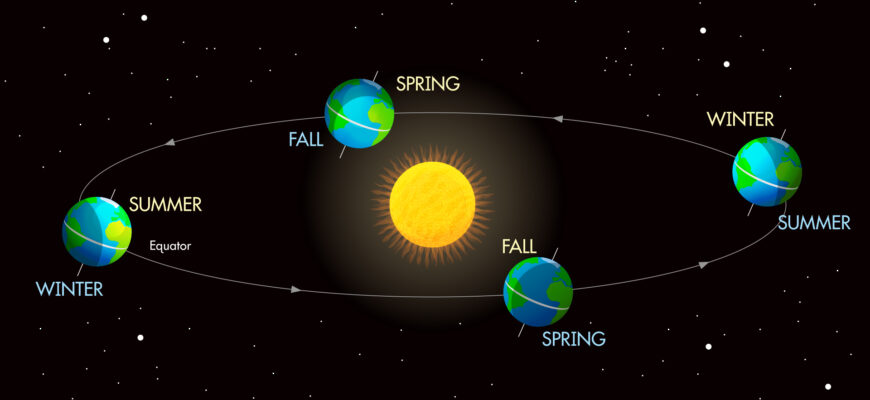
Seasons happen because Earth’s axis is tilted about 23.5 degrees as it orbits the Sun.
Cause
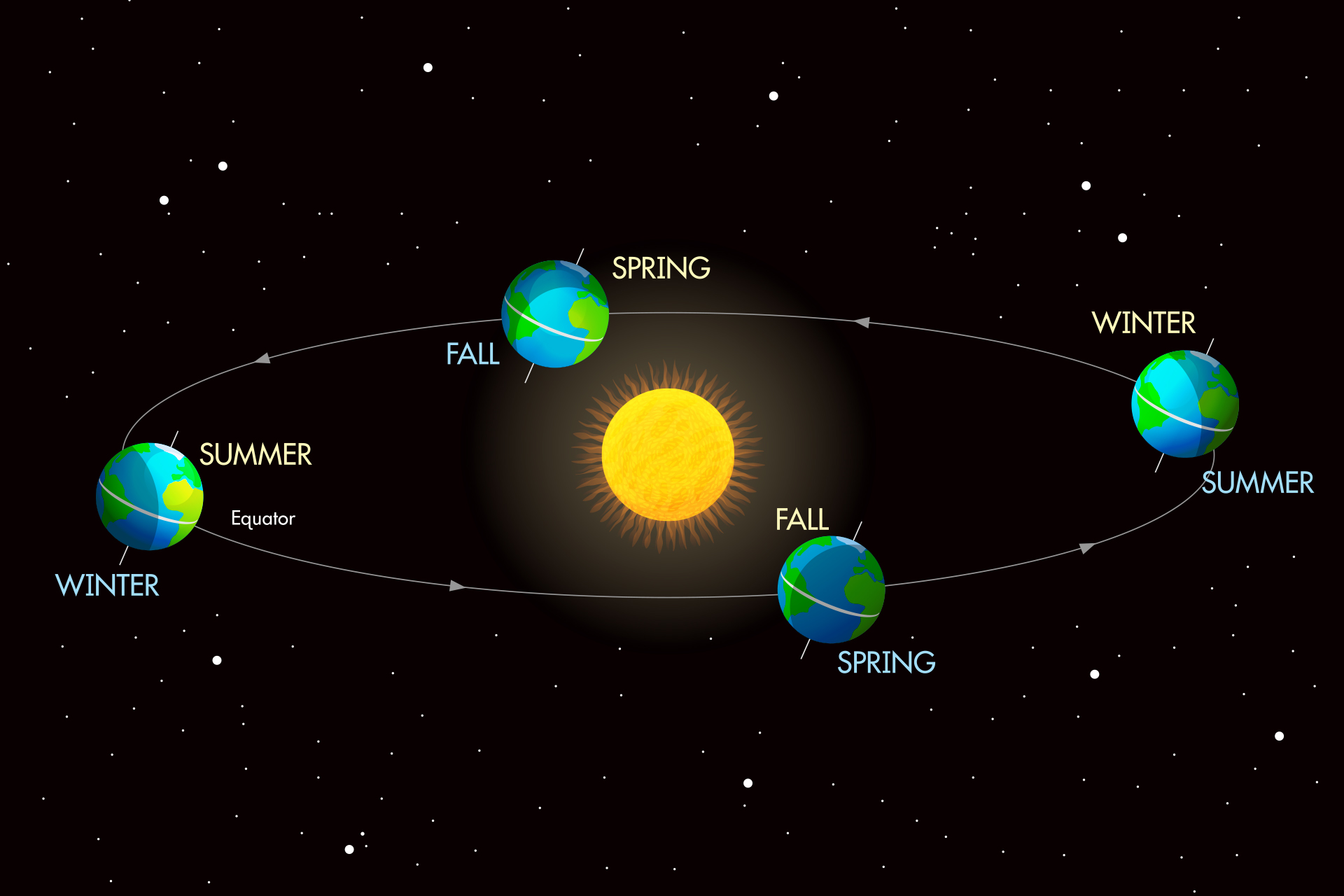
Seasons are caused by Earth’s axial tilt of about 23.5 degrees as it orbits the Sun. They are not caused by distance from the Sun.
How it works
When the Northern Hemisphere tilts toward the Sun, it gets more direct sunlight and longer days: summer. Six months later the Southern Hemisphere tilts toward the Sun.
Key dates
- Solstices: around June 21 and December 21.
- Equinoxes: around March 20 and September 22.
Distance myth
Earth is closest to the Sun (perihelion) in early January, during Northern Hemisphere winter.
Near the equator
Seasons are mild.
Poles
Have six months of daylight and six months of darkness.
What causes seasons
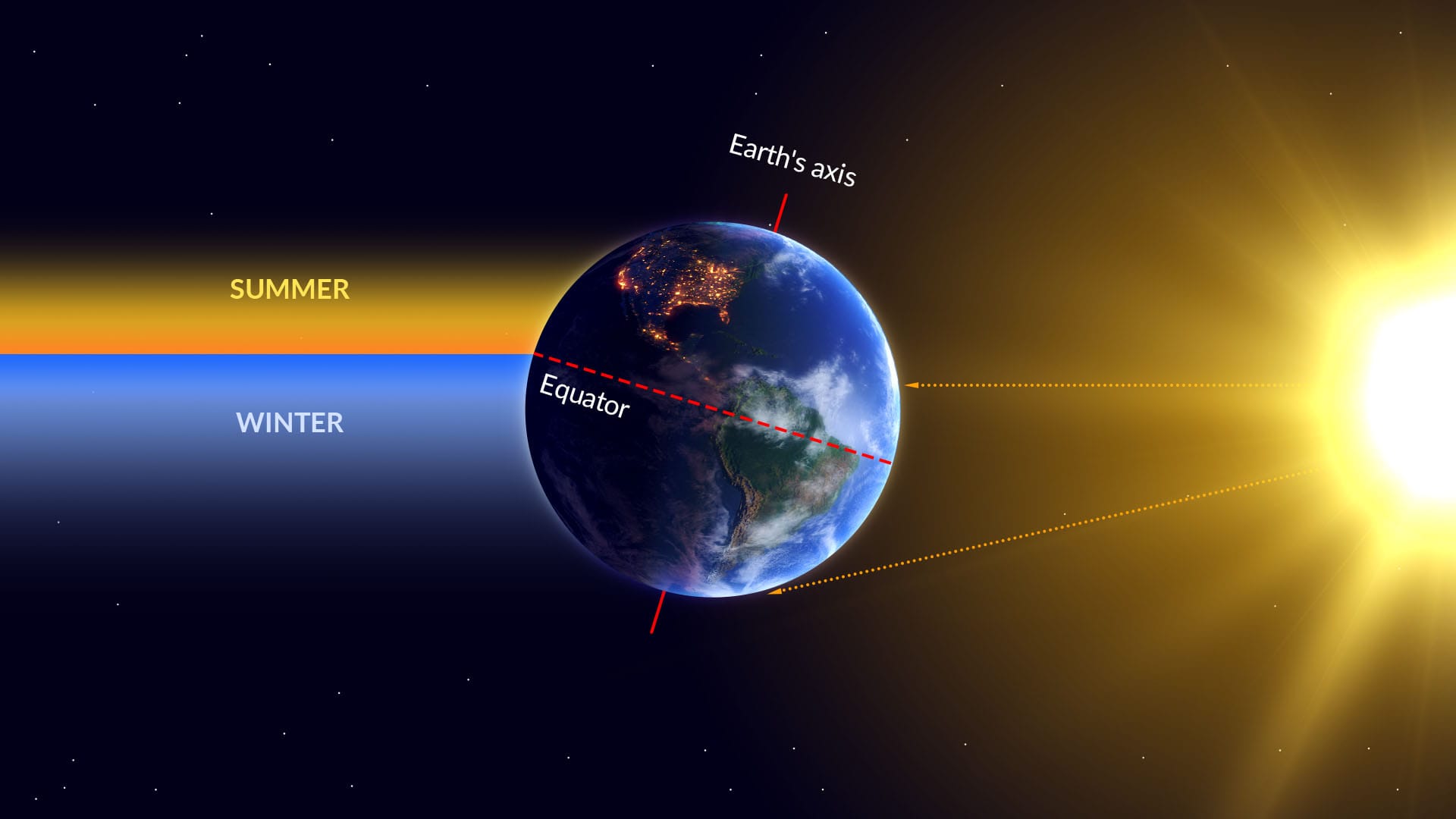
Seasons are caused by the tilt of Earth’s axis, about 23.5 degrees from perpendicular to its orbit, not by distance from the sun. As Earth orbits the sun over 365.25 days, the Northern Hemisphere points toward the sun for half the year and away for the other half. The hemisphere tilted toward the sun gets more direct sunlight and longer days, producing summer. The hemisphere tilted away gets less direct light and shorter days, producing winter.
How it works
When sunlight strikes at a steeper angle, the same energy is spread over a smaller area and heats more. Longer days give more hours of heating. In winter, light comes at a low angle, spreads out across a larger area and passes through more atmosphere. The tilt is what drives the two effects.
Key dates
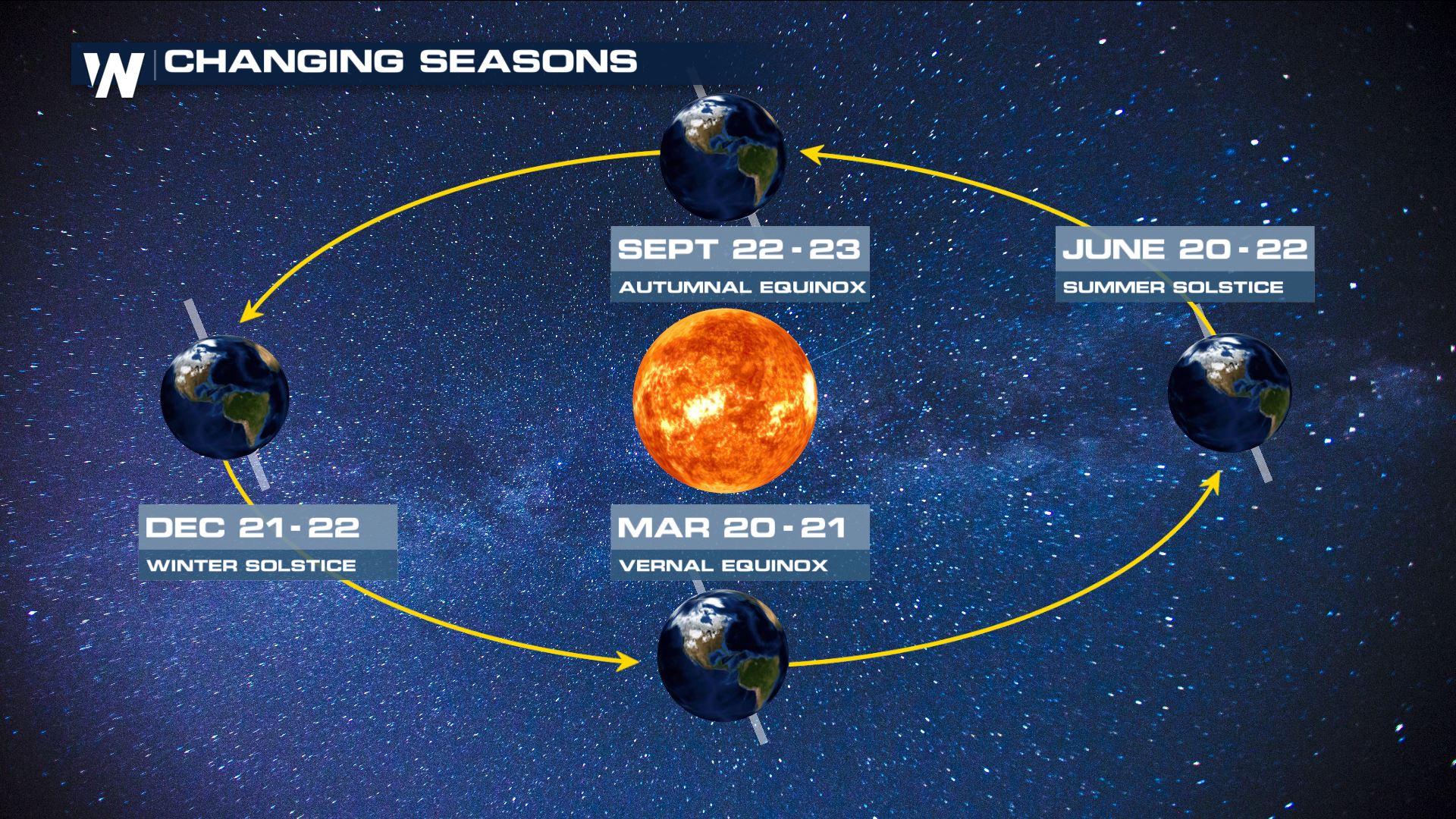
- Spring equinox: around March 20, day and night nearly equal.
- Summer solstice: around June 21 in the Northern Hemisphere, the longest day.
- Autumn equinox: around September 22 or 23.
- Winter solstice: around December 21, the shortest day.
Seasons are reversed in the Southern Hemisphere, so Christmas falls in summer in Australia.
The distance myth
Earth is actually closest to the sun (perihelion) in early January, about 147.1 million kilometers, and farthest (aphelion) in early July, about 152.1 million kilometers. The Northern Hemisphere has winter when Earth is closest. The 3% difference in distance has a much smaller effect than the tilt.
Near the equator
The tropics get similar sun all year, so there are wet and dry seasons instead of four seasons. Places on the equator have about 12 hours of daylight every day.
Poles
Above the Arctic Circle (66.5 degrees north), the sun does not set for at least one day around the summer solstice, the midnight sun, and does not rise for at least one day in winter. At the North Pole, there are about six months of daylight and six months of night.
Other planets
Uranus has an axial tilt of about 98 degrees, so its poles get 42 years of sunlight followed by 42 years of darkness. Mars has a tilt of 25 degrees and has seasons about twice as long as Earth’s.
Tilt, temperature and the calendar
Earth’s axis is tilted 23.4 degrees, and this tilt, not distance from the sun, changes the angle and length of sunlight across the year. Earth is closest to the sun (perihelion) around January 3 at about 147.1 million km and farthest (aphelion) around July 4 at 152.1 million km, so the Northern Hemisphere has summer when Earth is farthest. The solstices occur around June 21 and December 21, and the equinoxes around March 20 and September 22, with date shifts of one day depending on year. At the Arctic Circle, the sun does not set for at least one day around the June solstice. Mars has seasons due to its 25 degree tilt, but they last nearly twice as long because its year is 687 Earth days. Uranus, tilted 98 degrees, has extreme seasons lasting about 21 Earth years each.
Based on data from NASA and NOAA