
Gorillas beat their chests to show strength, warn off rivals, communicate over distance, and attract mates.
Meaning
Chest beating is a display, mostly by adult male gorillas, especially silverbacks.
Reasons
- Show strength and size to rivals.
- Warn off threats.
- Communicate over distances: the sound carries up to 1 km.
- Attract females.
- Excitement or play (young gorillas do it too).
How
Gorillas stand upright and drum their chests with cupped hands, making a hollow sound from air sacs in the throat.
Often with
Hooting, charging and breaking branches.
Dangerous?
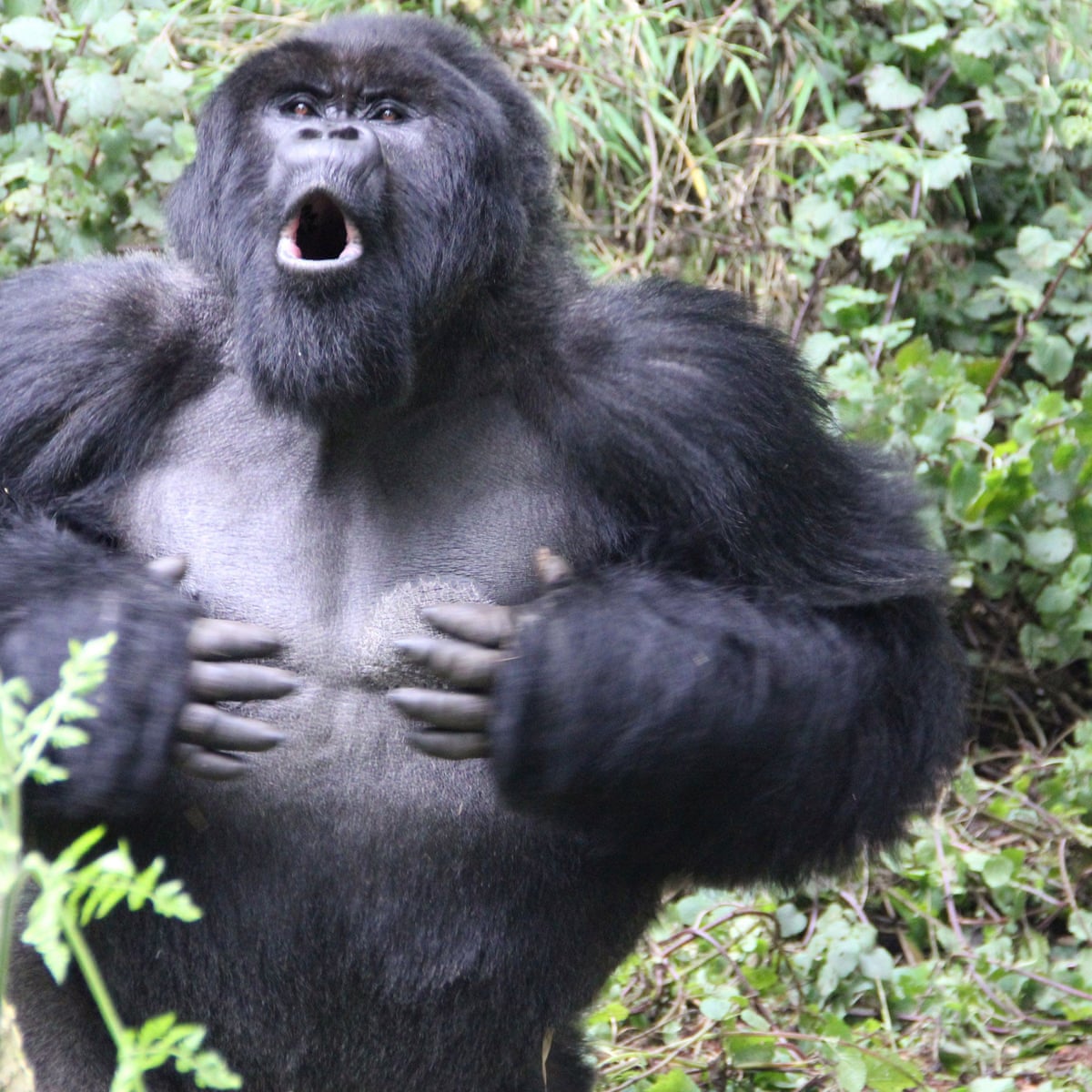
Mostly a bluff to avoid actual fighting.
Status
Mountain and eastern gorillas are endangered, and western gorillas are critically endangered (IUCN).
Meaning
Chest beating is a display behavior seen mainly in adult male gorillas, particularly silverbacks. The male stands upright, hoots, and beats his cupped hands rapidly on his chest, making a sound that can be heard up to a kilometer away. It signals strength and size.
Reasons
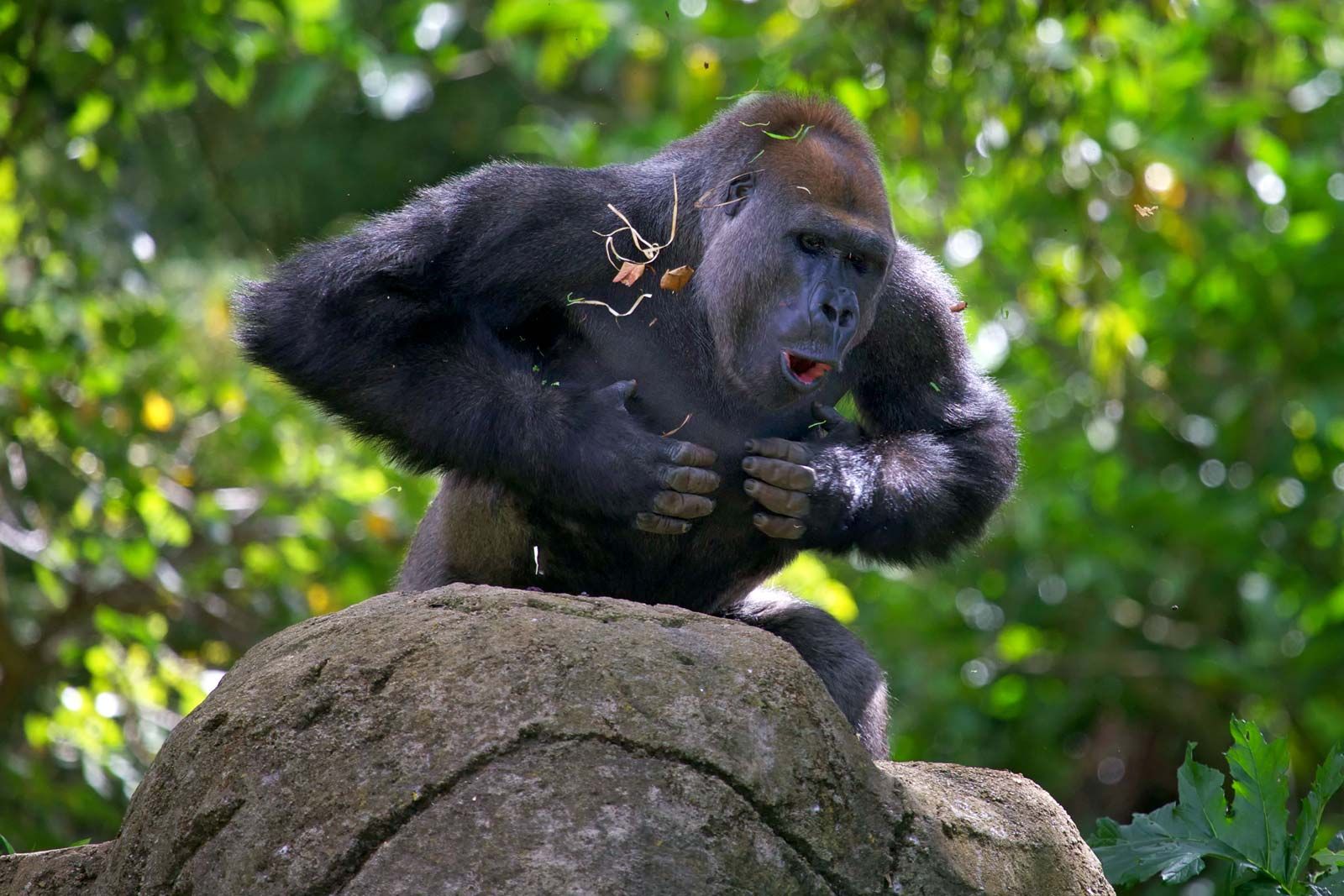
- Dominance: to show his size and power to rivals and assert authority over the group.
- Defense: to warn off threats such as other males, leopards or humans, and warn the troop of danger.
- Communication: to locate group members and keep contact in dense forest.
- Courtship: to show strength to females.
- Excitement: also seen when playing or when gorillas are excited. Young gorillas beat their chests during play.
- Stress or agitation.
How
The gorilla’s chest has air sacs in the larynx that act as resonating chambers, which amplify the sound. Beats happen at a rate of about 2 per second, in a series that usually lasts about 10 seconds. The display often ends with kicking, running sideways, tearing plants and slapping the ground.
Often with
Chest beating usually comes with hooting, strutting, throwing vegetation, and a stiff-legged run. A 2017 study at the University of Zurich analyzed the sound of beats and found that the sound’s frequency correlates with body size, so it may tell rivals how big the male is.
Dangerous?
It is mostly bluff and a ritual to avoid a fight. Real fights are rare and violent, because gorillas have canines up to 5 centimeters long and weigh up to 200 kilograms. Wildlife guides tell visitors to stay calm, crouch down, avoid direct eye contact and not run if a gorilla displays.
Status
Gorillas are great apes living in central Africa. Eastern gorillas (including mountain gorillas) and western gorillas are listed as Critically Endangered by the IUCN. About 1,063 mountain gorillas remained in 2018, a number that has been increasing due to conservation. Threats include poaching, habitat loss, disease and civil conflict.

Field research and behavior details
Chest beating by gorillas produces a hollow sound that can be heard up to about a kilometer away, and it is mostly done by adult males, especially silverbacks, which weigh up to 400 pounds (180 kg). Researchers studying mountain gorillas, including Dian Fossey, found that the display often starts with hooting, then a series of rapid beats using cupped hands, along with running sideways and ripping vegetation. A 2022 study in the journal Scientific Reports found that the sound of a chest beat conveys the male’s body size to other gorillas, with larger males producing lower frequency sounds. The behavior communicates strength, warns rivals, announces location to group members and may attract females. Display charges are mostly bluffs, and gorillas rarely attack humans. Both mountain gorillas, which number about 1,060 individuals in the wild, and western lowland gorillas are endangered or critically endangered, according to the IUCN.
Based on data from the IUCN and the journal Scientific Reports