A tire pressure monitoring system measures the air pressure in each tire and warns you on the dashboard when it is low.
What it does
A tire pressure monitoring system (TPMS) warns you when a tire is underinflated. It is required on all new US passenger vehicles since 2008.
Direct TPMS
Each wheel has a sensor inside the tire that measures pressure and sends a radio signal. Batteries last 5 to 10 years.
Indirect TPMS
Uses ABS wheel speed sensors to detect a tire that spins faster because it has lower pressure.
Warning
The light comes on when pressure falls 25 percent below the recommended level. A flashing light means system fault.
Reset
Inflate, then drive for a few minutes, or press the reset button.
Check
Use a gauge monthly. The correct pressure is on the door jamb sticker.
Cost
$50 to $150 per sensor.
Rules behind the system
In the United States, the TREAD Act required tire pressure monitoring systems on new passenger vehicles from the 2008 model year. Similar rules apply in the European Union since 2014.
Direct sensors
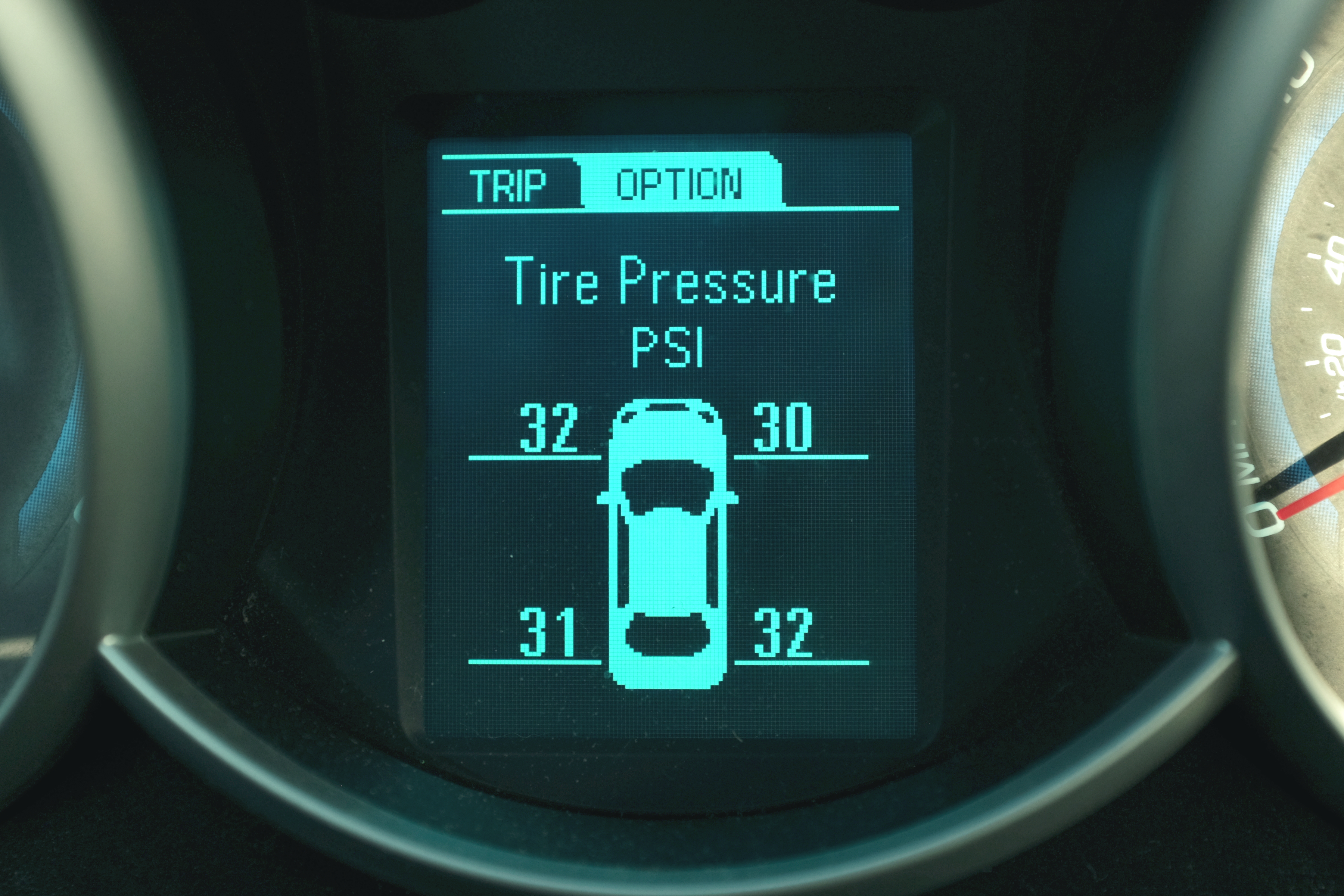
Each wheel contains a sensor that measures pressure, and often temperature. It transmits by radio frequency, usually at 315 or 433 MHz, to a receiver in the car. Some systems display the pressure of each tire in the dashboard.
Indirect system

Indirect TPMS compares rotation speeds of wheels via ABS sensors. It does not read actual pressure, so it must be reset after inflating tires or rotating them. It cannot detect all four tires losing pressure equally unless the system uses additional algorithms.
Typical thresholds
The system warns when the pressure is 25% under the placard value. Properly inflated tires improve fuel economy by around 0.6% on average, and up to 3% when all four are under inflated, according to the Department of Energy.
Risk of underinflation
Underinflated tires wear faster, overheat and are more likely to fail. NHTSA estimates that TPMS reduces the likelihood of a vehicle being driven with a severely underinflated tire.
Seasonal changes
Pressure falls about 1 psi per 10 degrees F, so a morning cold snap can switch on the light.
Service and cost
Sensor replacement costs roughly 50 to 150 dollars each. Rubber valve stems, nuts and seals often need replacing at the same time. When tires are changed, the shop should handle the sensors carefully.
Don’t ignore the light
Even if the car feels normal, check all four tires and the spare, if it has a sensor, using a good gauge.
Standards and sensor technology
Federal Motor Vehicle Safety Standard 138 requires a TPMS that warns the driver when any tire is 25 percent or more under the recommended pressure. In Europe, TPMS has been required on new passenger cars since 2014. Direct systems use sensors with a battery inside each wheel to report pressure and sometimes temperature to the car’s computer, typically via 315 or 433 MHz radio. Indirect systems compare wheel rotation speeds from the ABS and infer low pressure when one wheel rotates faster. Underinflated tires wear faster, reduce handling and raise the risk of blowouts. NHTSA estimates TPMS reduces the number of vehicles with severely underinflated tires by about 55 percent.

Service and seasonal issues
After changing tires or adjusting pressure, some indirect systems need a reset, often via a button or dashboard menu. Cold weather lowers pressure by about 1 psi per 10 F, and a light that appears on a cold morning and goes off after driving is common. Sensors usually cost 50 to 150 USD each to replace including programming, and service kits for valve stems are inexpensive. Do not rely only on the light, since it does not warn for small losses. Check pressure monthly with a gauge, including the spare when equipped.
Based on data from NHTSA and the Tire Industry Association