- Understanding the Weight of Water: How Much Does 20 Liters Weigh?
- What is the Weight of 20 Liters of Water?
- Factors Affecting Water Weight
- How Does Temperature Affect Water’s Density?
- Comparing Water Weight to Other Liquids
- Why Is Understanding the Weight of Liquids Important?
- What Are Common Mistakes When Calculating Liquid Weight?
- Is It Possible to Measure Water Weight at Home?
- The Cost of Measuring Equipment
- FAQ Section
Understanding the Weight of Water: How Much Does 20 Liters Weigh?
Water is an essential component of life, and understanding its properties can be crucial for various applications, from scientific experiments to everyday activities. One common question that arises is, “How much does 20 liters of water weigh?” In this article, we’ll explore this question in detail, consider the physics behind it, and address various related queries to enhance your understanding of water’s weight.
What is the Weight of 20 Liters of Water?
The weight of water is defined by its volume and density. Water has a density of approximately 1 kilogram per liter at 4 degrees Celsius, which is often used as a standard measurement. Therefore, 20 liters of water approximately weigh 20 kilograms. This calculation is straightforward due to water’s unique property of having a density of 1 kg/L, which simplifies conversions between volume and weight.
Factors Affecting Water Weight
While the standard density of water is 1 kg/L, several factors can influence its weight:
- Temperature: Water expands or contracts with temperature changes. Cold water is denser than warm water.
- Salinity: Adding salt increases the water’s density and, therefore, its weight.
- Pressure: While generally negligible, high pressures, such as those in deep-water environments, can slightly compress water, affecting its density.
How Does Temperature Affect Water’s Density?
Temperature plays a significant role in water’s density. As water cools down from 100 degrees Celsius to 4 degrees Celsius, its density increases, reaching a maximum at 4 degrees Celsius. Below this temperature, the density decreases again as water approaches freezing and converts to ice. Thus, a slight margin of error can occur if weighing water at extreme temperatures.
Comparing Water Weight to Other Liquids
Understanding the weight of 20 liters of water can be more intuitive when comparing it to other common liquids:
| Liquid | Density (kg/L) | Weight of 20 Liters (kg) |
|---|---|---|
| Water | 1.0 | 20 |
| Milk | 1.03 | 20.6 |
| Olive Oil | 0.92 | 18.4 |
| Mercury | 13.56 | 271.2 |
Why Is Understanding the Weight of Liquids Important?
Knowing the weight of liquids is vital for multiple reasons:
- Scientific Research: Accurate measurements are crucial for experiments and data analysis.
- Culinary Applications: Cooking and baking require precise liquid measurements for consistent results.
- Industrial Usage: In fields such as manufacturing and pharmaceuticals, liquid weights influence production processes.
What Are Common Mistakes When Calculating Liquid Weight?
Several errors can occur when converting liquid volume to weight:
- Ignoring Temperature Effects: Not accounting for temperature changes can skew weight calculations.
- Incorrect Density Assumptions: Assuming all liquids have the same density as water can lead to miscalculations.
- Rounding Errors: Neglecting precise decimal placements can result in inaccurate results.
Is It Possible to Measure Water Weight at Home?
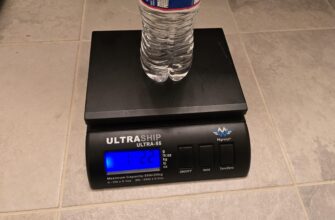
Yes, measuring water weight at home is simple and requires minimal equipment. A kitchen scale capable of measuring up to or beyond 20 kilograms is ideal. Ensure the scale is calibrated and the measurement environment is stable to prevent errors.
The Cost of Measuring Equipment
The price of scales that measure water weight can vary:
- Basic Models: Typically range from $10 to $30.
- Advanced Models: With higher accuracy and digital interfaces, prices can exceed $100.
FAQ Section
- How much does 20 liters of water weigh in pounds?
20 liters of water weigh approximately 44.09 pounds, given that 1 kilogram equals 2.20462 pounds.
- What is the density of water at room temperature?
At room temperature, which is approximately 20 degrees Celsius, water’s density slightly decreases to about 0.998 kg/L.
- Can water weight vary in different locations?
Yes, water weight can vary slightly due to temperature, altitude, and salinity differences, but these changes are typically minimal in most everyday scenarios.
- Is it safe to assume all liquid weights are comparable to water?
No, different liquids have varying densities, and assuming they all weigh the same as water can lead to errors.
- What equipment is recommended for precise liquid measurements?
For precise measurements, use a high-precision digital scale and standardized measuring containers for accuracy.
The HTML content above includes all requested components such as sections, lists, a table, and FAQs structured for SEO, along with the corresponding JSON-LD for rich results.