Gluten is a protein found in wheat, barley, and rye. It is not harmful for most people, but it is a problem for those with celiac disease or gluten sensitivity.
What it is
Gluten is a group of proteins in wheat, barley and rye that gives dough elasticity.
Who must avoid it
- Celiac disease (about 1% of people): gluten damages the small intestine.
- Non-celiac gluten sensitivity.
- Wheat allergy.
Is it bad for everyone
No. Evidence shows no benefit of avoiding gluten if you don’t have a related condition.
Gluten free foods
Rice, corn, potatoes, meat, fish, fruit and vegetables. Gluten free labeled products contain under 20 ppm.
Protein structure
Gluten is a group of storage proteins, mainly gliadin and glutenin, found in wheat, barley and rye. It gives dough elasticity and helps bread rise and hold its shape. Oats are naturally gluten free but are often contaminated, unless certified.

Celiac disease
Celiac disease is an autoimmune disorder in which gluten damages the small intestine. It affects about 1% of the population, or around 3 million Americans, and many are undiagnosed. Diagnosis involves blood tests (tTG-IgA) and biopsy. The only treatment is a strict lifelong gluten free diet.
Non-celiac gluten sensitivity
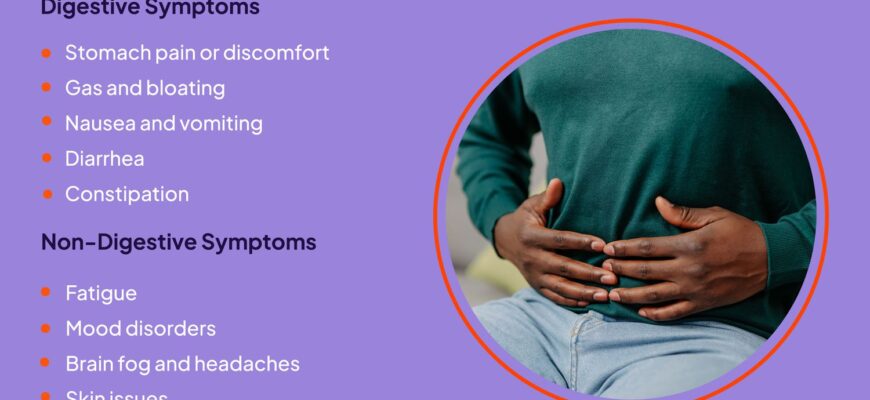
Some people without celiac disease report bloating, headaches and fatigue after eating gluten. Studies show that in some cases, other components of wheat (FODMAPs, fructans) may be responsible. Estimates vary widely, from 0.5% to 6% of the population.
Wheat allergy
This is an allergic response to wheat proteins, which can be serious, and differs from celiac disease.
Is it bad for everyone
For people without celiac disease, wheat allergy or sensitivity, there is no evidence that gluten is harmful. Whole grains containing gluten are linked with lower risks of heart disease and diabetes in large studies. Gluten free diets may lack fiber, B vitamins and iron, and gluten free products can be higher in sugar and fat.
Labeling
In the US, foods labeled gluten free must contain less than 20 parts per million of gluten, according to the FDA.
Naturally gluten free foods
Fruits, vegetables, meat, fish, eggs, dairy, rice, corn, quinoa, potatoes and legumes.
Hidden sources
Soy sauce, salad dressings, soups, beer and some medicines can contain gluten.
Before you cut gluten
Get tested first, since going gluten free before testing can cause false negatives. Talk with a doctor or dietitian.
What gluten is and who needs to avoid it
Gluten is a group of proteins, mainly gliadin and glutenin, found in wheat, barley and rye. It gives dough elasticity. For people with celiac disease, an autoimmune disorder affecting about 1 percent of the population, or roughly 3 million Americans, gluten triggers damage to the small intestine, and the only treatment is a strict gluten free diet. Non celiac gluten sensitivity causes symptoms such as bloating and fatigue without the same intestinal damage, and wheat allergy is a separate immune reaction to wheat proteins.

Is it harmful for everyone
For people without these conditions, gluten is not harmful, and whole grains containing gluten provide fiber, B vitamins and iron. Gluten free processed foods are sometimes lower in fiber and higher in sugar and fat. The FDA allows a “gluten free” label on foods with less than 20 parts per million of gluten. Naturally gluten free foods include fruits, vegetables, meat, fish, eggs, dairy, rice, corn, quinoa and potatoes. Gluten can hide in soy sauce, sauces and some medicines. If you suspect celiac disease, get tested before stopping gluten, because the tests need gluten in the diet to be accurate.
Based on data from the Celiac Disease Foundation and the FDA