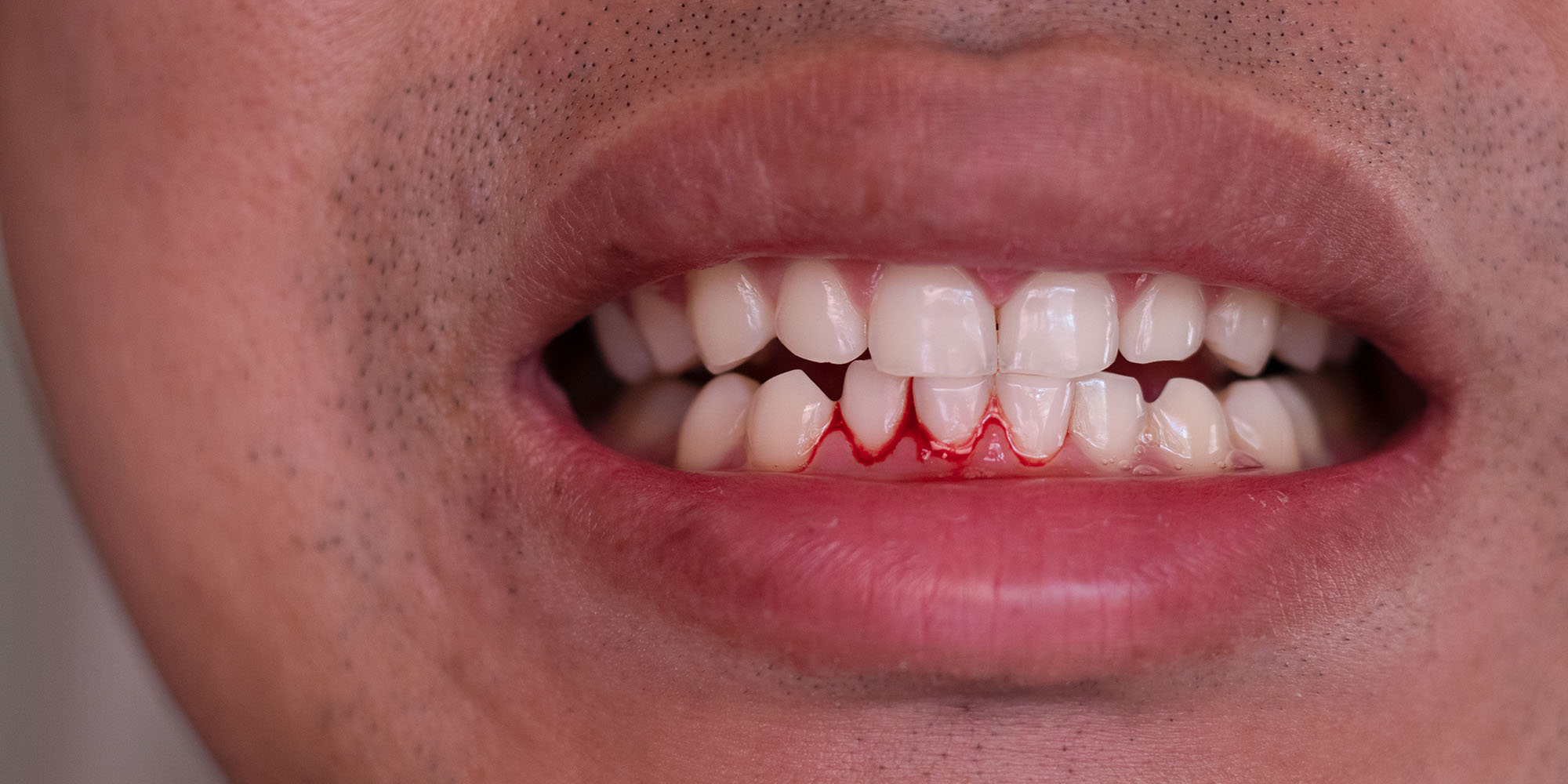
Bleeding gums when brushing are usually a sign of gum inflammation (gingivitis) or brushing too hard. See a dentist.
Causes
- Gingivitis, caused by plaque buildup. Affects about half of US adults to some degree.
- Brushing too hard or using a hard brush.
- New flossing routine.
- Pregnancy hormones.
- Vitamin C or K deficiency.
- Blood thinners.
- Gum disease progression (periodontitis).
What to do
- Brush gently twice a day with a soft brush.
- Floss daily.
- Use antibacterial mouthwash.
- Visit a dentist for cleaning.
Good news
Gingivitis is reversible with good care in 1 to 2 weeks.
See a dentist if
Bleeding lasts more than 2 weeks or comes with swelling, bad breath or loose teeth.

Systemic
Bleeding without cause could signal a blood disorder.
Causes of bleeding gums
- Gingivitis, the most common cause: plaque on the gumline inflames the gums. About half of US adults show some form of gum disease.
- Brushing too hard or using a hard-bristle toothbrush.
- Starting flossing for the first time, which often causes bleeding for the first 1 to 2 weeks.
- Poorly fitting dentures or braces.
- Pregnancy, due to hormone changes, which cause pregnancy gingivitis in 30% to 75% of women.
- Blood thinners, aspirin and other medicines.
- Vitamin C deficiency (scurvy) and vitamin K deficiency, which are rare.
- Smoking, which actually hides bleeding while worsening disease.
- Diabetes, leukemia and clotting disorders.
- Advanced gum disease (periodontitis).
What to do
- Keep brushing and flossing, since bleeding usually lessens within 1 to 2 weeks as the gums heal.
- Use a soft-bristle brush or an electric toothbrush with a pressure sensor.
- Brush for two minutes twice a day at a 45 degree angle toward the gumline.
- Floss daily and consider interdental brushes.
- Rinse with an antiseptic mouthwash or warm salt water.
- Get a professional cleaning.
- Quit smoking, and eat a balanced diet with vitamin C.
Good news
Gingivitis is reversible. With good care, the gums often heal in 1 to 2 weeks.
See a dentist if
Bleeding continues beyond 2 weeks, gums are swollen, red or receding, you have bad breath, loose teeth, pain or pus. Untreated gingivitis can become periodontitis, which damages bone.
Systemic
Gums that bleed easily with nosebleeds, easy bruising, or heavy periods may point to a bleeding disorder, vitamin deficiency or blood disease. A doctor can test the blood count and clotting.
Link to the body
Gum disease is associated with heart disease, diabetes and complications in pregnancy, although a cause and effect link is not proven.

Gum disease statistics and prevention
Nearly half of US adults age 30 and older (about 42 percent) have some form of periodontitis, according to CDC data, and gingivitis is the earlier stage that causes bleeding. Plaque left on teeth for 24 to 72 hours hardens into tartar that only a dental professional can remove. Brushing too hard with a hard bristled brush can also cause bleeding and gum recession, so use a soft brush and a 45 degree angle at the gumline. Floss daily, because bleeding usually stops in 1 to 2 weeks of consistent cleaning if gingivitis is the cause. Other causes include pregnancy hormones, vitamin C and K deficiency, blood thinners, and leukemia in rare cases. See a dentist twice per year, and sooner if bleeding continues for more than two weeks, gums are swollen, teeth feel loose or breath has a persistent bad odor.
Based on data from the CDC and the American Dental Association