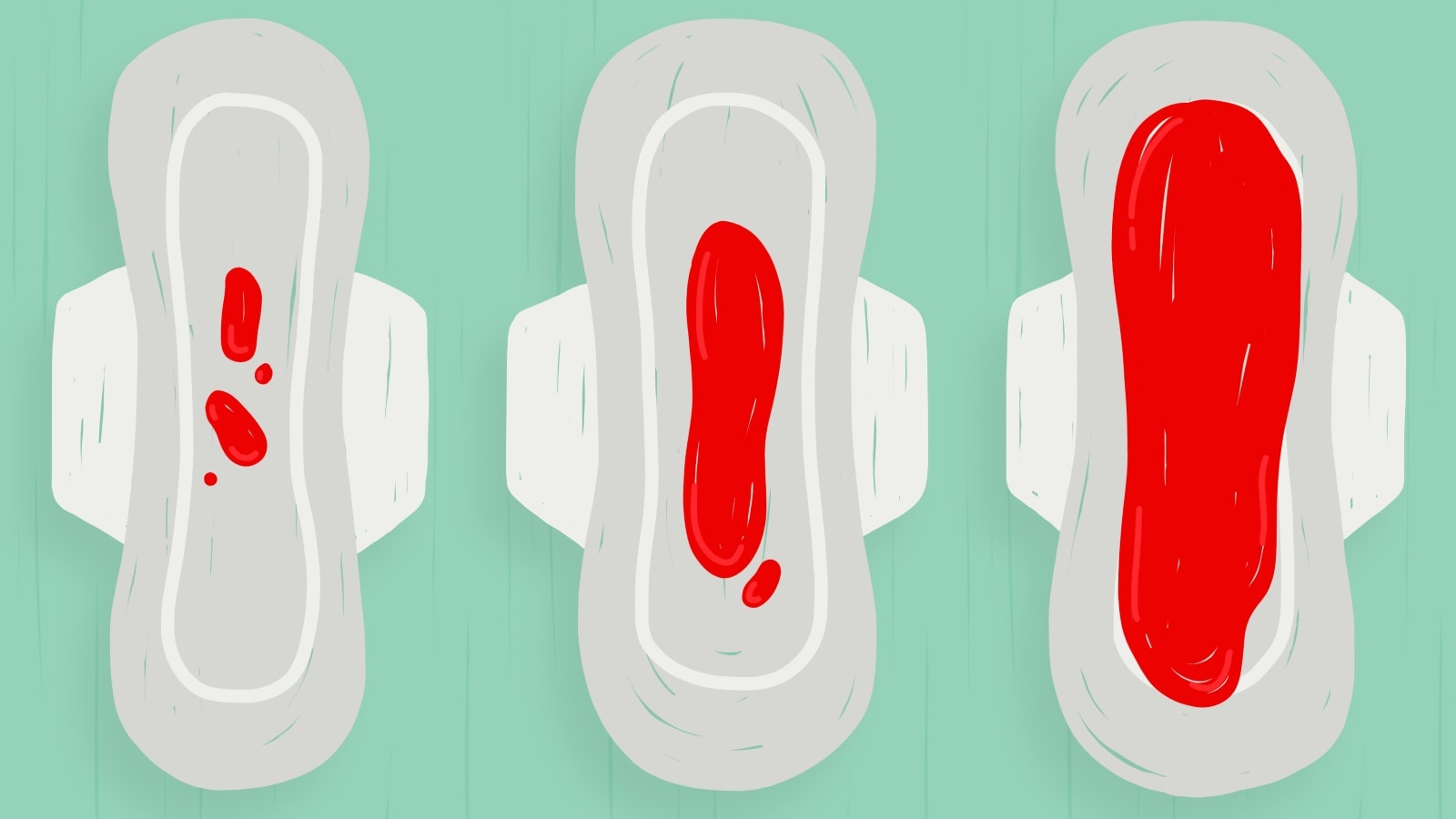
Spotting is light bleeding that does not fill a pad, while a period is heavier and lasts about 3 to 7 days.
Spotting
- Light pink or brown blood.
- Not enough to fill a pad or tampon.
- Lasts 1 to 2 days.
Period
- Red blood, flows steadily.
- Needs a pad or tampon.
- Lasts 3 to 7 days.
Causes of spotting
Ovulation, implantation, birth control, stress or hormonal changes.
See a doctor
If spotting is frequent, between periods, after menopause or during pregnancy.
Amount of blood
Spotting is light bleeding that does not need a pad or tampon, often just a few drops on underwear or when wiping. A period is heavier flow lasting 3 to 7 days, usually needing menstrual products. The average cycle is 21 to 35 days, with 28 days as the typical length, and the average blood loss is 30 to 40 milliliters per period (about 2 to 3 tablespoons). Heavy bleeding is more than 80 milliliters.
Color and timing
Spotting often looks pink, light red or brown, since older blood turns brown. It can occur before or after a period, or in between periods.
Ovulation and implantation
- Ovulation spotting happens about mid cycle, in a small number of women, due to a hormone dip.
- Implantation bleeding happens 6 to 12 days after conception, is light and lasts a few hours to 2 days. Around 25% of pregnant women report early bleeding.
Hormonal causes
- Starting or switching hormonal birth control, including pills, the patch, ring, implant or IUD. Breakthrough bleeding often settles within 3 to 6 months.
- Perimenopause.
- Thyroid problems.
- Polycystic ovary syndrome (PCOS).

Medical causes
- Cervical or uterine polyps and fibroids.
- Endometriosis.
- Infections such as chlamydia, gonorrhea or pelvic inflammatory disease.
- Cervical changes or cancer.
- Ectopic pregnancy or miscarriage.
Trigger events
Stress, sudden weight change, intense exercise and sex can cause spotting.
When to see a doctor
Spotting between periods that repeats, bleeding after sex, bleeding after menopause, heavy bleeding that soaks a pad every hour, severe pain, fever or a chance of pregnancy needs medical advice. Severe one sided pain with bleeding and dizziness is an emergency.
Tracking
Use a period app or calendar to track dates, flow and symptoms to share with a clinician.
Telling spotting and a period apart
A period typically brings flow lasting 3 to 7 days, with total blood loss averaging 30 to 40 ml that requires a pad or tampon and often comes with cramps. Spotting is light bleeding that does not fill a pad and may appear as pink or brown streaks on tissue or underwear. It may occur around ovulation, with the start of hormonal birth control, between periods on the pill or IUD, and with stress or sudden weight change. Implantation bleeding may occur 6 to 12 days after ovulation and happens in an estimated 15 to 25 percent of pregnancies, usually lasting a few hours to 2 days.

When to see a doctor
See a healthcare provider if spotting is persistent, occurs after sex, happens after menopause, or comes with pelvic pain, fever or foul discharge. Bleeding while pregnant needs prompt evaluation. Causes include polyps, fibroids, infections, thyroid disease, polycystic ovary syndrome and, less often, cervical or uterine cancer. A pregnancy test helps if a period is late. Track the dates, amount and color in an app or calendar to share with your clinician.
Based on data from ACOG and the Mayo Clinic