Gum disease is an infection of the gums caused by plaque bacteria, and it ranges from gingivitis (mild, reversible) to periodontitis (advanced).
Stages
- Gingivitis: red, swollen gums that bleed when brushing. Reversible.
- Periodontitis: infection spreads below the gumline, destroying bone and ligaments, causing loose teeth.
Cause
Plaque, a sticky film of bacteria. Risk rises with smoking, diabetes, poor hygiene, genetics and some drugs.
How common
The CDC estimates that 42 percent of US adults aged 30 and older have periodontitis.
Symptoms
Bleeding, bad breath, receding gums, loose teeth and pus.
Prevention
Brush twice daily with fluoride toothpaste, floss daily and see a dentist every 6 months.

Treatment
Deep cleaning (scaling and root planing), antibiotics, surgery.
Link
Gum disease is associated with heart disease and diabetes.
What gum disease is
Gum disease, or periodontal disease, is an infection of the tissues that hold teeth in place. It starts when plaque, a sticky film of bacteria, builds up along the gumline and is not removed. Plaque hardens into tartar (calculus) within 24 to 72 hours and can only be removed by a dental professional. The bacteria irritate the gums and trigger an immune response that, if left alone, destroys tissue and bone.
Stages in detail
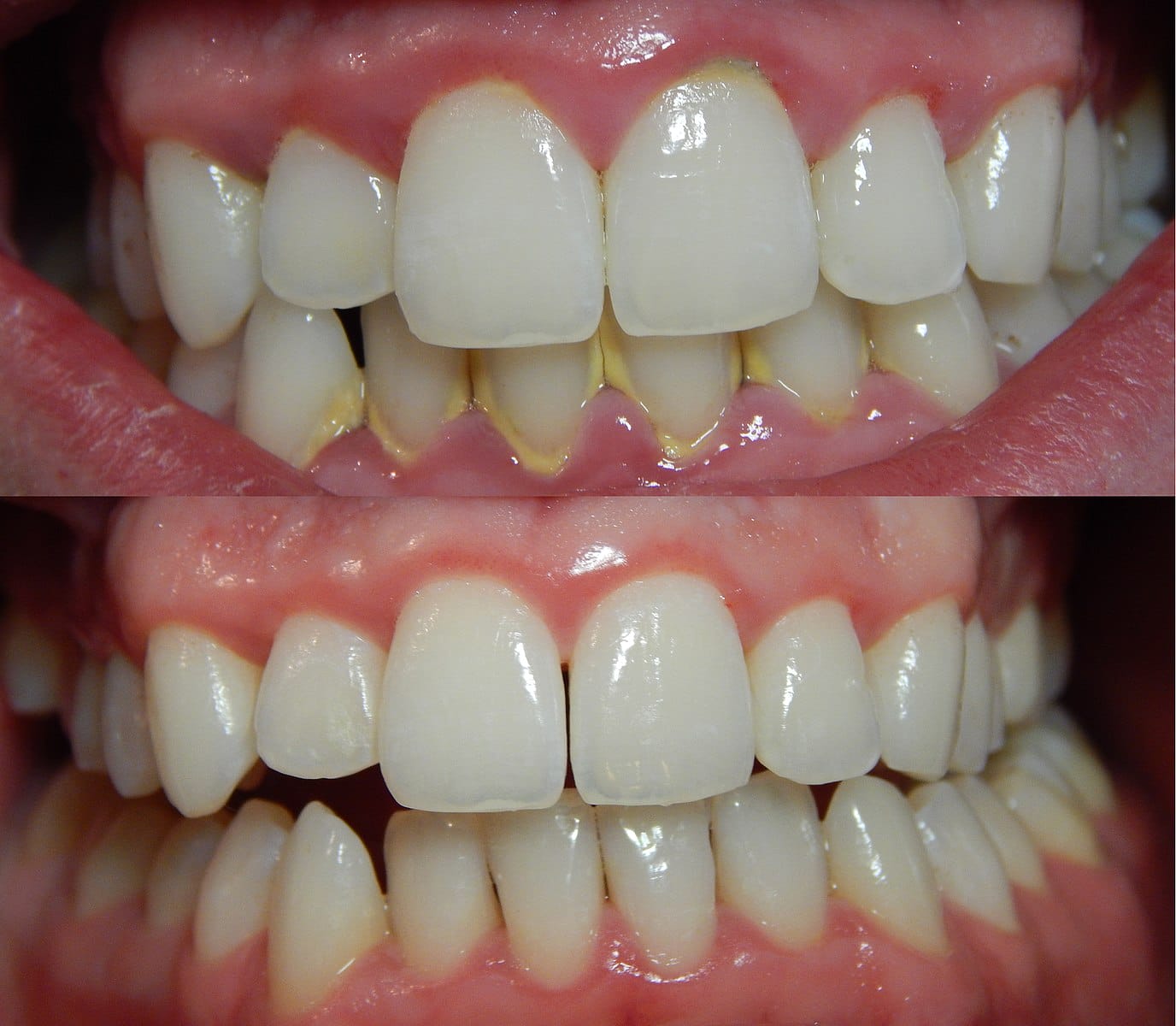
- Gingivitis: red, swollen gums that bleed when you brush. It is reversible with good cleaning and a professional scale and polish.
- Early periodontitis: the gum pulls away from the teeth and forms pockets, and bone loss begins. Pockets deeper than 3 millimeters on probing are a warning sign.
- Moderate periodontitis: deeper pockets of 4 to 6 millimeters, more bone loss, and gum recession.
- Advanced periodontitis: pockets deeper than 6 millimeters, loose teeth and a risk of losing teeth.
How common it is
The CDC estimates that about 42% of US adults aged 30 or older have periodontitis, and about 7.8% have severe disease. Prevalence rises with age and is above 70% in adults 65 or older. Worldwide, severe periodontitis affects roughly 1 billion people, according to the Global Burden of Disease study, making it one of the most common diseases.
Risk factors
- Smoking, which roughly doubles to triples the risk and slows healing.
- Diabetes, since high blood sugar feeds infection and infection raises blood sugar.
- Poor brushing and flossing habits.
- Genetics, since some people have a stronger inflammatory response.
- Dry mouth, certain medicines, hormonal changes in pregnancy and stress.
Link to the rest of the body
Studies link periodontitis with heart disease, stroke, diabetes control and adverse pregnancy outcomes. The link is association and shared risk factors like smoking, and it is not yet proven that treating gum disease prevents heart disease. Treating gum disease can improve blood sugar control in people with type 2 diabetes, with HbA1c dropping by about 0.3 to 0.4 percentage points in reviews.
Treatment
Gingivitis responds to a professional cleaning and better home care. Periodontitis is treated with scaling and root planing, a deep cleaning below the gumline, usually done in one or two visits with local anesthesia. Antibiotics or antimicrobial gels may be added. Severe cases may need flap surgery or bone and tissue grafts. After treatment, cleanings every 3 to 4 months are common.
Prevention
- Brush twice a day for two minutes with fluoride toothpaste.
- Clean between teeth daily with floss or interdental brushes.
- See a dentist for checkups, usually every 6 months or as advised.
- Stop smoking and manage diabetes.

Costs and coverage
A deep cleaning (scaling and root planing) in the US commonly costs about 200 to 400 USD per quadrant without insurance, and many dental plans cover part of it when pocket depths reach 4 mm or more. Maintenance cleanings every 3 to 4 months are usually advised after periodontitis treatment instead of the standard 6 months. Treatment is cheaper than the later cost of surgery or implants, which can reach 3,000 to 5,000 USD per tooth.
Based on data from the American Academy of Periodontology and the CDC