A catalytic converter uses metals like platinum and palladium to convert harmful exhaust gases into less harmful ones like carbon dioxide and water.
How it works
- Exhaust passes through a honeycomb coated with platinum, palladium and rhodium.
- Reduction: nitrogen oxides become nitrogen and oxygen.
- Oxidation: carbon monoxide becomes carbon dioxide.
- Unburned hydrocarbons become CO2 and water.
Results
Converters cut harmful emissions by over 90%.
Required
Federal law requires them on cars since 1975.
Signs of failure
Rotten egg smell, rattling noise and check engine light.
Chemistry inside
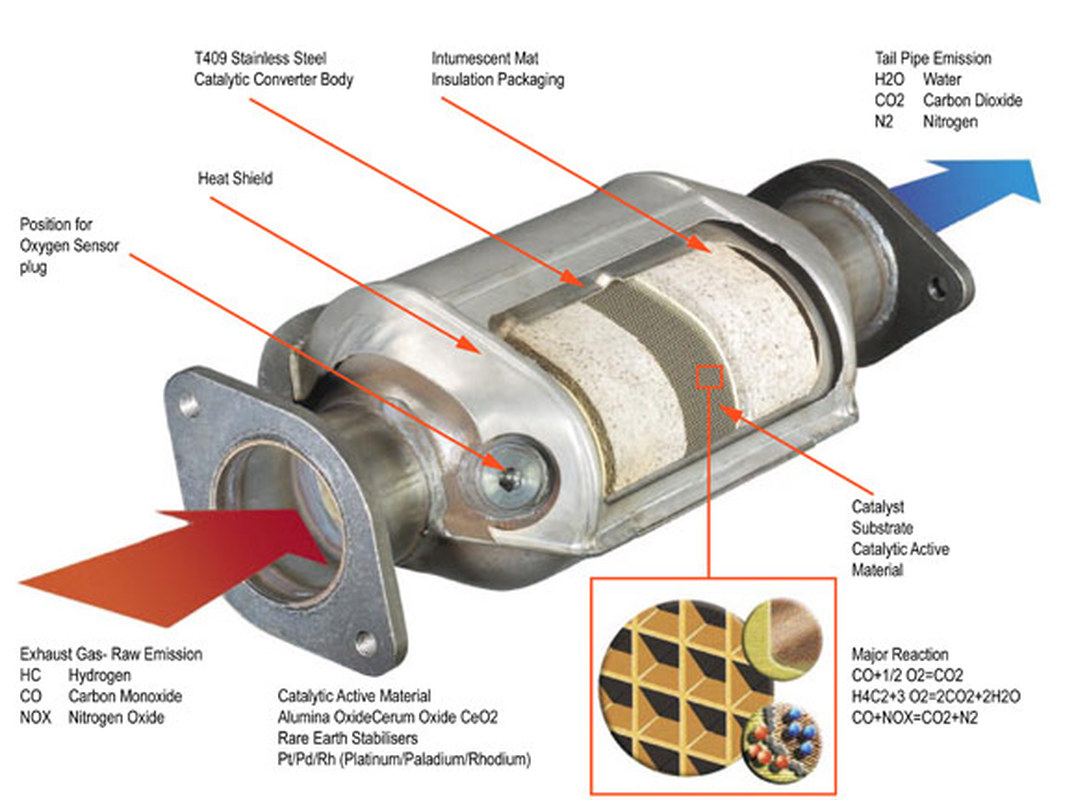
A catalytic converter sits in the exhaust system between the engine and the muffler. It has a ceramic honeycomb coated with platinum, palladium and rhodium. A three way converter handles three pollutants at once.
Reactions
- Reduction: nitrogen oxides (NOx) are split into nitrogen and oxygen.
- Oxidation: carbon monoxide (CO) becomes carbon dioxide (CO2).
- Oxidation: unburned hydrocarbons become CO2 and water.
Oxygen sensors
Sensors before and after the converter monitor exhaust oxygen levels. The engine computer adjusts the air to fuel ratio around the ideal 14.7 to 1 so the converter works efficiently.
Operating temperature
Converters work best at about 400 to 800 degrees C. They don’t work well at cold start, so they are placed close to the engine and some are electrically heated.
Results
Converters reduce harmful emissions of CO, hydrocarbons and NOx by more than 90%, according to the EPA. They have been required on US cars since the 1975 model year.
Failure signs
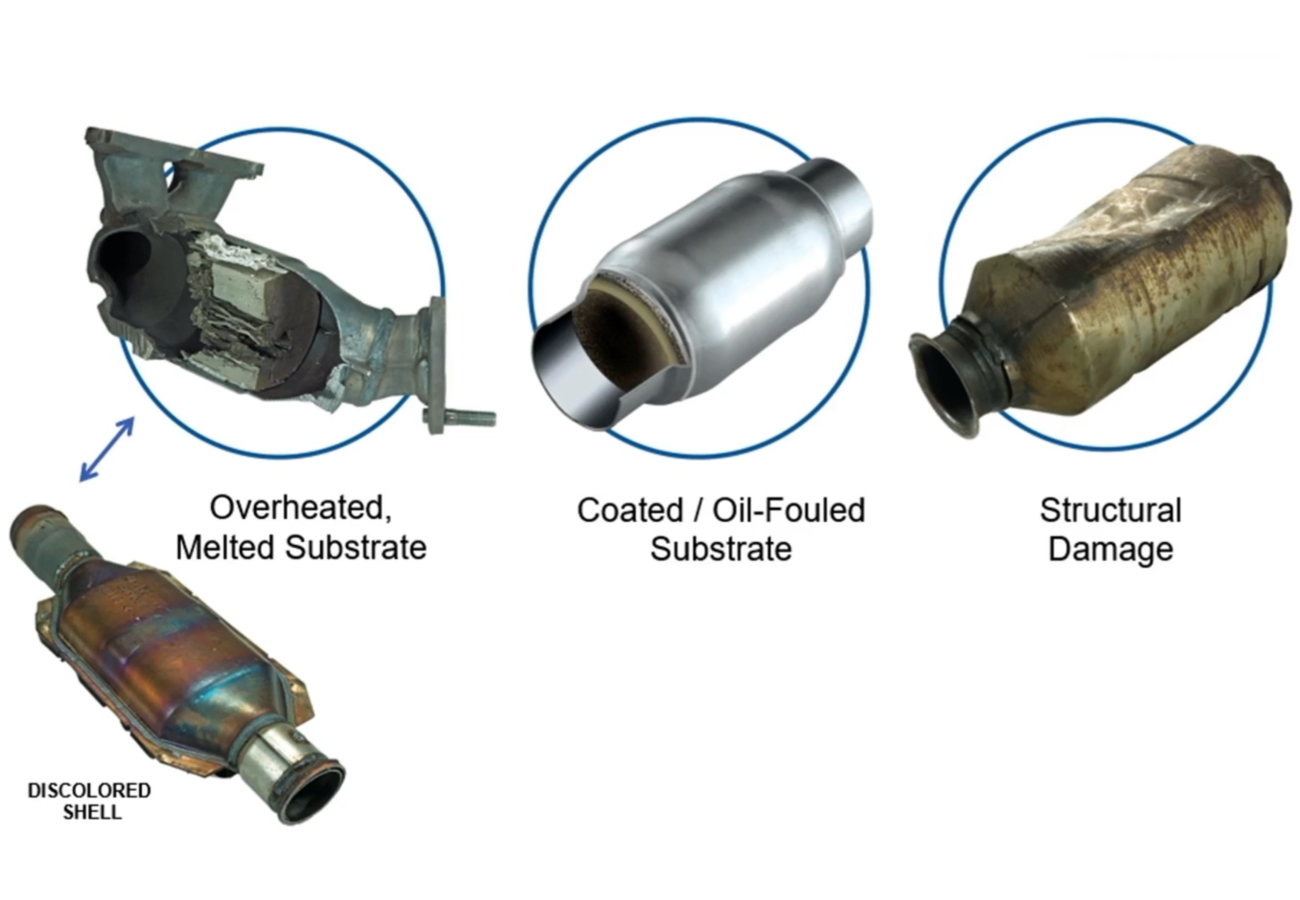
- Check engine light with code P0420 or P0430.
- Rotten egg smell from the exhaust (hydrogen sulfide).
- Reduced power and fuel economy.
- Rattling from broken ceramic inside.
- Failed emissions test.
Causes of failure
Engine misfires, oil or coolant leaks into the exhaust, physical damage and age. Fix the root cause first.
Replacement
Cost ranges from about 1,000 to 3,000 dollars. Federal law prohibits removing the converter, with fines for tampering.
Lifespan
They often last 10 years or 100,000 miles or more, and federal warranty rules cover emission parts for 8 years or 80,000 miles.
Three-way chemistry
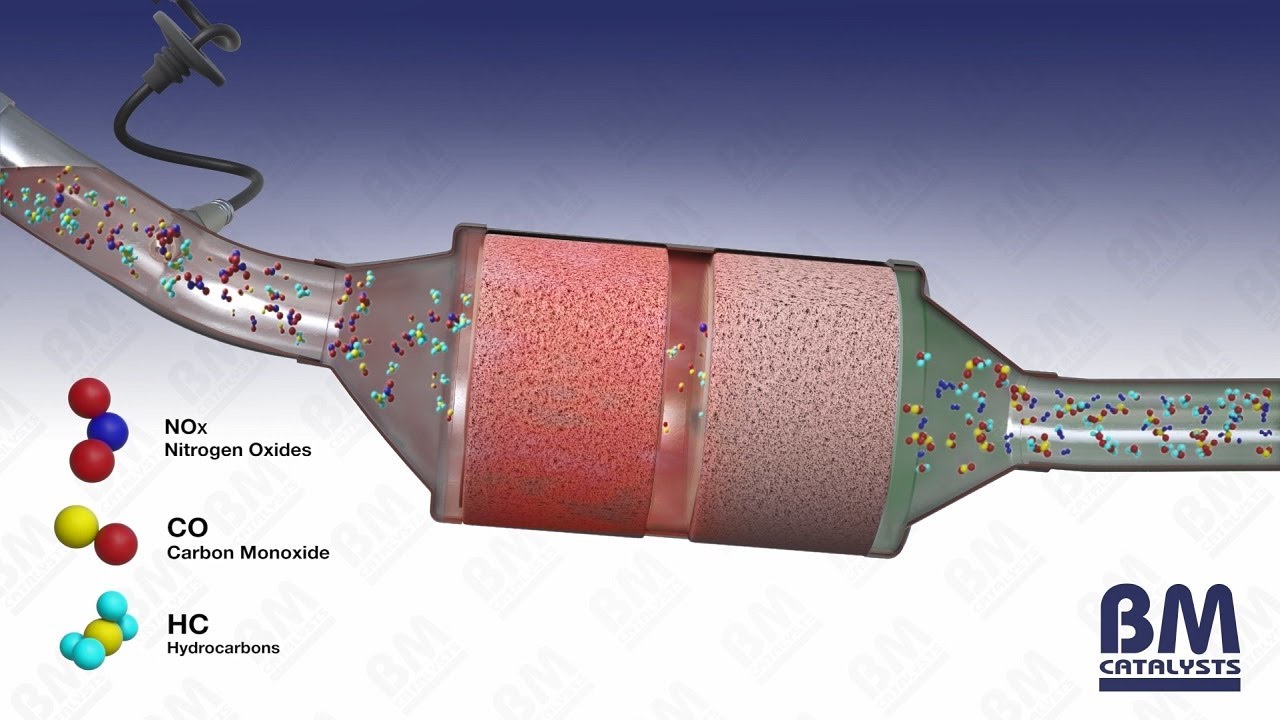
A three way catalytic converter sits in the exhaust system and uses a ceramic honeycomb coated with platinum, palladium and rhodium to convert about 90 percent or more of harmful gases. It reduces nitrogen oxides to nitrogen and oxygen, oxidizes carbon monoxide to carbon dioxide and burns unburned hydrocarbons to carbon dioxide and water. It works best at 400 to 800 C, and begins working at a light off temperature around 250 to 300 C. Oxygen sensors before and after the converter let the engine computer keep the air to fuel ratio near the ideal 14.7 to 1.
Failure and law
Converters became standard on US cars in 1975. They can fail from engine misfires, burning oil, coolant leaks or leaded fuel contamination. Signs include a check engine light with a catalyst efficiency code such as P0420, a rotten egg smell, reduced power and failed emissions tests. Replacement typically costs 1,000 to 2,500 USD, and federal law under the Clean Air Act prohibits removing or tampering with emissions equipment. A converter can last 100,000 miles or more when the engine is well maintained.
Based on data from the EPA