
A standard charger takes about 10 to 24 hours to fully charge a car battery, and a fast charger takes 4 to 6 hours.
Charging time
- Standard trickle charger (2 amps): 10 to 24 hours.
- Fast charger (10 amps): 2 to 6 hours.
- Driving: 30 minutes to 1 hour restores some charge, but a full charge may take hours.
How to charge
- Turn off the engine and remove the key.
- Connect the red clamp to the positive terminal, then the black clamp to ground.
- Plug in and set the right voltage (12 V).
- Disconnect in reverse order.
Safety
Work in a ventilated area, as batteries emit hydrogen gas. Wear eye protection.
Check
A fully charged battery reads about 12.6 to 12.8 volts.
When to replace

If it won’t hold charge, replace it.
How long charging takes
A car battery that is dead but healthy usually needs 4 to 24 hours on a standard 4 to 10 amp charger. The formula is the battery capacity in amp hours divided by charger amps, and then about 20% extra. A 50 amp hour battery that is half drained would take around 4 hours on a 6 amp charger. A 2 amp trickle charger can take 24 hours or more.
Charging by driving
Driving at highway speed for 30 minutes or more can add some charge, but alternators are designed to maintain a battery, not to recharge a flat one. Repeated short trips and using the alternator to recharge a very low battery can shorten its life. If the battery needed a jump start, drive for at least 30 minutes and then use a charger.
Steps to charge safely
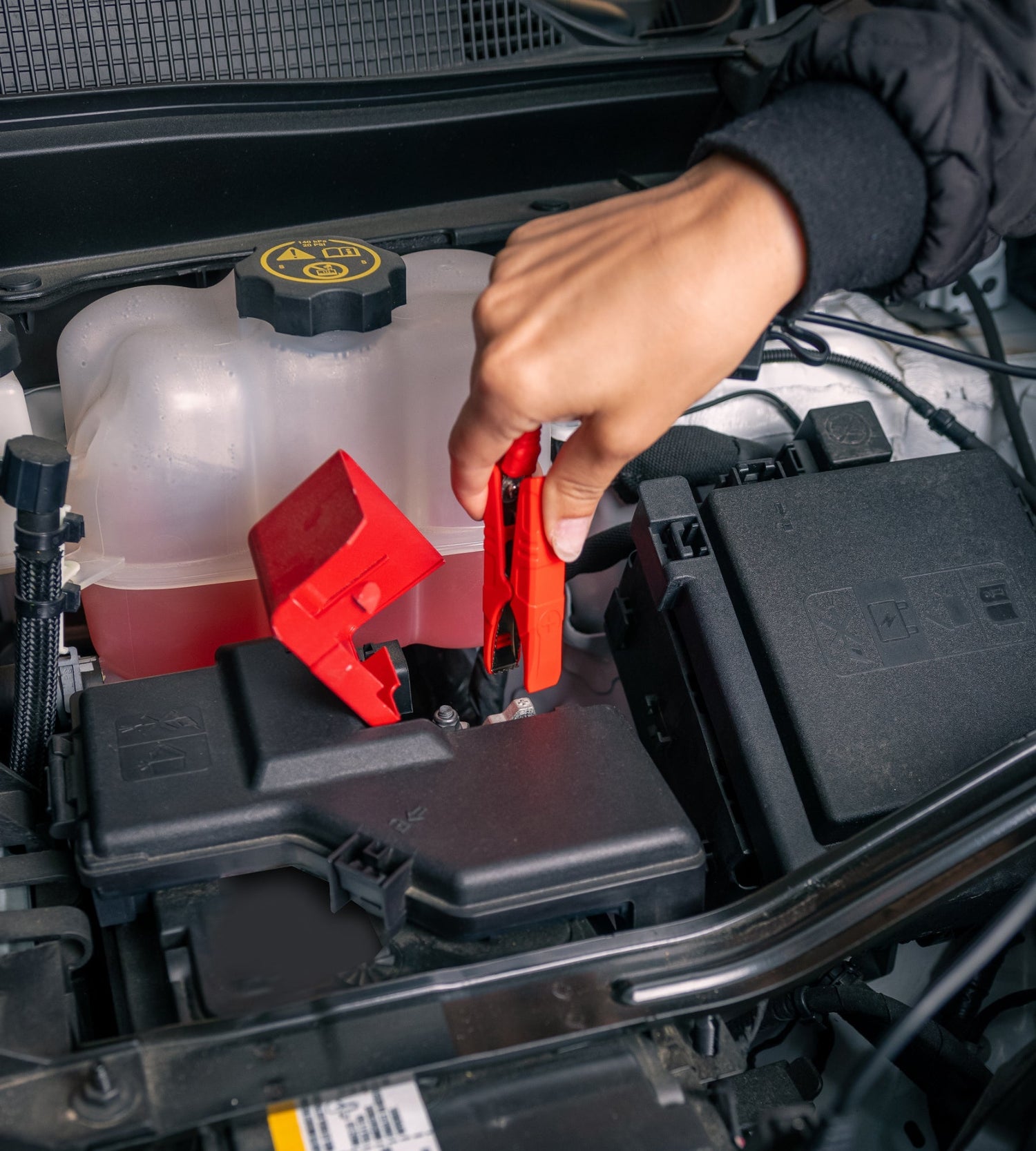
- Turn the car off, remove keys and put on safety glasses.
- Connect the red clamp to the positive terminal first, then the black clamp to a bare metal part of the engine block or chassis away from the battery.
- Set the charger to the correct voltage (12 V) and the right battery type: flooded, AGM or gel.
- Plug in the charger and start the charge.
- When done, unplug the charger before removing clamps, black clamp first.
Knowing when it is full
A fully charged 12 V lead acid battery reads about 12.6 to 12.8 volts at rest, measured a few hours after charging. Under 12.4 V means about 75% charged, and 12.0 V is about 25%. Smart chargers switch to float mode automatically. Overcharging can boil the electrolyte and damage the plates.
Jump starting
Connect the red clamp to the dead battery’s positive terminal and the donor battery’s positive terminal. Connect the black clamp to the donor’s negative terminal and the other black clamp to unpainted metal on the dead car. Start the donor car for a few minutes, then try to start the dead car. Never jump a frozen or visibly damaged battery.
When to replace
Car batteries last 3 to 5 years on average, less in hot climates. Signs of failure include slow cranking, dim lights, a swollen case, corrosion on the terminals and a battery over 4 years old. A battery that will not hold a charge after a full cycle should be tested at an auto parts store, which often tests for free.
Safety
Charging produces hydrogen gas, which is flammable. Charge in a ventilated area, keep sparks and flames away and do not lean over the battery while connecting clamps. Battery acid burns skin and eyes, so wash with water if you are splashed.
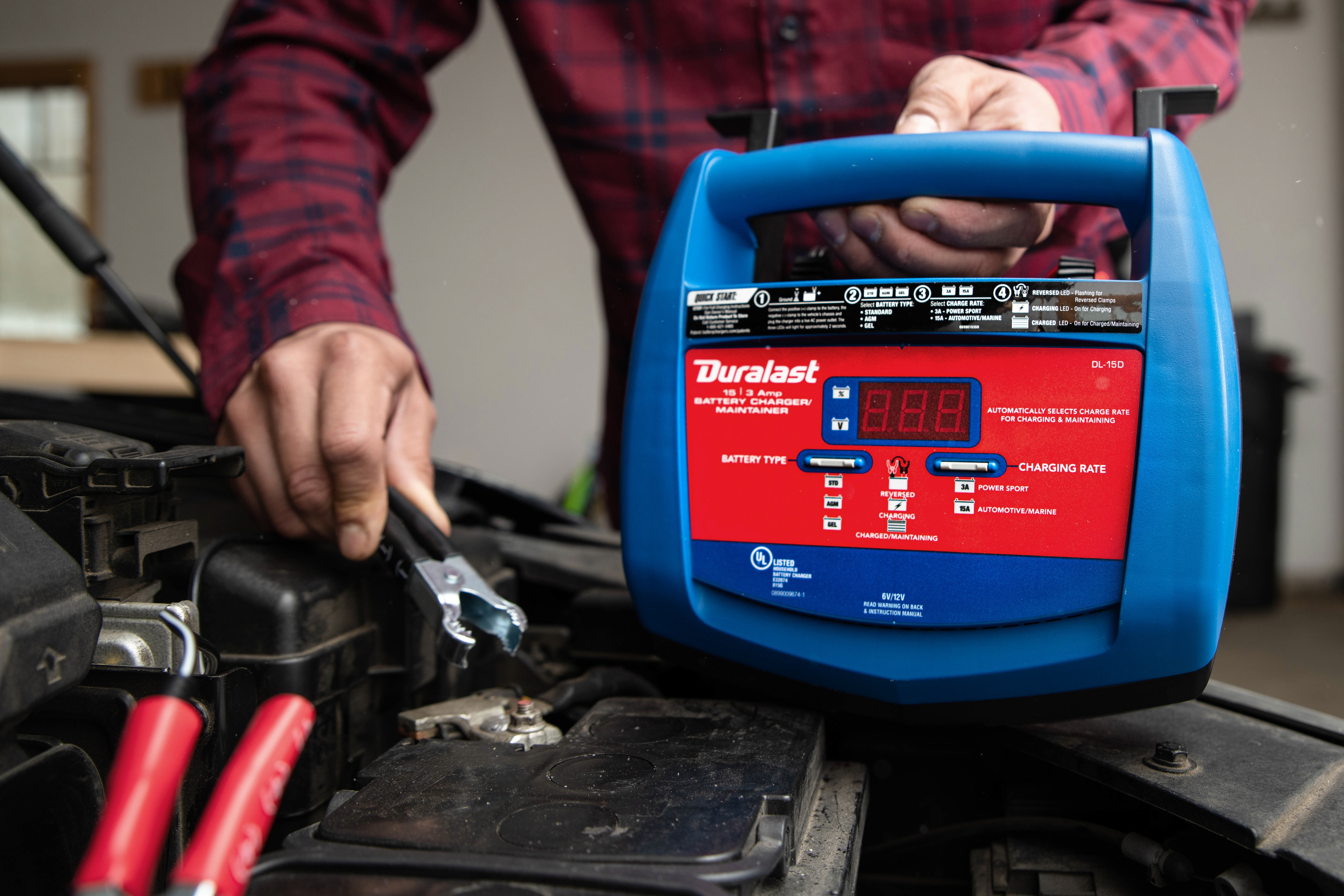
Charger types and numbers
A trickle charger delivers about 1 to 2 amps and may take 24 hours or more for a drained battery. A standard 10 amp charger can take about 4 to 6 hours for a typical 50 amp-hour car battery. Quick boost modes of 40 to 50 amps start an engine quickly but are not intended for full charging. Smart chargers shift to float mode, which prevents overcharging. A fully charged 12 volt lead acid battery rests at about 12.6 to 12.8 volts, and a reading under 12.0 volts means it is deeply discharged. Batteries left discharged build sulfate crystals that reduce capacity, and most car batteries last about 3 to 5 years.
Based on data from AAA and battery manufacturer technical guides