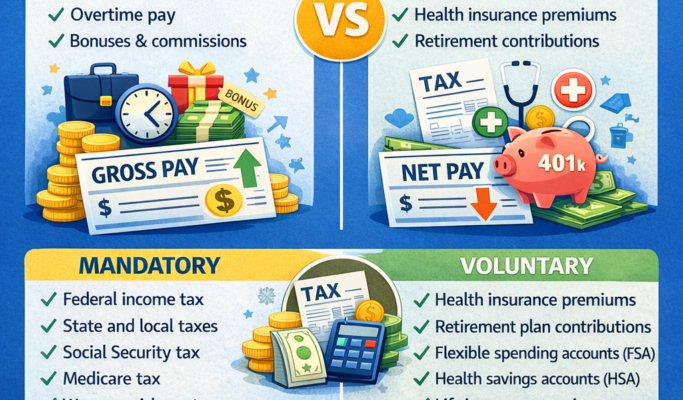
Gross pay is total earnings before taxes and deductions, and net pay is the amount you take home afterward.
Definitions
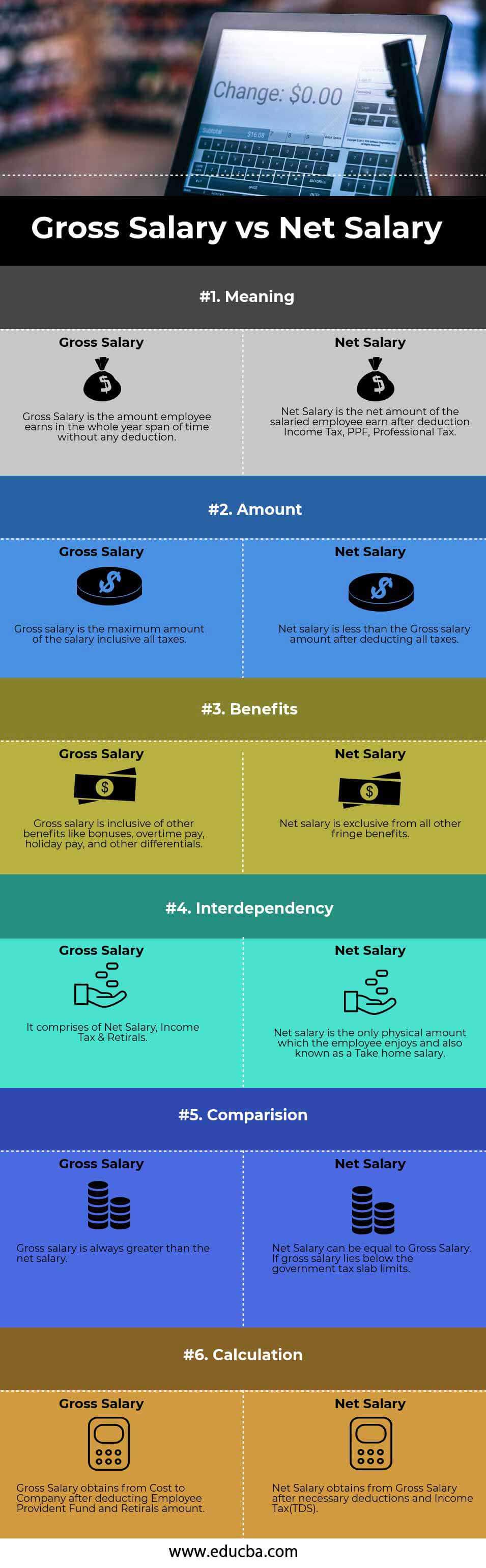
Gross pay is total earnings before anything is taken out. Net pay (take-home pay) is what you receive after taxes and deductions.
Deductions
- Federal and state income tax.
- Social Security (6.2 percent) and Medicare (1.45 percent).
- Health insurance, 401(k) and other benefits.
Example
Gross $2,000, deductions $500, net $1,500.
Formula
Net pay = gross pay minus taxes and deductions.
Hourly pay
Gross = hourly rate x hours worked (including overtime at 1.5 times).
Budgeting

Use net pay for your budget. Salary offers are stated in gross.
Estimate
Use a paycheck calculator, and note that state taxes vary.
Definitions
Gross pay is the total amount an employer owes before anything is taken out. It includes wages, salary, overtime, bonuses and commissions. Net pay, also called take-home pay, is what you actually receive after taxes and deductions. The difference can be 20% to 35% or more of gross pay, depending on income, location and benefits.
Common deductions from gross pay
- Federal income tax, withheld based on your Form W-4 and income tax brackets.
- Social Security tax, 6.2% of wages up to $168,600 in 2024.
- Medicare tax, 1.45% of all wages, plus an extra 0.9% on wages over $200,000.
- State and local income taxes, in most states. Nine states, including Texas, Florida and Washington, have no wage income tax.
- Health insurance premiums and flexible spending contributions.
- Retirement contributions to a 401(k), up to $23,000 in 2024.
- Union dues and wage garnishments.
Example
Gross monthly pay of $5,000:
- Federal income tax: about $500.
- Social Security: $310.
- Medicare: $72.50.
- State tax at 4%: $200.
- Health insurance: $200.
- 401(k) at 5%: $250.
Net pay is about $3,467 per month, or roughly 69% of gross.
Formula
Net pay = gross pay minus taxes minus pre-tax and post-tax deductions. Pre-tax deductions such as 401(k) and health premiums reduce taxable income, which lowers the taxes withheld.
Hourly workers
Gross pay for hourly employees equals hours worked times the hourly rate, with overtime at 1.5 times pay for hours over 40 in a week under the Fair Labor Standards Act for most non-exempt workers. Someone who earns $20 an hour for 40 hours has gross weekly pay of $800.
Why it matters
Budget with net pay, not gross. Job offers quote gross salary, so you must estimate the take-home. Compare offers by looking at benefits, taxes where you live, and retirement matches, since a lower salary with free health insurance can leave more spending money.
Tools
Use the IRS Tax Withholding Estimator to adjust your W-4, and payroll calculators such as those from ADP and PaycheckCity for estimates. Your pay stub shows the exact figure for every item.

Payroll examples and withholding
Gross pay is total earnings before deductions, and net pay is take-home pay. For example, on a 60,000 USD salary, gross pay per biweekly check is about 2,308 USD. Social Security tax is 6.2 percent of wages up to the annual wage base (168,600 USD for 2024, 176,100 USD for 2025) and Medicare is 1.45 percent. Federal income tax is withheld based on Form W-4. State income tax, health insurance premiums, 401(k) contributions and union dues reduce net pay. A net pay of around 75 to 80 percent of gross pay is common at middle incomes, but varies widely. Review each pay stub to catch errors.
Based on data from the IRS and the Social Security Administration