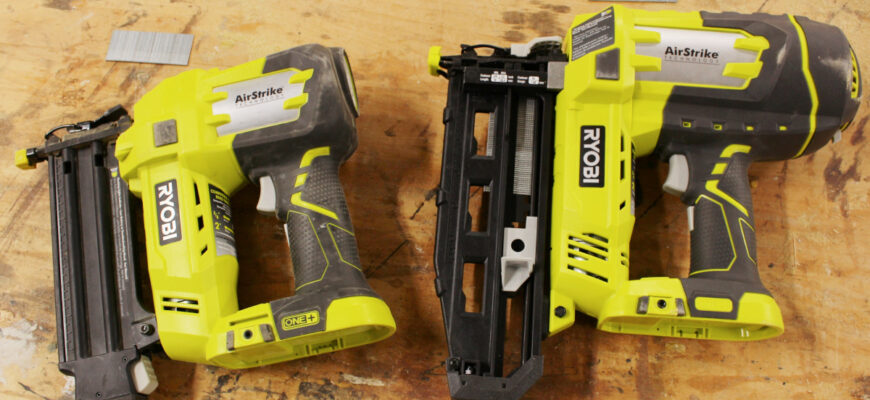
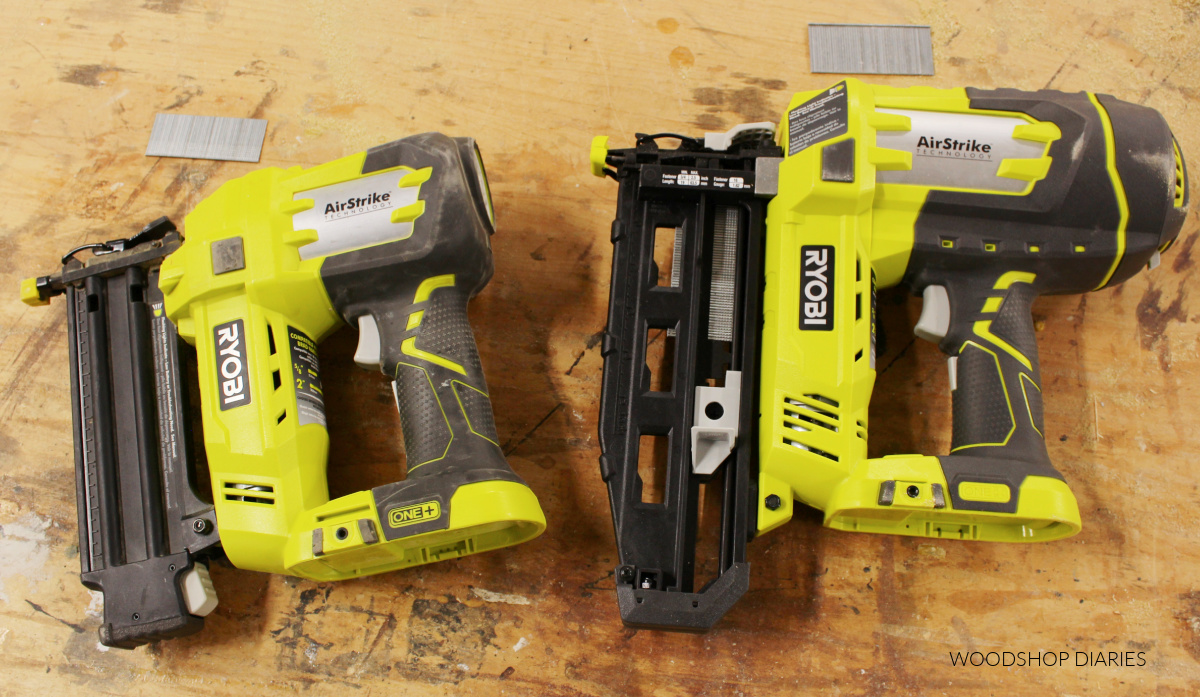
A brad nailer uses thin 18-gauge nails for delicate trim, while a finish nailer uses thicker 15 or 16 gauge nails for sturdier trim.
Brad nailer
- 18 gauge nails, thin and with small heads.
- For small trim, molding and crafts.
- Leaves a small hole.
Finish nailer
- 15 or 16 gauge nails, thicker.
- For baseboards, door casings and heavier trim.
- Stronger hold.
Choosing
Brad for delicate trim, finish for heavy trim and cabinets.
Tip
Test on scrap wood.
Nail gauges
Brad nails are 18 gauge, thin and small, with a diameter of about 0.047 inch. Finish nails are typically 15 or 16 gauge, thicker and stronger (about 0.072 inch for 15 gauge).
Length
Brad nailers drive nails from 5/8 inch to 2 inches. Finish nailers handle nails up to 2.5 inches long.
Holding power
Finish nails hold heavier trim, such as baseboard, door casings and crown molding. Brads are good for lightweight trim, small moldings and holding glue joints while they dry.
Holes
Brads leave smaller holes, easier to fill, and are less likely to split thin wood. Finish nails leave a larger hole that needs filler.
Angled finish nailers
15 gauge angled finish nailers reach tight corners. 16 gauge nailers are straight and are lighter.
Power sources

Pneumatic (air compressor), cordless battery or gas types. Cordless models cost more but need no hose.
Safety
Wear eye protection and keep fingers away from the nose. Disconnect air or remove the battery when clearing jams. Use sequential trip mode for accuracy.
Related tools
- Pin nailers: 23 gauge headless pins, nearly invisible.
- Staplers and framing nailers for rough work.
Typical project
Use a finish nailer for baseboards and door trim, a brad nailer for decorative moldings and cabinet assembly.
Price
Brad nailers cost about 50 to 150 dollars, finish nailers 100 to 300 dollars.
Tip
Test on scrap wood and adjust depth so nails sit just below the surface.
Gauges, nail sizes and uses
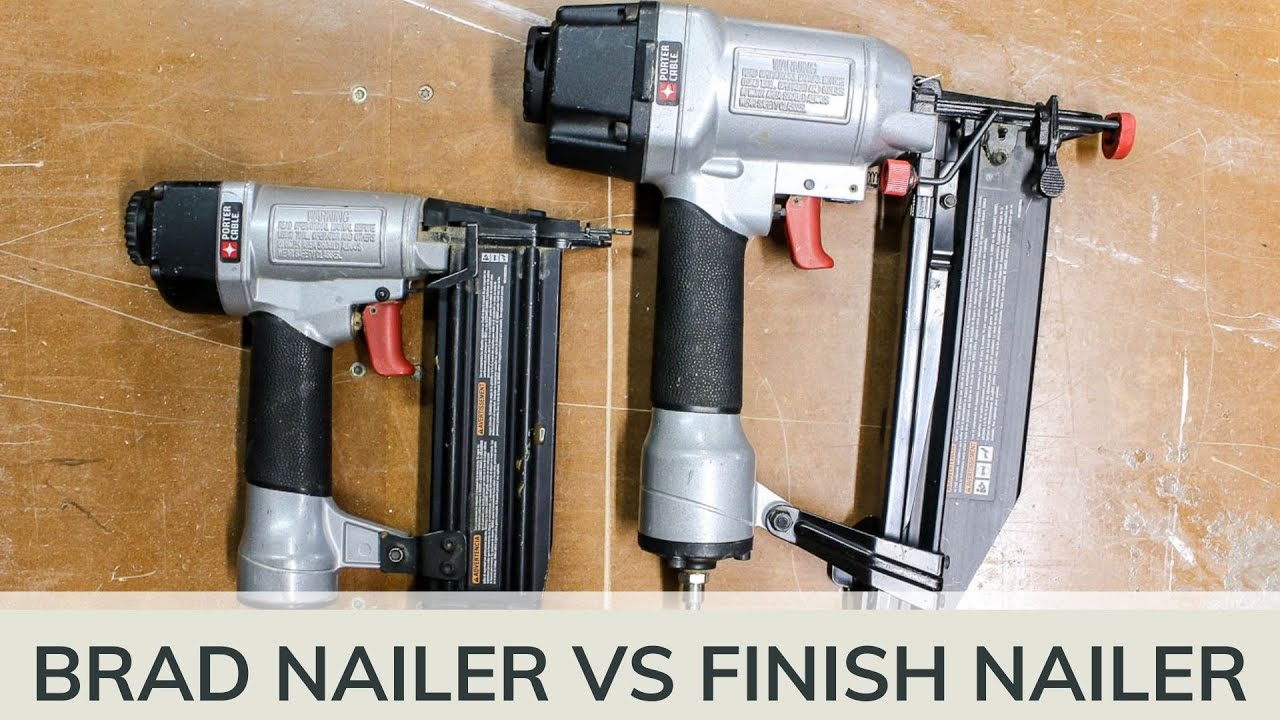
Nail gauge numbers run in reverse, so a higher number means a thinner nail. Brad nailers shoot 18 gauge nails, usually 5/8 inch to 2 inches long, which leave a very small hole and are suited to lightweight trim, thin moulding, small cabinet parts and craft projects. Finish nailers shoot thicker 15 or 16 gauge nails, typically 1 to 2.5 inches, with much greater holding power for baseboards, door and window casings, crown moulding and stair parts. Finish nailers come in straight or angled magazines, with 15 gauge angled models at 15 to 34 degrees reaching into tight corners.
Power, safety and cost
Both are available as pneumatic tools needing an air compressor with 70 to 120 psi, or as cordless battery tools. Brad nailers often cost 60 to 150 USD and finish nailers 100 to 250 USD. Always wear safety glasses, keep fingers away from the trigger and nose, disconnect the air hose when clearing a jam, and keep the tool pointed away from people. Thin 18 gauge brads can split small trim less often, but they may not hold heavy pieces, so match the nailer to the job. Use wood glue with brads for added strength.
Based on data from the Occupational Safety and Health Administration and manufacturer specifications