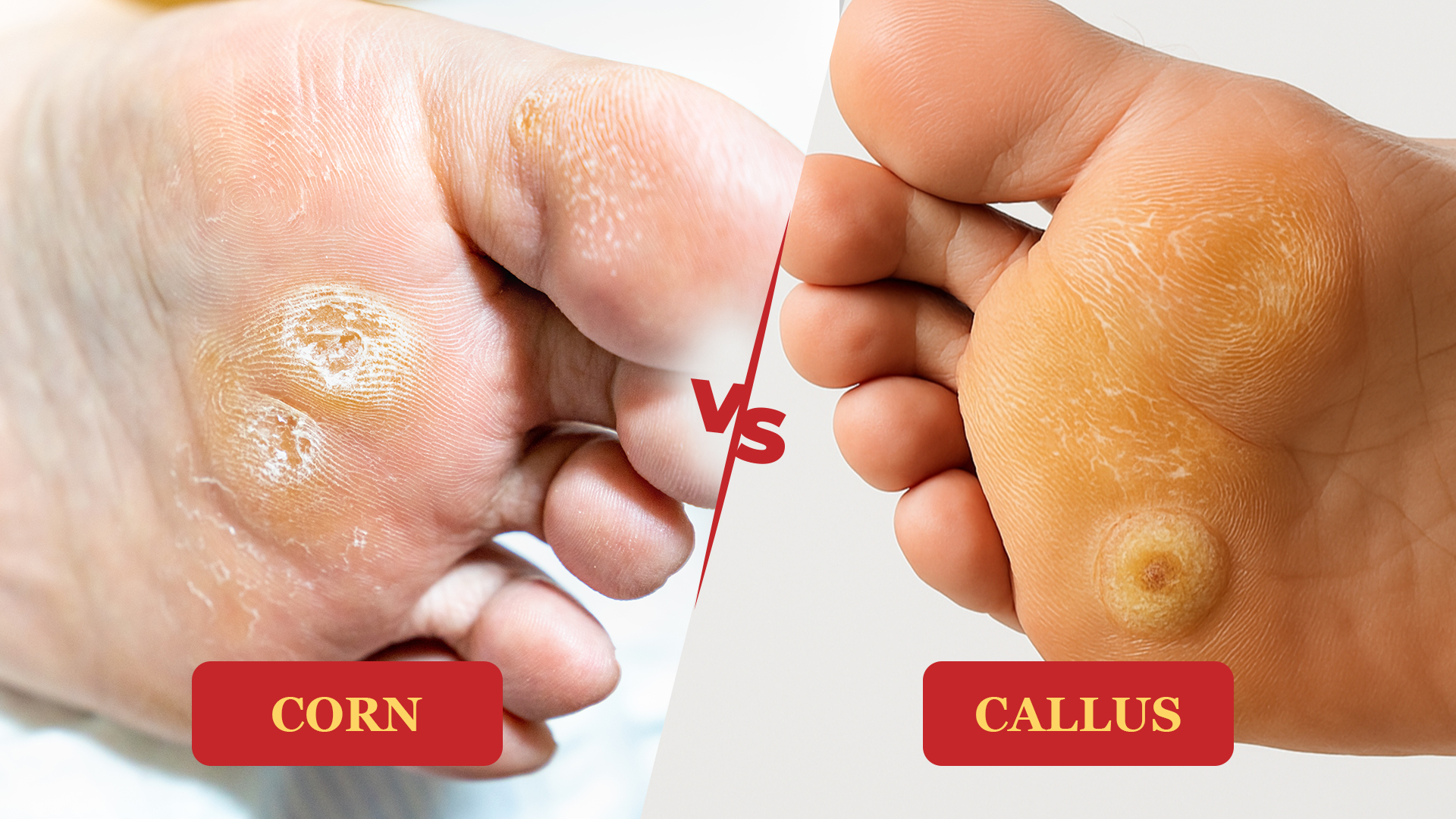
Corns are small, hard, often painful bumps with a core on the toes or feet, while calluses are wider, thicker, usually painless patches of hard skin.
Corns
Small, hard, round bumps with a central core, found on toes or feet, often painful when pressed. Caused by friction and pressure from tight shoes.
Calluses
Larger, flatter, thickened patches of skin, usually on soles, heels or palms. Usually not painful, caused by repeated friction.
Types of corns
Hard corns (on top of toes) and soft corns (between toes).
Treatment
- Soak and file gently with a pumice stone.
- Use padding or moleskin.
- Salicylic acid pads (not for diabetics).
- Wear comfortable shoes.
See a doctor or podiatrist
If painful, infected, or you have diabetes or poor circulation.
Don’t
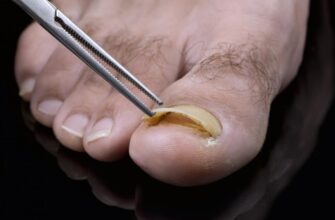
Cut them yourself.
Prevention
Well-fitting shoes and moisturizing.
How corns form
Corns and calluses form from repeated friction or pressure. Poorly fitting shoes, high heels, walking barefoot and foot deformities like hammertoes or bunions are common causes.
Appearance
- A corn is small, round, with a hard center and often painful when pressed.
- A callus is wider, flatter, uneven and usually less painful.

Common places
Corns appear on top or between toes. Calluses form on the heel, ball of the foot, palms and fingers, for example from lifting weights or playing guitar.
Safe home care
- Soak the foot in warm water for 5 to 10 minutes.
- Gently rub with a pumice stone or a washcloth.
- Apply a moisturizer with urea, lactic acid or salicylic acid.
- Wear padded corn pads and roomy shoes.
Avoid
- Cutting or shaving with a razor.
- Using strong acid medicated pads for long when you have diabetes or poor circulation.
- Walking in tight shoes.
People with diabetes
Foot problems can lead to infection or ulcers. Anyone with diabetes, nerve damage or poor blood flow should have a doctor or podiatrist treat corns and calluses.
Professional treatment
A podiatrist can pare down hard skin safely, fit custom insoles and, if a bone deformity is causing the problem, discuss surgery.
Formation and skin structure
Corns and calluses are thickened layers of dead skin from repeated friction or pressure. Calluses are broad and flat, usually on the heel, ball of the foot or palms, and are rarely painful. Corns are smaller, with a hard center, and form on the toes or between them, and they hurt when pressed. Soft corns appear between toes and look rubbery because of moisture. Poorly fitting shoes, high heels, going without socks, hammertoes and bunions are common causes, and hand calluses form from tools, weightlifting and instruments. Many cases clear when the pressure source is removed.

Safe care and who needs a professional
Soak the feet in warm water for 10 minutes, then gently rub with a pumice stone, and apply a moisturizer containing urea or salicylic acid. Do not cut or shave corns or calluses at home, and avoid medicated pads with acid if you have diabetes or poor circulation, since injuries can lead to infection. The American Podiatric Medical Association advises people with diabetes to see a podiatrist for any foot lesion. A podiatrist can safely trim the skin, recommend padding or shoe inserts and treat underlying deformities. Choose shoes with a wide toe box and about a thumb’s width of space beyond the longest toe.
Based on data from the American Podiatric Medical Association and the American Academy of Dermatology