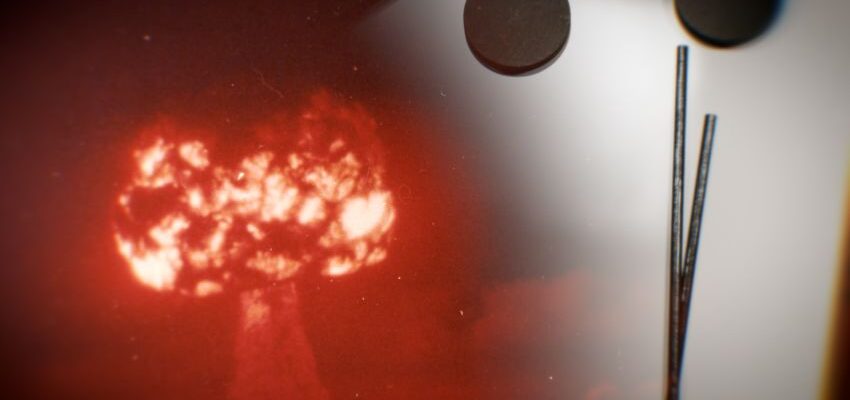
There is no sure answer. Scientists expect Earth to become uninhabitable in the very distant future when the Sun expands into a red giant, billions of years from now, and there is no credible evidence of an imminent end.
Near term
The most pressing risks are human-caused: nuclear war, pandemics, climate change and asteroids. Those are risks, not predictions.
Long term
- In about 1 billion years the Sun’s increasing brightness will make Earth too hot for oceans.
- In about 5 billion years the Sun will become a red giant, and may engulf Earth.
- The universe may expand forever, with stars burning out in trillions of years (heat death), or other models.
Asteroids
NASA’s DART mission in 2022 showed an asteroid’s path can be changed.
Perspective
Scientists consider the end of Earth far away.

Religions
Various traditions have beliefs about the end of the world.
Near term
Scientists name several risks that could end human civilization or cause mass death in the coming centuries: nuclear war, engineered pandemics, climate change, and powerful artificial intelligence. Philosopher Toby Ord estimated in his 2020 book “The Precipice” that the chance of an existential catastrophe in the next 100 years is about 1 in 6, with the largest risks coming from human activity, not natural events. Others dispute these numbers.
- Nuclear war: about 12,100 nuclear warheads exist, with the US and Russia holding about 90%. A large exchange could cause a “nuclear winter” and global famine.
- Climate change: the IPCC says that limiting warming to 1.5 C needs steep emissions cuts. Climate change is a serious threat, though most scientists do not expect it to end humanity.
- Pandemics: COVID-19 killed over 7 million people officially. Engineered pathogens are a concern.

Long term
The sun is about 4.6 billion years old and will keep shining for about 5 billion years more. In about 1 billion years, it will be 10% brighter, which would evaporate oceans and make Earth uninhabitable. In about 5 billion years, it will become a red giant and may engulf Earth. Within trillions of years, stars will burn out in a “heat death” of the universe, one of the leading cosmological predictions.
Asteroids
The impact that ended the dinosaurs about 66 million years ago was caused by an asteroid about 10 kilometers wide. NASA tracks near-Earth objects and has found over 95% of those larger than 1 kilometer, none of which pose a threat in the next 100 years. In 2022, the DART mission successfully changed an asteroid’s orbit, showing that deflection is possible.
Perspective
Mass extinctions have happened five times in Earth’s history. Researchers say human extinction is unlikely in the near future, though catastrophic risks deserve attention. The Bulletin of the Atomic Scientists set the Doomsday Clock at 90 seconds to midnight in 2024, the closest ever.
Religions
Many religions teach about an end of the world. Christianity describes Armageddon and Christ’s return, Islam describes the Day of Judgment, Hinduism describes cycles of creation and destruction, Norse mythology tells of Ragnarok, and Buddhism teaches impermanence. Predictions of specific dates have always been wrong.

Scientific estimates for the long future
The Sun is about 4.6 billion years old and will grow into a red giant in around 5 billion years, and Earth will become uninhabitable well before then. NASA scientists estimate the Sun’s brightness rises about 1 percent every 100 million years, so oceans may evaporate in around 1 billion years. The most certain near term threats are climate change, nuclear war, pandemics and asteroid impacts. The asteroid that likely caused the dinosaur extinction was about 10 km wide and hit 66 million years ago. NASA’s DART mission in 2022 successfully changed the orbit of the asteroid moon Dimorphos, showing deflection is possible. Astronomers see no known asteroid with a significant chance of hitting Earth in the next 100 years. Religious traditions describe the end of the world in different ways, and these are matters of belief, not scientific prediction.
Based on data from NASA and the Intergovernmental Panel on Climate Change